A Washington Post investigation finds that scores of female athletes were sexually exploited by officials of the two major U.S. bodybuilding federations.
from Bodybuilding.com Articles https://ift.tt/KpahEAP
via IFTTT
Monday, October 31, 2022

Mens Journal
You might not want straight-up tree trunks for legs, but if you’re craving more solid muscle mass—especially in the notoriously tough-to-build calves—you need targeted calf exercises, aside from just hammering your lower body in colossal leg-day workouts.
Calves can be especially challenging. We’ve heard plenty of lifters complain that they just don’t have the right genetics to build big calf muscles. But these stubborn muscles can grow, if you approach your workouts the right way.
First, some anatomy: The calf is made up of two main muscles. The gastrocnemius is a lower leg muscle that sits just under the skin, and it makes up the bulk of the calf. Then there’s the soleus, a wide, flat muscle that starts below your knee and runs down your lower leg, connecting to the Achilles tendon above the heel. These muscles connect the knee and ankle joint to help with knee flexion and extension so you can walk, run, and jump.
Here, we’ve compiled some of the greatest muscle-building calf exercises (think single-leg calf raise) you can do to add some definition to your legs. Try these on for size during your next leg day workout; just be sure to move methodically with proper range of motion to really stimulate the muscles. Also consider working in some explosive cardio like sprinting and jump rope to help develop stronger, more muscular calves. They’ll create micro-tears in the muscle fiber that’ll cause the body to send blood and nutrients to the cells in need, growing your calves bigger and stronger.

The Best Exercises for Calf Workouts

How to Do It: Stand with your feet together and arms at your sides. Jump and spread your legs outside shoulder width as you clap your hands overhead. Jump and return your hands and feet to the starting position.

How to Do It: Perform jumping jacks but extend your arms out to your sides as you jump your feet out. When you jump back, clap your hands together in front of your body.

How to Do It: Use a seated calf raise machine or sit on a bench and rest the balls of your feet on a block or step (and hold dumbbells on your thighs for resistance). Your knees should be bent 90 degrees and your toes turned out about 15 degrees. Allow your heels to drift toward the floor until you feel a stretch in your calves. Now drive the balls of your feet into the platform and raise your heels as high as possible.

How to Do It: Use a seated calf raise machine or sit on a bench and rest the balls of your feet on a block or step (and hold dumbbells on your thighs for resistance). Your knees should be bent 90 degrees and your toes pointing straight ahead. Allow your heels to drift toward the floor until you feel a stretch in your calves. Now drive the balls of your feet into the platform and raise your heels as high as possible.

How to Do It: Use a seated calf raise machine or sit on a bench and rest the balls of your feet on a block or step (and hold dumbbells on your thighs for resistance). Your knees should be bent 90 degrees and your toes turned inward 15 degrees. Allow your heels to drift toward the floor until you feel a stretch in your calves. Now drive the balls of your feet into the platform and raise your heels as high as possible.

How to Do It: Place your toes on a mat or block so they’re elevated above your heels. Bend one knee, pushing it forward so you feel a stretch in your calf. Draw your leg back. Repeat this motion for the desired number of reps, and then switch legs.

How to Do It: Stand on a block or step with one leg. Keep your weight resting on the ball of your foot. Wrap your free foot around the back of the working leg. Allow your body to sink toward the floor and stretch your calf. Hold for one second and then drive the ball of your foot into the surface as you raise your heel up. Hold the top position for two seconds.

How to Do It: Stand on a block or step with feet shoulder-width apart and toes turned out. Lower yourself into the bottom position of a squat (called “the hole”). Perform a calf raise, coming up as high as you can on the balls of your feet without extending your hips or legs.

How to Do It: Stand on your tiptoes and walk. Don't let your heels touch the floor at any time. If you can, do this calf exercise barefoot for greater muscle activation.

How to Do It: Stand tall with feet flat on the floor. Jump, but use only your calves to propel you upward. Land softly, absorbing the force by dropping into a half squat. Try to land quietly.

How to Do It: Use a standing calf raise machine or stand on a block or step with a dumbbell in one hand. With your free hand, hold onto something sturdy for support. Lower your heels toward the floor until you feel a stretch in your calves. Drive the balls of your feet into the footplate and contract your calves, raising your heels as high as possible. Control the descent on each rep.

How to Do It: Use a seated calf raise machine or sit on a bench and rest the balls of your feet on a block or step (and hold dumbbells on your thighs for resistance). Perform a calf raise as described above, but with hips and knees bent 90 degrees.

How to Do It: Stand holding a plate or dumbbell, or perform this exercise without weight. Step your right foot out to the side while hinge your hips back, and come into a lateral lunge. Push off this foot and rise to a standing position. Then immediately bring your right leg into a curtsy lunge behind your body. Alternate legs and repeat. Maridav / Shutterstock

How to Do It: Place an agility ladder flat on the floor and stand at one end of it. If you don't have an agility ladder, creating lines with tape or chalk on the floor is a great alternative. Run (or hop) from one end of the agility ladder to the other, placing your feet within the boxes created by the ladder lines. That's one rep. BAZA Production / Shutterstock

How to Do It: Place a Bosu ball dome-side down. Carefully stand on the ball and get your balance. Slowly lower into a squat under control. Slowly raise yourself up. That's one rep. Olena Yakobchuk / Shutterstock

How to Do It: Find a track (or measure out distances with cones in an open area), then do 55-, 100-, or 200-meter sprint repeats. You can also work on a straight, flat stretch of road and estimate the distances above by time if you know your splits. Focus on hitting top speed and propelling yourself by staying on your toes. Sprinting—like any high-intensity activity—requires a lot of fast-twitch muscle fibers; it boosts protein synthesis, and increase the production of human growth hormone (HGH) in your body, which builds muscle. Jacob Lund / Shutterstock

How to Do It: Stand tall with a weight in each hand. Maintain a tall chest, retract the shoulder blades, and keep the weights from resting on your thighs. Walk forward. Instead of using choppy heel-to-toe steps, walk on your toes to engage your calves more. Ensure your head is facing forward and your posture is rigid. James Michelfelder

While plugging away on the StairMaster might not seem like the most entertaining workout, it's a great way to develop more muscular calves, as it works the entire back of your legs. Floopin Photography / Shutterstock
from Men's Journal https://ift.tt/4qlX7Rr
via
Stack Like Shaq: The Novex Biotech Supplement that’s Part of the Former NBA Legend’s Daily Routine
Let’s take a look into the larger than life Shaquille O’Neal’s secret to staying in shape.
from Bodybuilding.com Articles https://ift.tt/2sNGU7c
via IFTTT
from Bodybuilding.com Articles https://ift.tt/2sNGU7c
via IFTTT
Saturday, October 29, 2022
Mens Journal
Beyond bodegas and pizza joints, New York City plays host to an extensive number of fitness studios and workout classes. If you don’t call the Big Apple home, you might feel a little left out, but that doesn’t have to be the case if you own MIRROR. Recently, lululemon unveiled lululemon Studio and a new lululemon Essential Membership program to connect members to an even more dynamic range of workout content, broadening enthusiasts’ exposure to the fitness community and core lululemon products in the process.
Available through the lululemon Studio Mirror app—as well as in-person if you are a NYC dweller—the brand is offering more than 10,000 on-demand and live-streamed classes via MIRROR for $39/month. Aside from the typical smorgasbord of classes, members will be able to sweat it out across even more modalities (think yoga, dance, boxing, HIIT, and more) from some of Manhattan’s top studios. So far, partners include AARMY, Y7 Studio, DOGPOUND, FORWARD__Space, Pure Barre, Rumble, AKT, and YogaSix. Already a MIRROR member? You’ll automatically become a lululemon Studio member at the same monthly price.

Those who subscribe to the free Essential Membership program can stream new weekly classes from home or nab in-person spots—at discounted rates—at the studios’ brick-and-mortar locations. The fun doesn’t end there: lululemon is also offering members 10% discounts on lululemon product, early access to lululemon events and experiences, and access to select lululemon Studio classes at no cost.
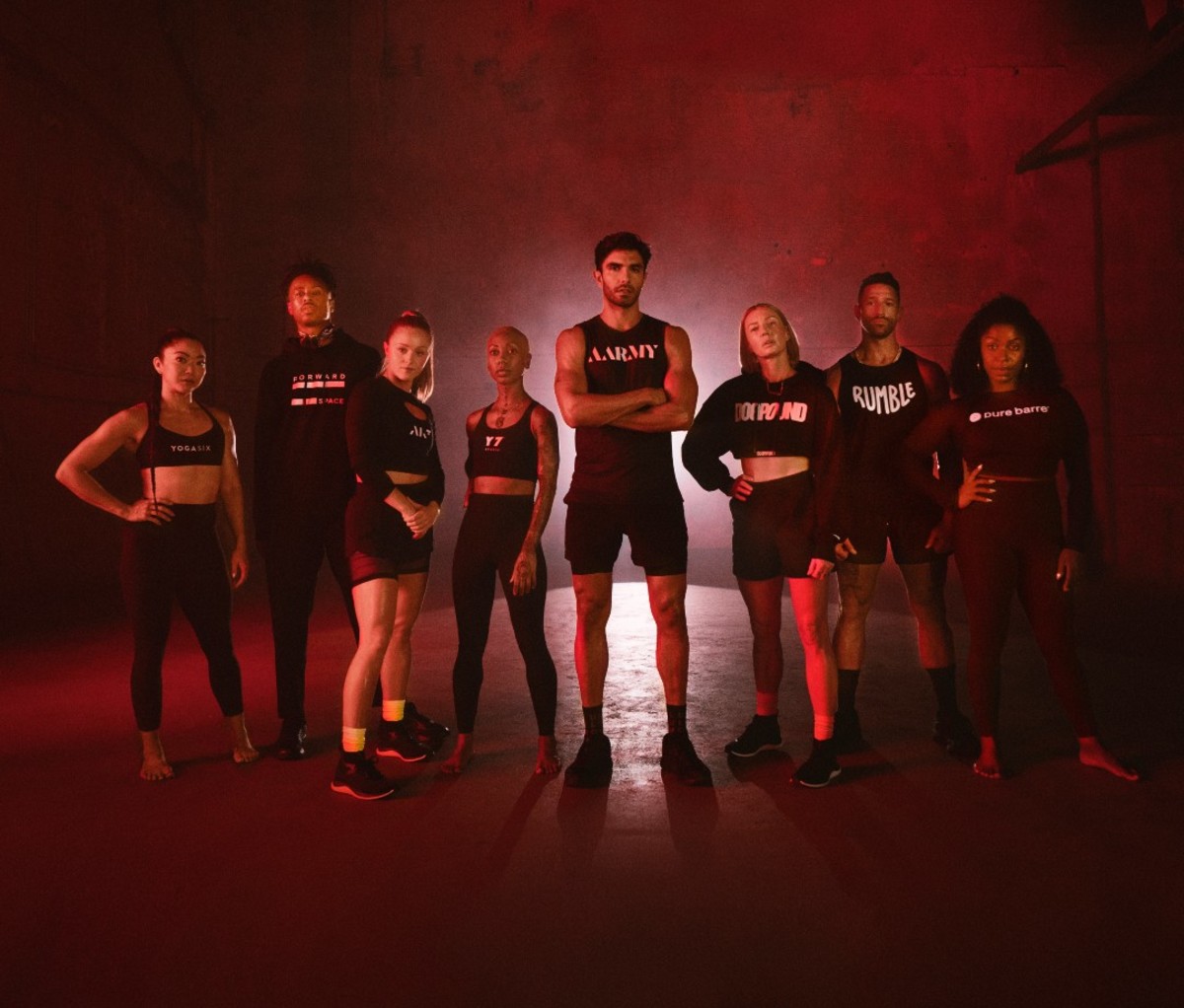
“Our guests’ fitness needs have evolved and lululemon Studio is solving for them by providing members with access to fitness content from our world-class trainers and studio partners at home, on the go, and live in studios around North America,” says Nikki Neuburger, lululemon’s chief brand officer. “lululemon Studio unlocks the versatility our community has told us they are looking for now. No longer will you have to choose between going to your favorite studio or streaming a class at home—you can have both.”

10 At-Home Workouts to Lose Weight and Build Muscle
These quick and easy workout routines eliminate flab and improve your physique, even if you’re five ...
Read articleThe new MIRROR integration is a hybrid experience that—pardon the pun—mirrors the way people want to stay active. There’s a hunger for diversity, flexibility, and entertainment that keeps physical health from feeling like a chore.
lululemon is also sweetening the deal by slashing the price of the standard MIRROR to $795 with free delivery.
Learn Morefrom Men's Journal https://ift.tt/OuENrFa
via
Friday, October 28, 2022
Slay the Leg day with The Curse!
Need a good leg workout? Check this out!
from Bodybuilding.com Articles https://ift.tt/U82GjKe
via IFTTT
from Bodybuilding.com Articles https://ift.tt/U82GjKe
via IFTTT
Mens Journal
Success is often measured by what we see on the outside. But, of course, rich and miserable isn’t much of a goal. The same is true for being passionate and living in a storage closet. Success is a big prize you can better score with a blend of rewarding attributes. It’s a combination of a position of power, the ability to make an impact, and a sense of purpose. These 10 powerful books put those goals at your fingertips.
They’ll help open your mind, inspire better habits, build more wealth, sharpen your negotiation skills, embrace change, make better choices, and get the inspiration to pursue your goal all the way to the winner’s circle.
10 Books to Help You Be More Successful
For Determination
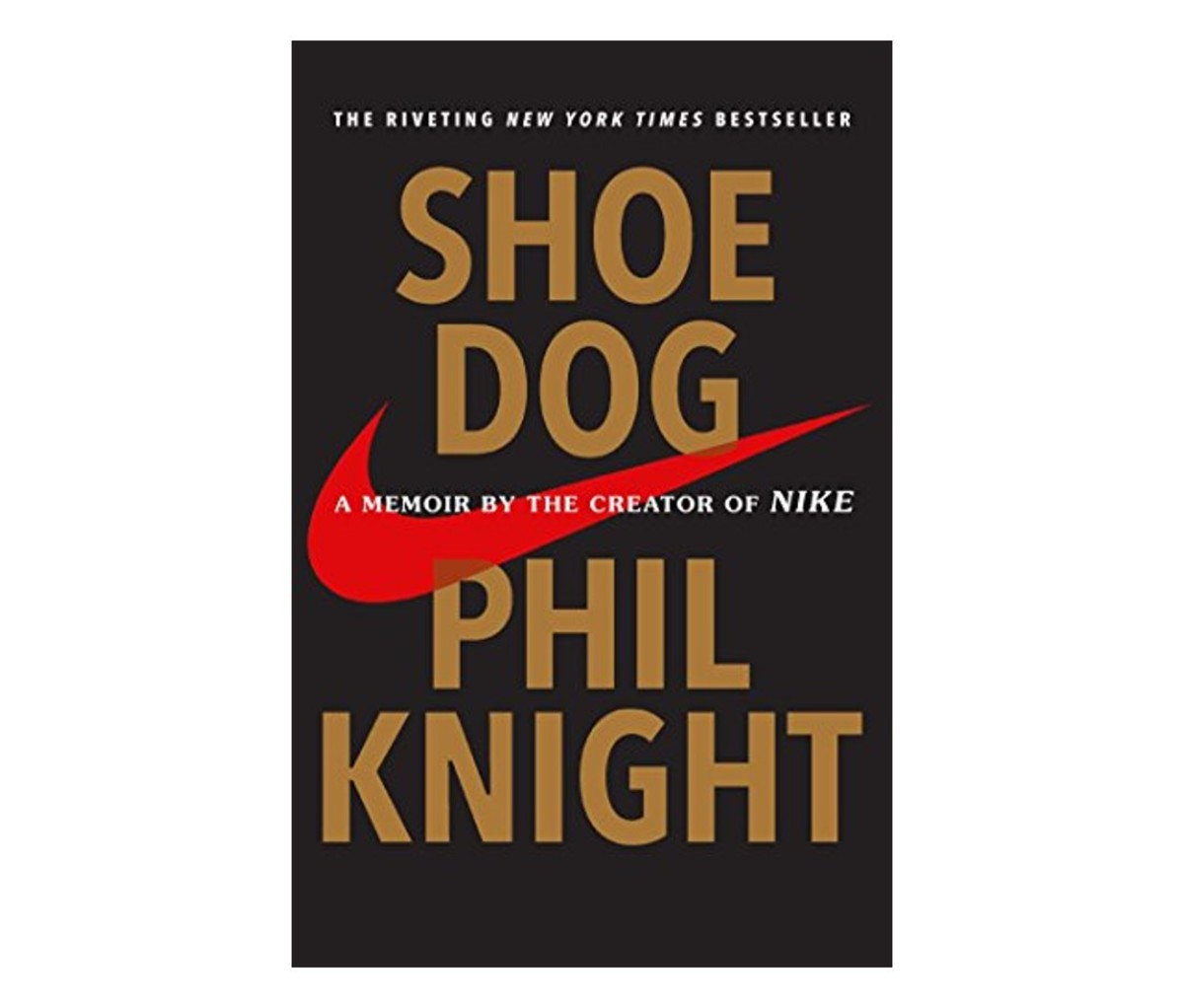
1. Shoe Dog: A Memoir by the Creator of Nike by Phil Knight
If you want to know what a real path to success looks like, you’ll find it in Phil Knight’s story. It’s one that began with sheer determination. Knight made a deal to import Onitsuka Tiger running shoes from Japan that grossed his company, Blue Ribbon, $8,000 his first year. It led to founding the Nike brand, which, 60 years later, is an absolute behemoth.
His detailed account of the twists and turns offers valuable lessons, from needing to feel an attachment with the product you’re selling to remembering anything can be learned (“I had no idea how to run a factory,” he writes of the decision to open Nike’s first, “but I was willing to try. I was willing to learn.”) Bill Gates calls the book, “a refreshingly honest reminder of what the path to business success really looks like: messy, precarious, and riddled with mistakes, endless struggles and sacrifice.” Knight even discusses coming back from the edge of bankruptcy on several occasions.
A takeaway: “Don’t tell people how to do things, tell them what to do and let them surprise you with their results.”
Get it
2. Never Split the Difference: Negotiating as if Your Life Depended on It by Chris Voss You may have the best product and be the best person to deliver it—now put the best deal-making power in your hands. Based on research on emotional intelligence and cognitive bias, former FBI hostage negotiator Chris Voss arms you with the tools you need. The key? Negotiating with people, not against them. He explains how doing an “accusation audit” (calling out the other person’s negative perceptions of you) can diffuse a problem; how getting someone to say a “calibrated no” will make them feel more in control; how proposing odd numbers seems to make people believe you’ve reached your bottom line; and how writing your best-case goal down helps you from falling victim to your own BATNA (Best Alternative to a Negotiated Agreement), which might be the lowest cash offer you already have. “Never be so sure of what you want,” writes Voss, “that you wouldn’t take something better.” A takeaway: “The goal is to identify what your counterparts actually need (monetarily, emotionally, or otherwise) and get them feeling safe enough to talk and talk and talk some more about what they want.” Courtesy image

3. Principles: Life & Work by Ray Dalio Mark Cuban calls this book by billionaire hedge fund investor Ray Dalio “a bible.” Dalio shares what led to his rise from his middle-class Long Island upbringing to founding Bridgewater Associates investment firm that’s made more money for its clients than any hedge fund in history. And with it, he provides a framework for how to evaluate opportunities and make better decisions yourself by sticking to a set of principles that will protect you from flawed thinking. Dalio built his company culture around this, he says with “an idea meritocracy” that is based on radical open-mindedness and transparency. By identifying your own weaknesses and opening your mind to differing opinions, you are able to make rational choices rather than emotional ones. “Evaluate accurately, not kindly” writes Dalio of making successful decisions. Follow his principles and you can, too. A takeaway: “Maturity is the ability to reject good alternatives in order to pursue even better ones.” Courtesy image

4. The 5am Club: Own Your Morning. Elevate Your Life by Robin Sharma Apple CEO Tim Cook famously wakes at 3:45 am. Author Robin Sharma suggests joining the ranks of the highest-level performers like these by waking early yourself for a “victory hour” first thing in the morning during the time of least distraction, when your brain’s prefrontal cortex (that does all the analyzing and worrying for you) is temporarily shut down. He proposes waking at 5 a.m. and following a 20/20/20 formula: Spend 20 minutes exercising to lower cortisol and accelerate the formation of neural connections; 20 minutes reflecting, by mediating or planning; and 20 minutes learning, reading, or studying to help you grow. Also vital to the plan: Banning electronic devices in the bedroom so your screens don’t keep you awake at night, and your work messages aren’t the first thing you check as soon as you wake up. Rest, wake, then start your day with energy and purpose. A takeaway: “The soreness of growth is so much less expensive than the devastating costs of regret.” Courtesy image

5. Trillion Dollar Coach: The Leadership Playbook of Silicon Valley’s Bill Campbell by Eric Schmidt, Jonathan Rosenberg, and Alan Eagle The late Bill Campbell was a Jedi master in management methodology who coached some of the biggest tech players in Silicon Valley—including at Apple and Google in their rise. He was a college football player turned college football coach who transformed his career by going into business in his forties and quickly climbing the ladder. And though he passed away in 2016, more than 80 people who knew him share what they learned. Campbell, for example, was a proponent of bringing your whole self to work, believing that humanizing one another gets the most out of the team. And he knew the power of really listening to people and encouraging autonomy—which is why a manager telling Intuit engineer what features to build in a product made him furious. (“Tell them what problem the consumer has,” Campbell said, “then let them figure out the features.”) And he kept his eyes open for employees on the bench, perhaps not speaking up in meetings, whose talent deserved a chance to flourish. A takeaway: “Work the team, then the problem.” Courtesy image

6. Atomic Habits: An Easy & Proven Way to Build Good Habits & Break Bad Ones by James Clear Whether you’re trying to meditate, train for an Ironman, or launch your side hustle, Clear’s book can help you develop the good habits that will get you there. His advice is based on studies that show most of our behavior follows a predictable pattern of cue, craving, response, reward (as in: see the cake; imagine tasting it; devour it; feel glorious for a few short seconds). Clear walks you through how to work with the four laws of behavior change by making what you want obvious, attractive, easy, and satisfying (as in: replace the cake with fruit; make it visible, cleaned, and ready to eat; feel healthy; be proud of yourself.) And if you make a chart marking off every day you follow the desired habit, you can watch your small changes lead to big success. A takeaway: “Goals are about the results you want to achieve. Systems are about the processes that lead to those results.” Courtesy image

7. The Millionaire Fastlane: Crack the Code to Wealth and Live Rich for a Lifetime by M.J. DeMarco Like Robert Kiyosaki’s Rich Dad, Poor Dad for a new generation, author M.J. DeMarco aims to shake up old-school thinking about money. Yes, he says, you can “get rich slow” using the default template for success: Get a job, invest in your 401K, and spend frugally. But this is his pep talk on moving from a mediocrity mindset to a wealth one much faster. The secret is similar to what Tim Ferriss outlined in The 4-Hour Workweek: Detach the hours you work from the money you earn by creating a path to passive income, or what DeMarco calls “a real, living fruit-bearing money tree.” The way to do that, he says, is by thinking like a producer. Instead of consuming products you want, study them: the packaging, the messaging, the feeling that makes you want it. Then learn from that and use it yourself. A takeaway: “Stop thinking about business in terms of your selfish desires, whether it’s money, dreams or ‘do what you love.’ Instead, chase needs, problems, pain points, service deficiencies, and emotions.” Courtesy image

8. Imagine It Forward: Courage, Creativity, and the Power of Change by Beth Comstock As post-pandemic life continues to shift where and how we work, Comstock’s guide to mastering change is more relevant than ever. In Imagine It Forward, she shares what she learned about innovation through three decades of working at GE and media giants including NBC and CBS. Among her practical advice: Don’t be held back by bureaucratic bottlenecks and “gatekeepers” who see divergent thinking as a threat and try to hold onto the power they have. Pull in forward thinkers and change agents who think differently than you. Have an uncompromising faith in experimentation and talk about your new ideas to people—because the more you do, the clearer it becomes. And rather than letting time or budget constraints hamper you, allow them to fuel your creativity instead. A takeaway: “A spark is a person, usually an outsider, whose unique perspective—the more different, the better—challenges the team to think differently.” Courtesy image

9. The 7 Habits of Highly Effective People by Stephen R. Covey This classic has sold 40 million copies for a reason. It’s a guide for aligning your goals with your actions to build integrity, character, and success. The book is worth it alone for his “put first things first” idea, in which Covey explains how tasks fit into one of four quadrants ranging from “urgent and important” down to “not urgent and not important”—and how most of us spend the most time on the latter that we should either delegate or eliminate altogether. Covey also believes in beginning with the end in mind (offering a funeral exercise to identify how you want to be remembered), in having an abundance mentality over a scarcity one, and practicing real listening with an intention to understand rather than reply. Learning to be both independently and interdependently effective is his secret to success. A takeaway: “Until a person can say deeply and honestly, ‘I am what I am today because of the choices I made yesterday,’ that person cannot say, ‘I choose otherwise.’ ” Courtesy image

10. Let My People Go Surfing: The Education of a Reluctant Businessman by Yvon Chouinard Patagonia founder Yvon Chouinard’s book has become a primer on pursuing your purpose through responsible business practices. His compelling account follows how the avid rock climber turned his small business selling alpinist equipment into a $3 billion success and one of the most environmentally conscientious companies on earth (the ownership of which he recently transferred to a trust dedicated to protecting land combatting climate change). And he did it by making unconventional choices. Not only did he encourage his employees to live rich, full lives (“We run a flexible workplace,” he writes, “and we have ever since we were a blacksmith shop that shut down whenever the waves were six feet, hot and glassy”), but he stayed true to his values of sustainability, like when he made the decision to produce his sportswear from 100% organic cotton. “Every time we’ve elected to do the right thing,” he writes, “it’s turned out to be more profitable.” A takeaway: “In every long-lasting business, the methods of conducting business may constantly change, but the values, the culture and the philosophies remain constant.” Courtesy image
from Men's Journal https://ift.tt/nxvRs2a
via
Wednesday, October 26, 2022
Meet the Fitness Trainer You Didn’t Know You Needed: Roc Shabazz
The former IFBB Pro took his passion for training and created a successful franchise in Atlanta, Georgia, now owning the programming for celebrity athletes to the likes of Shaquille O’Neal.
from Bodybuilding.com Articles https://ift.tt/WNijtBh
via IFTTT
from Bodybuilding.com Articles https://ift.tt/WNijtBh
via IFTTT
Mens Journal
Aldis Hodge had been preparing to become Carter Hall, aka Hawkman, for years before Black Adam was even announced, he just didn’t know it yet. As a young man, he read graphic novels featuring the Justice Society of America from DC Comics, of which Hawkman was a member. And on his rise as a career actor, Hodge had racked up a number of buzzed-about physical performances, building an impressive physique along the way. But he always hoped for a superhero part to come through and give him the chance to really spread his wings.
Hodge was handed that chance when Black Adam star and executive producer Dwayne Johnson called him personally to offer him the Hawkman role. Men’s Journal spoke with Hodge about the fitness journey that began as soon as that call came, the workouts on set in Atlanta, and what it was like to square up in onscreen battle against Dwayne Johnson as the iconic antihero Black Adam.

Men’s Journal: Can you describe what it was like to get that call that you were going to play Hawkman?
Aldis Hodge: The first time I heard I was going to play the superhero was back in September 2020, the day after my birthday. I got a call from a random number, which ended up being DJ, aka Dwayne Johnson. I thought someone was playing a joke on me at first, but eventually realized that it was most definitely him. That’s when he told me, “Welcome to Black Adam.” My mind was blown at that moment, and I knew it was time to get started.
How much did you know about the character of Hawkman?
I’ve always been a big comic book guy. I grew up on graphic novels, and was already a fan of the JSA so already had ideas. But when I did get it, I put more time into learning about the character of Carter Hall, who is Hawkman’s actual identity. I didn’t want to get bogged down by all the different versions of the character that were out there. But one of the undisputed facts is the man is a superhero with or without the armor. The plating that he puts on is just an extension and an amplifying force to the power he already has.

Did you have an idea of how you wanted to look physically?
I really wanted to elevate the physique as much as possible, because this is the first time Hawkman has been in a film. There are a lot of fans of this character who wanted to see justice done. This goes back to 1940. His powers and capabilities are incredible. I wanted to push everything to the fullest extent. The fight scenes that we’ve done in this movie are unmatched. I wanted to make sure what I was doing stood up alongside what everyone was bringing in this one, lead by DJ.

So when it comes to getting started, what did you do first?
I guess you could say I was preparing a long time before I actually got the role. I’m not sure if I knew this was going to be the opportunity, but it’s all about staying ready, because you never know. I was staying in quarantine at the time, coming from another job, and as soon as I had the call from DJ the first thing I wanted to do was get in the gym. I tried to sneak into the hotel one but they wouldn’t let me. So instead, I had a few large dumbbells sent up to my room and the process of getting in shape for Hawkman started right there. I got the Bowflex joints where you can adjust the weight on the dumbbell. Those were great because I was stuck in a little room in the hotel and could manage a lot with those. I was in there doing chest flys, rows, and everything else.
How about when you were finally able to get into a real gym?
Everything went to that next level when I was able to get into a proper gym. I felt like a kid going into the candy store every day, because I’ve always wanted to have one of those gigs that forced me to push my training to that next level—an excuse to take it to that physical limit. Before getting this film, I’d done a bio picture about football player Brian Banks and spent a lot of time with the actual Brian Banks training. I took a lot of what I’d learned with him. That was a few years ago though, so my body was in a different place when I started this journey. I was already good with building muscle, but I wasn’t cutting the fat the way I needed to so I hit up DJ for a little guidance. He put me on his team who helped me get into the metabolic science of working out.

Who were some of those key players?
As far as the gym, when it came to bodybuilding, I worked with my guy Myles Humphus, who’s on DJ’s team. He’s a stunt guy who is awesome at his job, but he also knows how to build up a body like nobody’s business. He had so much confidence in me, he would take me to the gym and put me on a weight that I’d never attempted before. One day we were doing leg press, and I was expecting to do an easy 400 pounds, which I knew was easily in my range. Myles gets this crazy look in his eyes and puts on 1,000 pounds. I thought he was just doing that for his reps, and I was proud of him for it. Once he was done, he motioned over and wanted me to hit a few reps of it myself. I didn’t think I had it in me, but he had full confidence I did. I was surprised when I was able to knock them out. I needed someone like him there to push me beyond those previous limits, and set new benchmarks.
What did a typical day of training look like?
We would start by waking up at 4 o’clock in the morning, then get to the gym by 5 a.m. Everything would start with warming up, stretching, and mobility exercises. During those movements, we weren’t even using weights, just bodyweight as resistance. That time is even more important when you’re bulking up because you want to prevent getting too big and locking up while you’re putting on mass. We’d train for three hours until 8 a.m., then make our way to the stunt gym where we would work on fight choreography and wirework. On top of that, we’d do endurance runs and wrap around 4 p.m. So we had somewhere around a 12-hour day of training for two months straight, non-stop, until we started shooting the movie.

What were some of the exercises that you were doing during these sessions?
Once we were done warming up, the session might start off with benching some weight, which was kind of an additional warmup. My starter weight at the time was 185, then I’d get it up to 250 on the regular reps, and max out at around 300 pounds. Sometimes I’d have it up to 315. Along with my dude, Myles, we’d do slow tension pulls where you push the bar up explosively then slowly bring it back down to your chest as you count out five seconds. The movements were focused on having us deal with tension, fluid movement, and pressure in different circumstances. There was a constant force being exerted, if we were done with a set of bench presses, then we’d jump down and hit some pushups just to keep the muscles warm. End of the workout, we’d do a little rowing to completely burn out. We would try to see how fast we could get to a mile on the rowing machine. Once the filming started, the training didn’t stop. We had to keep up the pace to maintain everything we built.

Can you describe what it was like doing the stunt training?
I grew up with martial arts and I grew up watching action heroes. Jet Li, Jean-Claude Van Damme, and the rest. I was always looking for the reason to live in that space mentally. Black Adam filmed in Atlanta, and I got there early to start training with the stunt team. I was working with my stunt double David Charles Warren on movement and this guy is just insane. I like to do a lot of my own fighting, and I’m good at it, but this brother has insane ability in the air. We were working with Chris Brewster, who was our stunt coordinator and fight coordinator. I went to Chris and told him I wanted to build a style out of all the martial arts that I’ve studied. It really came down to movement and choreography.
I was super impressed with how you look in the suit, and that’s a compliment because when it comes to the physical aesthetic, it’s clear that’s all you. What was it like putting it on?
[Laughs] You’re right. That’s all me. There isn’t a whole lot to hide behind the suit. The only real challenge was seeing through the helmet, because it cuts down your visibility. I had to learn to convey emotions and act bigger, because the shield covers part of my face. The action with the suit was fun though.
I always wanted to step into the shoes of an awesome superhero, into the ultimate action world in any real capacity, and to end up getting to do it playing one of the most badass heroes out there is a win—especially when I get to go up against the biggest action star in the world. Hell yeah, this is the way I wanted to do it. I was blown away by how we were able to get the context out of these fight scenes, which was largely thanks to the partnership between our director Jaume Collet-Serra and our director of photography Lawrence Sher. They composed the fight scenes in a way that I think really elevated what we’ve seen in past superhero movies. The fight we did was beautifully savage. Everything was massive in a special way. We wanted the audience to see the best of Black Adam and the best of Hawkman.

You definitely brought the best of Hawkman to the screen. I’m hoping to seeing more movies with you as the character. Any plans?
There’s a lot of great backstory there with Hawkman that I’d love to explore…the reasons behind how he became who he did before we see him in Black Adam. I think there’s a lot to build on when it comes to the JSA and all of its members. I hope to see more of him, too.
Black Adam premieres in theaters on October 21st.
from Men's Journal https://ift.tt/zpbH5BF
via
Monday, October 24, 2022
Mens Journal
If you want to build muscle, it’s best to stick with tried and true methods—and hypertrophy training is one of them. Put simply, it’s training to make muscles grow larger, and the hypertrophy chest workout below will help you build a larger chest. Hypertrophy 101 Any hypertrophy routine requires three key factors in order to […]
from Men's Journal https://ift.tt/YGXWj1w
via
from Men's Journal https://ift.tt/YGXWj1w
via
Friday, October 21, 2022
Mens Journal
This article was produced in partnership with Bayer It’s hard enough to make nutritious choices (we’re looking at you, deep-dish pizza) even for those of us who have access to healthy foods. For those living in areas of the country without readily available wholesome eats, the struggle is infinitely harder. Known as food deserts, these […]
from Men's Journal https://ift.tt/NMTn031
via
from Men's Journal https://ift.tt/NMTn031
via
Wednesday, October 19, 2022
Mens Journal
What if I told you there’s a secret to success? It’s not some ancient proverb that unlocks the meaning of life. Instead, it’s a simple framework that’ll help you achieve your goals and unlock your potential. Far too many people start working toward their goals without developing a clear plan. They’re so focused on the […]
from Men's Journal https://ift.tt/fXrVQcH
via
from Men's Journal https://ift.tt/fXrVQcH
via
Mens Journal
Aldis Hodge had been preparing to become Carter Hall, aka Hawkman, for years before Black Adam was even announced, he just didn’t know it yet. As a young man, he read graphic novels featuring the Justice Society of America from DC Comics, of which Hawkman was a member. And on his rise as a career […]
from Men's Journal https://ift.tt/fnp5Es8
via
from Men's Journal https://ift.tt/fnp5Es8
via
Tuesday, October 18, 2022
Mens Journal
You have your go-tos to get her in the mood: the neck kiss, a back massage, that thing you do with your tongue. But while physical foreplay gets all the attention, there’s a lot you can do to get her in the mood without touching her. “Sex is really primarily thought of in terms of […]
from Men's Journal https://ift.tt/qOpRCht
via
from Men's Journal https://ift.tt/qOpRCht
via
Why You Should be Taking JNX SPORTS THE SHADOW! PRE-WORKOUT
The Shadow! Pre-workout can help maximize your workout by potentially enhancing your mental focus, maximizing your force output, increasing blood flow, and decreasing muscular fatigue.
from Bodybuilding.com Articles https://ift.tt/ekYh1M9
via IFTTT
from Bodybuilding.com Articles https://ift.tt/ekYh1M9
via IFTTT
Mens Journal
Much as we like to think of ourselves as an evolved species, we’re not immune to the occasional door-slamming shouting match with our partner. So how do you avoid an icy stalemate for any longer than you have to? There are quite a few ways to expedite the process and get over a fight with […]
from Men's Journal https://ift.tt/PXlVfjJ
via
from Men's Journal https://ift.tt/PXlVfjJ
via
Thursday, October 13, 2022
Mens Journal
Whatever your reason is to drop some pounds, you’ve probably contemplated how much weight you can lose in a week. Realistically and safely: How much damage (the good kind) can you do in seven days? Here’s the good news: “Assuming you’re already pretty healthy, hovering between 15 and 20 [percent body fat], you can realistically […]
from Men's Journal https://ift.tt/EuF5IzN
via
from Men's Journal https://ift.tt/EuF5IzN
via
What is the Optimal Combination of Training and Protein Intake for Maximum Muscle Growth?
In a 2015 study, Nutritional interventions to augment resistance training-induced skeletal muscle hypertrophy found that muscle growth is fundamentally driven by resistance training with adequate post workout protein consumption.
from Bodybuilding.com Articles https://ift.tt/mHrpiKs
via IFTTT
from Bodybuilding.com Articles https://ift.tt/mHrpiKs
via IFTTT
Wednesday, October 12, 2022
Mens Journal
Free weights are best, but machines aren't all bad. Here are half a dozen machines that are worth your time.
from Men's Journal https://ift.tt/lCaNE0K
via
from Men's Journal https://ift.tt/lCaNE0K
via
Tuesday, October 11, 2022
Mens Journal
This article was published in partnership with cbdMD Like most people, you probably want to know what you’re getting into before you put something new in your body—and CBD is no different. So when it comes to the various claims CBD companies make versus the numbers they write on their bottles, you should know exactly […]
from Men's Journal https://ift.tt/51Aump2
via
from Men's Journal https://ift.tt/51Aump2
via
Monday, October 10, 2022
Mens Journal
Want to see a magic trick? I can tell you what goes through your head each time you see someone running down the street or ordering a salad at a restaurant. You think: How are they doing that? Then comes a feeling of guilt, followed by a promise that you’ll take better care of yourself…starting […]
from Men's Journal https://ift.tt/jPJtUF5
via
from Men's Journal https://ift.tt/jPJtUF5
via
Mens Journal
When you’re training from home, you need workouts you can do with minimal equipment. How about workouts that require just one kettlebell? They’re simple and ideal for small spaces, but don’t let that deter you: These routines are also challenging, creative sweat sessions. Why Kettlebells? Kettlebells offer unique advantages over dumbbells. First, the kettlebell design […]
from Men's Journal https://ift.tt/zN7b5tJ
via
from Men's Journal https://ift.tt/zN7b5tJ
via
Thursday, October 6, 2022
Pay Off Your Mortgage 2022 Sweepstakes
ENTER THE GIVEAWAY NOW! Pay Off Your Mortgage™ 2022 Sweepstakes Official Rules.
from Bodybuilding.com Articles https://ift.tt/tn1acUK
via IFTTT
from Bodybuilding.com Articles https://ift.tt/tn1acUK
via IFTTT
Wednesday, October 5, 2022
Mens Journal
You may have stood in front of an open refrigerator late at night and thought, “This isn’t a good idea.” And a recent scientific study from Brigham and Women’s Hospital in Boston agrees—eating late isn’t good for you. In fact, the study in Cell Metabolism concludes that it can increase a person’s risk for obesity. […]
from Men's Journal https://ift.tt/3lumdOX
via
from Men's Journal https://ift.tt/3lumdOX
via
Tuesday, October 4, 2022
Mens Journal
This article was produced in partnership with Paradigm Media Let’s face it, hangovers can get worse as we get older, and even leave us feeling absolutely useless the day after we’ve overindulged. Many of us have our own tried-and-true remedies for hangovers, whether they be taking a bunch of vitamins after a heavy night of […]
from Men's Journal https://ift.tt/15hxlKa
via
from Men's Journal https://ift.tt/15hxlKa
via
Subscribe to:
Posts (Atom)