Wednesday, November 30, 2022

Mens Journal

Endlessly doing leg raises, basic planks, and oblique crunches can become redundant if you’re looking for a program that really attacks your abs. It’s easy to fall into the habit of doing abs exercises that are convenient and easy—but we all know that’s the ticket to plateau central.

Because of this, it’s important to change the game and provide an added challenge for the abdominals. These six moves do just that.

Man in a gym holding a barbell. arm exercises

5 Essential Exercises for Bigger Arms

Read article

Abs Exercises: 6 Moves You’ve Never Tried


1. Split-Stance Cable Lift
The split stance—where you're resting on one knee with an upright torso—is a great tool to apply to core training. This move uses that stance to teach the abs to resist unwanted movement, which helps their function of stabilizing the spine. Pulling the cable from one side asks the abs to work hard to stabilize the torso and keep it from moving. When you perform this exercise, be sure not to allow the hips to move, and remember, it doesn't take much weight to really get a burn. How to Do It: Attach one end of a bar to the lower pulley of a cable station. Hold the bar with both hands so that the cable runs backward and to your right and set yourself up in a split stance: Right knee on the ground, upright torso, left foot on the floor (similar to a lunge position). Keeping your torso straight up and facing ahead, use both arms to pull the bar out in front of you. Extend it until your right arm is fully extended forward. Slowly return to start position. That's one rep. After you finish a set, repeat on the other side. See here for a video demo. Gerain0812 / Shutterstock
2. Plate Transfer Plank
Adding plate transfers to a plank is the ultimate upgrade for the most common core move. How to Do It: Stack up to five 2.5- or five-pound plates on the ground, and then get into a plank position. The stack of weights should be next to your left arm. While maintaining the plank, reach over and pick up a weight with your right arm and place it to your right. Repeat until you've stacked all the weights on your right side. Then repeat with your left arm to move the weights back to your left. See here for a video demo. G-Stock Studio / Shutterstock
3. Dragon Flag
Challenging the eccentric (negative) strength of a muscle makes it stronger, since the strongest fibers get the chance to work hard. The dragon flag is one of the most demanding bodyweight core exercises in the game for this exact reason. How to Do It: Using a decline bench or flat bench, lie down with your back on the bench and grab onto the back edge of the bench with both hands behind your head. Then raise the entire body up as vertically as possible. There should be a straight line from shoulders to ankles. Allow your body to descend slowly; resist a quick drop by bracing your abdominals. Keep your butt away from the bench for as long as possible; the body should touch the bench all at the same time, not in parts. See here for a video demo. Chris Nemes / Shutterstock
4. Dead Bug
The dead bug is one of those movements where you control the intensity. It's an unloaded bodyweight movement with no real resistance unless you create it for yourself. The dead bug helps connect the upper body to the lower body so that the abs are capable of properly transferring forces through the entire body during compound movements. They can help everything from the efficiency of your squat to the efficiency of your breathing on a day-to-day basis. How to Do It: Find any wall and lay supine on the floor in front of it. With a slight bend in the elbows, apply pressure into the wall, and make sure there are no spaces between the back and the ground. Then, while maintaining that pressure, lift both legs into the air, keeping them bent 90 degrees at the knees. Next, slowly alternate a “cycle” motion with the legs: Lower each leg down to the floor, one leg at a time (so that your heel touches the ground), and bring it up again. Continue pressing into the wall while doing this. Be hard on yourself and keep strong tension for sets of 30 seconds each. See here for a video demo. Studio Romantic / Shutterstock
5. Turkish Get-Up
The Turkish get-up is complex, sure, but you're not going to find a better exercise to challenge rotary stability, trunk flexion, back strength, and shoulder mobility—all in the same movement. The standard dumbbell or kettlebell Turkish get-up is a winner, especially when performed at the end of your workout as a conditioning drill. If you're up for a greater challenge, try using a barbell that's the same weight as the dumbbell or kettlebell you used. Check out our guide for full instructions on how to do a Turkish get-up. Jules43 / Shutterstock
6. Body Saw
If you have access to a TRX or other suspension kit, don't underestimate body saws; they're much more challenging than they look. How to Do It: Set the TRX handles around one foot off the ground, and place the feet inside while face down. Assume a plank position, and start with the eyes in line with the fists. Then, slowly allow the arms to “guide” your body backwards until the eyes are in line with the elbows. Be sure not to break form by letting the stomach fall or the back arch. Keep the hips slightly elevated, and remember to engage the glutes. Return to your start position and repeat. This movement will challenge the anti-extension capacity of the abs and strengthen the lower back in the process, which can fix walking issues and pelvic tilts, not to mention boost basic exercise techniques. See here for a video demo. Mihail Fedorenko / Shutterstock


from Men's Journal https://ift.tt/lLFiUO8
via

Mens Journal

You’ve done about a thousand curls in the past week and the same number of triceps extensions, yet your arms are still not growing. The fact is, you can’t get real muscle growth by doing the same arm exercises over and over. There needs to be variety in your workouts if you want to reach a new level.

The arm exercises below will help you challenge your arms and make them bigger. These moves allow you to spend your energy more efficiently: You’ll centralize your biceps and triceps and maximize the gains you get out of each motion. Read on for instructions on how to execute each exercise effectively.

Actor Chris Hemsworth kneeling on a workout bench doing bentover row with dumbbell.

How Chris Hemsworth Got Even More Jacked for 'Extraction 2'

Read article

5 Essential Arm Exercises for Muscle Growth


1. Dead-Hang Chinup
Grasp a pullup bar with an underhand, shoulder-width grip, kick your legs behind you, cross your feet, squeeze your glutes, and pull your shoulders down and back. Your arms should be fully extended. This is the start position. Pull yourself up so your collarbone is in line with the bar, pause, and take four seconds to lower yourself back to the start position. If you feel like upping the intensity, wear a weighted vest or belt during the exercise. Beth Bischoff
2. Rolling Skull Crusher With Press
Lie back on a bench holding a dumbbell in each hand straight above your chest. Slowly allow your elbows to bend and your upper arms to come back toward your face as you lower the dumbbells in a controlled motion. The dumbbells should end up behind your head. Reverse the motion to return the dumbbells to their original position, then lower them to your chest and press them back up. That’s one rep. Add extra power to this exercise by swapping the bench for a Swiss ball. That way, you'll challenge your abs at the same time as your arms. Beth Bischoff
3. Drag Curl
Hold a barbell with a shoulder-width, underhand grip and pull your shoulders down and back. Drag the bar up the front of your body, pulling your elbows back, and when it reaches your solar plexus, slowly lower the barbell. Try to mimic the motion with dumbbells for even bigger gains. Beth Bischoff
4. Grasshopper Pushup
Get into a pushup position with hands shoulder-width apart, but rest your knuckles on the floor instead of your hands. Keep your palms facing in. Keep your elbows tucked in and slowly lower your chest so it touches the ground. Brace your abs and push yourself back up. If your knuckles hurt, just turn your hands to point your fingers outward to achieve the same motion. Dustin Snipes
5. Supinated Cable Row
Attach a straight bar to the low pulley of a cable station. (Note: Photo does not show a straight bar.) Grasp it with an underhand grip; keep your hands shoulder-width apart. Push your hips back with soft knees so your torso is at a 45-degree angle to the vertical. Row the bar to your belly button, and then slowly return to the start position. If this is too easy, try doing it with a barbell and with your back totally horizontal. Ian Logan


from Men's Journal https://ift.tt/RGZfM19
via

Bodybuilding.com Signature 100% Clear Whey Isolate

Clear Whey is an innovative protein that is lighter, less milky, and more bioavailable.

from Bodybuilding.com Articles https://ift.tt/3PJRGmv
via IFTTT

Tuesday, November 29, 2022

Bodybuilding.com Signature 100% Whey Isolate

Whey isolate is a milk-based product with a large amount of protein and minimal amounts of fat, carbs, and lactose

from Bodybuilding.com Articles https://ift.tt/PqpXyfu
via IFTTT

Monday, November 28, 2022

30-Day Core Challenge

Because abs recover so quickly, we can make great gains training them every day. Let’s see what yours can do when put to the test.

from Bodybuilding.com Articles https://ift.tt/DtGKboE
via IFTTT

Hot vs. Cold: Which Treatment is Best for Post Strength Recovery?

Find out whether it’s better for you to use hot or cold therapy to aid in your recovery.

from Bodybuilding.com Articles https://ift.tt/vd4OYI7
via IFTTT

Wednesday, November 23, 2022

Making Smart Choices at Your Holiday Feasts

Learn how to enjoy your holiday feasting without sabotaging your hard work.

from Bodybuilding.com Articles https://ift.tt/p9ymQ2O
via IFTTT

Mens Journal

The recent home-workout revolution—sparked by the pandemic—has seen millions of people worldwide decide to improve their health and fitness by purchasing home gym equipment. Though working out at home has its drawbacks (like a lack of heavy weights, machines, and other gym equipment), the convenience of getting your sweat on whenever it suits your schedule is a tough perk to beat—and one of the easiest ways to do that is with a pair of dumbbells. Whether you’re a veteran lifter, want to add some definition to your physique, or just want to maintain your gains, having a good set of dumbbells is a must-have for any home gym.

But, with so many dumbbell options available (rubber, iron, adjustable), it can be tricky business knowing which dumbbells will work for you. Fortunately, we’ve got you covered. Read on for a roundup of the best dumbbells for your home gym.

Best Dumbbells for Your Home Gym in 2023

Red and black adjustable dumbbell set on a white background.
Courtesy Image

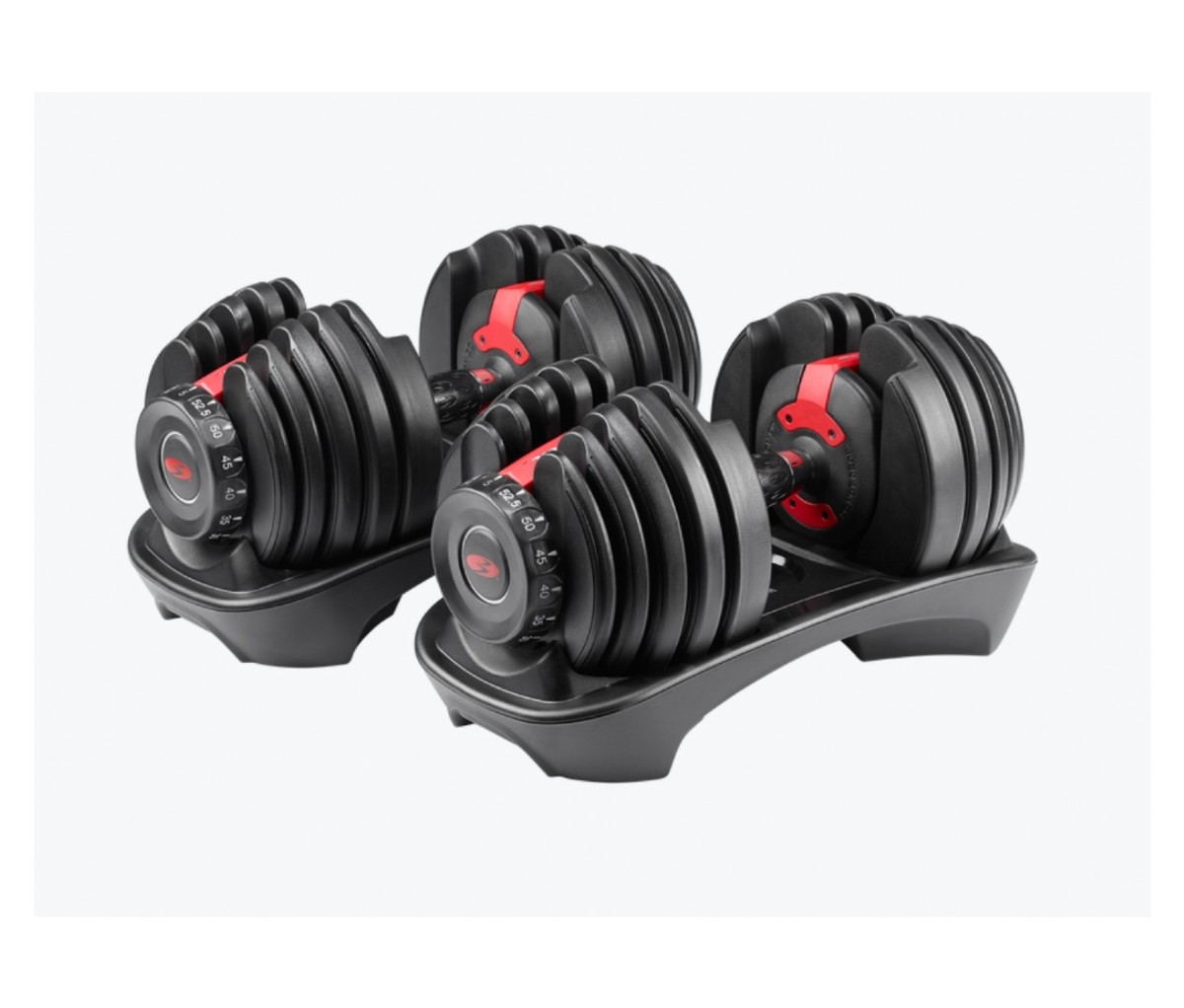
1. Bowflex SelectTech 552 Adjustable Dumbbells

You can adjust these dumbbells to 15 different weights, ranging from 5 to 52.5 pounds. They use a dial for quick maneuvering between weights, making them easy to adjust if you need to add or drop weight between sets. The wide weight range makes them suitable for both beginners and experienced lifters. Also, adjustable dumbbells save space by not cluttering your workout area.

[$429; bowflex.com]

Get it
Rubber-coated hex dumbbell on a white background.
Courtesy Image

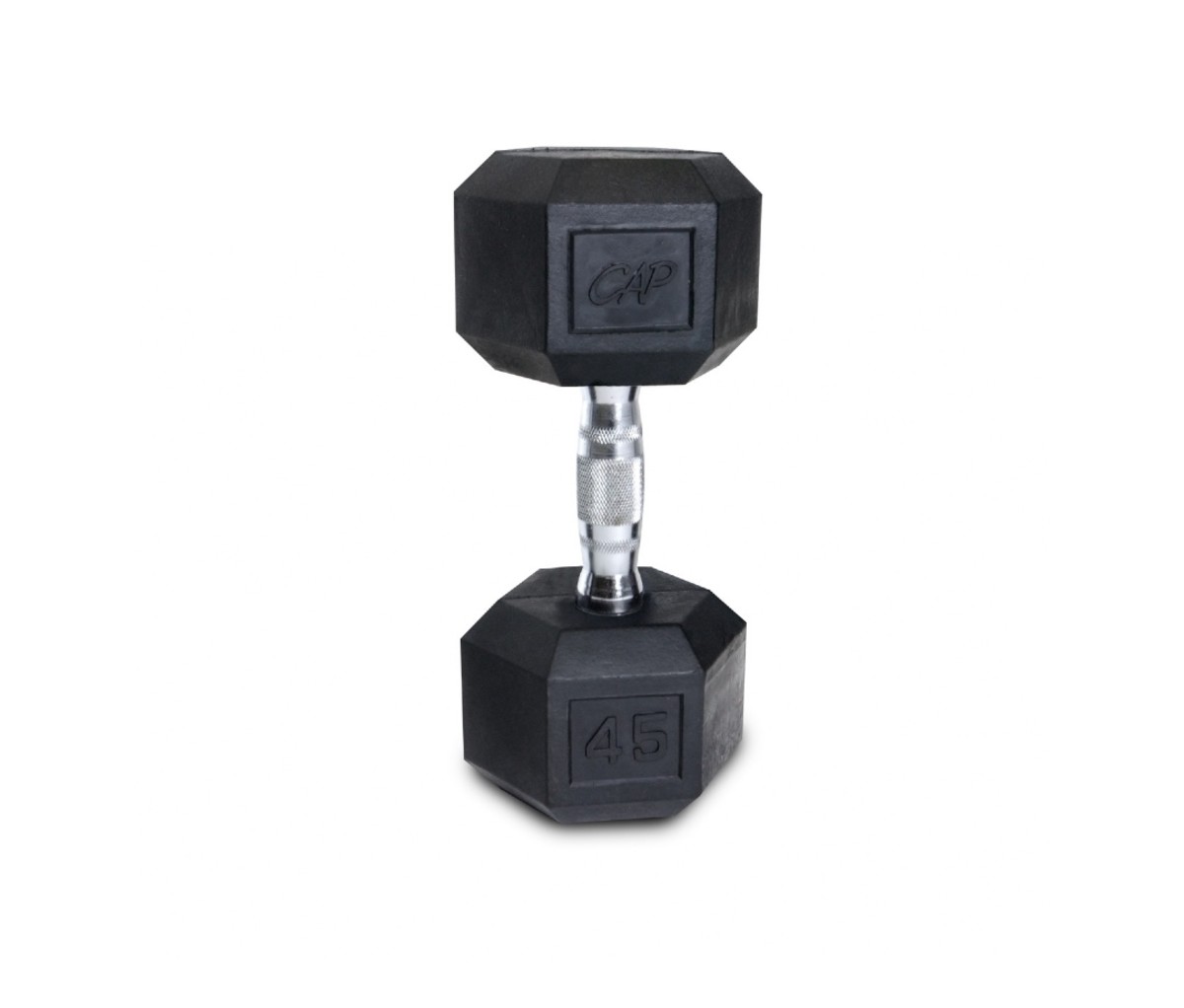
2. CAP Coated Hex Dumbbells

Anyone who’s spent time in a gym has likely seen a CAP dumbbell. It’s a solid piece of workout equipment with knurled steel handles and a chrome finish for a non-slip grip. The hexagonal shape means they won’t roll away on you, and the polypropylene material won’t damage your floor when you set them down, making them an excellent option for home gyms.

[From $10; capbarbells.com]

Get it
3. Flybird Adjustable Dumbbells
Similar to the Bowflex 552 dumbbells, these are simple to adjust (simply twist the handle) and toggle between 5 to 25 pounds to save on space. Even better, they’ll save you money with their affordable price. If you’re looking to pump some iron without a significant investment, Flybird’s adjustable dumbbells are a good option. [From $260; flybirdfitness.com] Courtesy Image
4. Core Fitness Adjustable Dumbbell Set
What sets these adjustable dumbbells apart is their high-quality grip and rock-solid cradle for holding the dumbbells. The weights range from 5 to 50 pounds, making them accessible to lifters of any fitness level. Adjusting the weight is straightforward; just twist the handles to your desired weight. This makes it easy to switch weights between sets and exercises. [$400; corehomefitness.com] Courtesy Image
5. RitFit Rubber Hex Dumbbell Set
When you buy a set of dumbbells for your home gym, you want them to be durable and last for years. With RitFit’s rubber dumbbells, that’s what you get. Their ergonomic cast-iron handles provide superb grip to help you get a serious pump, while their hexagonal shape and rubber design prevent damage to floors. [From $70; ritfitsports.com] Courtesy Image
6. Amazon Basics Neoprene Coated Dumbbell Hand Weight Set
These are an excellent option for beginners since they come in three sets of lightweight dumbbells that are neoprene-coated, making them easy on the hands. They also come with a bonus weight rack to store the dumbbells and not clutter up your space, all at an affordable price that won’t break the bank. [$80; amazon.com] Courtesy Image
7. Papababe Dumbbell Set with Rack
Another great dumbbell set for beginners, this includes five pairs of lightweight rubber dumbbells, including 5, 10, 15, 20, and 25 pounds. Though they’re not adjustable, the set comes with a rack for easy storage. Also, having multiple sets of dumbbells allows more than one person to work out at a time so you and your partner or a friend can lift together. [$400; amazon.com] Courtesy Image
8. CAP Cast Iron Hex Dumbbells
If you want to talk about durability, you’d be hard-pressed to find a more solid set of dumbbells than these cast-iron hex dumbbells. They have various weight options available on Amazon, ranging from 5 to 25 pounds. These dumbbells can take a beating and will last years. [From $17; capbarbell.com] Courtesy Image
9. Balelinko Adjustable Steel Chrome-Finish Dumbbells
Made from a steel alloy with an appealing polished chrome finish, these highly durable dumbbells (cut as a solid piece of steel) are tough yet sleek. Adjusting them takes a bit more time than other adjustable dumbbells. Still, each dumbbell can be tweaked to suit your desired resistance (ranging from 10 to 40 pounds), allowing you to ramp up the intensity of your workouts as needed. [$110; amazon.com] Courtesy Image


from Men's Journal https://ift.tt/m9xMIkb
via

Tuesday, November 22, 2022

Progressing the Deadlift: A Beginner to Expert Level Guide

The deadlift is the most fundamental yet technical lift performed by the human body.

from Bodybuilding.com Articles https://ift.tt/8FRwcpb
via IFTTT

Monday, November 21, 2022

Mens Journal

Does the term “hypertrophy back workout” make your eyes glaze over? It might sound complicated or obscure, but hypertrophy training is actually an old-school, tried-and-true method for making your muscles grow. Put simply, it means working out with the goal of making your muscles increase in size, and it works best when directed at specific muscle groups in focused workouts. In the back hypertrophy workout below, I’ve applied this method to the back muscles. (When you’re ready for more, check out these hypertrophy leg, arm, chest, and shoulder routines, too.)

Hypertrophy 101

Any hypertrophy routine requires three key factors in order to deliver gains:

  1. Volume: This refers to the total number of sets (and cumulative reps) of work the muscle is exposed to in a workout or across several workouts.
  2. Intensity: The amount of loading a muscle takes on.
  3. Mechanical Tension: This refers to the muscle spending time under tension throughout its functional range of motion. Doing that requires looking closely at the muscle’s action within the body and prioritizing exercises that challenge the muscle through as much of its range of motion as possible.

For most lifters with a decent fitness baseline, the best way to achieve hypertrophy benefits is to zero in on different body regions one workout at a time. Of course, this is known as isolation training. Using isolation training methods to favor one group of muscles in a given workout allows you to spend your entire time in the gym giving that muscle group a serious pump.

When done correctly, and supplemented with a healthy, protein-rich diet complete with a caloric surplus (i.e. consuming more calories than you burn while working out), the body will respond by making that muscle group grow. Below, I’ve applied this method to the back. Read on for the best hypertrophy back workout to add to your workout regimen.

Shoulder Workouts: The 50 Best Shoulder Exercises of All Time

50 Best Shoulder Exercises of All Time

Build bigger, broader shoulders with these essential upper-body moves.
Read article

How to Work Your Back Muscles

The back comprises multiple muscles, so there are many angles and directions you can use to target different parts of the back. That said, most experts agree that targeting the back as a whole requires mostly pulling movements. With that in mind, it’s important to remember that pulling exercises involve grip strength and can fatigue the forearms and biceps as a result. This workout is designed to avoid over-fatiguing the arms and hands before the back gets a chance to put in some real work.

The Best Hypertrophy Back Workout

  • A. Pullups x Max reps (5 sets): Rest as long as needed between sets.
  • Perform B1 and B2 as a superset for 4 rounds. Rest as long as needed between sets.
  • B1. V-Grip Pulldown x 8
  • B2. Chest-Supported Reverse Flye x 12: Lie down on an incline bench with your chest facing the floor (your chest should be on the higher side of the bench). Grab two dumbbells; hold them straight down below you. Bend your elbows slightly and retract your shoulder blades, squeezing them as you pull the weights upward and out in an arc on either side. Keep your elbows slightly bent throughout the movement, and finish with your elbows higher than your hands. See here for a video demo.
  • Perform C1 and C2 as a superset for 4 rounds. Rest 2 minutes between rounds.
  • C1. Dumbbell Face Pull x 12
  • C2. Cobra Pulldown x 10 (each arm): Set up an incline bench in line with a high cable pulley. Lie down on your side on the bench with your head closest to the pulley. Wrap your lower arm underneath the bench for stability. With your top arm, hold the cable and perform a single-arm “pulldown” pattern. The added stretch and force angles will isolate and work the lats. Plus, you’ll have the freedom to rotate your wrist and adjust your elbow position for the best hit.
  • D. Suicide Row x 10-12 (3 sets): This movement will serve as a perfect finisher for not only your back, but your entire posterior chain. Get set up with a fixed barbell or EZ bar and a horizontal back extension machine. Position yourself in the machine while holding the bar with an underhand grip at arms’ length in a full hang. While holding the weight at arms’ length, bring your torso upward, hinging at the waist. Once your back is parallel to the floor, immediately row the weight up to the ribcage. Lower your torso back down, bring the weight back to the floor, and repeat. It should be a real burner, so rest as long as needed between sets.
Actor Chris Hemsworth kneeling on a workout bench doing bentover row with dumbbell.

How Chris Hemsworth Got Even More Jacked for 'Extraction 2'

Read article


from Men's Journal https://ift.tt/lObZQ2I
via

Friday, November 18, 2022

Building a Recovery Toolkit: 3 Passive Recovery Methods to Add to Your Routine

Recovery is just as important when it comes to reaching your goals

from Bodybuilding.com Articles https://ift.tt/apHPS6F
via IFTTT

Wednesday, November 16, 2022

Mens Journal

If you’re looking for an effective weightlifting exercise to strengthen your back, legs, or the entire backside of your body (aka your posterior chain), look no further than good mornings (also known as “hip hinges”). Good mornings in a workout are entirely underrated. The move works great as a bodyweight exercise to warm up before doing compound lifts, like squats, deadlifts, and bentover rows. Alternatively, you can load a barbell with some plates and give good mornings dedicated time in your back or leg day session.

However you choose to include good mornings in your workout routine, it’s critical first to understand what they are, their benefits, and how to execute them with proper form to avoid injury. Fortunately, we’ve got you covered below. Plus, we give some variations of good mornings to keep the exercise fresh and exciting until they become a staple in your workout.

What Are Good Mornings

Good mornings are a weight-bearing exercise resembling something between a deadlift and a squat. They activate several muscle groups, including the hamstrings, glutes, calves, upper back, lower back, and core. While you can use good mornings to build strength and muscle, they’re not strictly a strength exercise like traditional muscle-building lifts since they improve hip mobility and flexibility. Also, using too much weight with good mornings can strain the lower back, so don’t expect to load the bar with a ton of weight when doing them.

Barbell good morning
James Michelfelder

How to do Good Mornings Exercise

To get started, place a barbell loaded with the appropriate weight across your upper back/shoulders like you would for a back squat. Consider using an empty barbell until you perfect the movement with proper form, then add weight as needed. Stand with your feet shoulder-width apart and knees slightly bent. Inhale while engaging your core, then, hinge your hips by sending your butt back and leaning your upper body forward until it’s nearly parallel with the ground. Next, exhale and reverse the movement to return to standing position. That’s one rep. Remember to keep your back straight and core engaged throughout the entire movement.

Do 3 x 10–12 reps with 1-min. rest between sets. Be sure to use a weight that allows you to maintain good technique with each rep.

Athletic man wearing gray T-shirt and maroon shorts doing renegade row with dumbbell

Best Time-Under-Tension Workout for Total-Body Strength

Read article

Benefits of Good Mornings

Once you hear the many benefits that good mornings deliver, adding them to your strength-training program is a no-brainer. Since good mornings engage various muscle groups, they’re an excellent way to improve leg, hip, and back strength and hip mobility. For example, good mornings target your hamstrings primarily, but they also work your glutes and adductor magnus (inner thigh) by engaging them as synergists (meaning they help provide movement). Other muscles activated during good mornings include your erector spinae (which runs the entire length of your spine), lower back muscles, and abdominal muscles. As a result, good mornings can increase your overall back and leg strength when done with the correct technique.

Good mornings can also boost your hip-hinging form by increasing hip extension and mobility, allowing for enhanced performance for other hip-hinging lifts, such as deadlifts, squats, barbell snatches, and kettlebell swings. Additionally, good mornings can improve your posture by strengthening the muscles along your spine. Good posture minimizes strain placed on your body, improves balance, helps you breathe better, and enhances your ability to do everyday activities.

One of the hamstring exercises is the “Good Morning”, it is done by holding two dumbbells or looping a band around your shoulders and under your feet.
Banded Good Morning Beth Bischoff

Good Morning Variations

Unlike other traditional weightlifting exercises, there are several variations of good mornings, allowing people at any skill or fitness level to perform them. Once you’ve mastered the basics of doing good mornings with a barbell, consider switching things up and trying the following variations. Aim for 8 to 12 reps.

1. Dumbbell good mornings: This is a nice variation for beginners or those with back or shoulder issues since there’s less strain on your lower back and no barbell resting across your shoulders. Instead of a barbell, use lightweight dumbbells and do the exercise as described above while holding them in front of you, allowing your arms to hang.

2. Resistance band good mornings: Another excellent variation for beginners as no weights are required. Stand on one end of a resistance band with both feet, then wrap the other end around the base of your neck. Go through the full range of motion, working against the band’s resistance to strengthen your back and legs. Use a band with lower resistance to avoid excess strain and injury and to maintain good technique.

Gym Equipment

Gym Machines You Should Never Use and Their Safer Alternatives

Read article

3. Single-leg barbell good mornings: This variation is for more advanced exercisers looking to make the traditional good morning more challenging. Perform the movement as described above, except using one leg. Doing so requires greater strength, balance, stability, and focus. If you try this one, be sure to lower the weight so you can maintain proper form and reduce your risk of injury.

4. Chest-loaded kettlebell good mornings (shown above): This cues the body to engage the core and maintain a neutral spine while hinging at the hips. Stand with feet hip-width apart, holding a kettlebell against your sternum. Maintaining a tall, neutral spine, shoulders back, and soft knees, hinge at the hips, keeping shoulders above hips. Reverse the movement by activating hamstrings and thrusting hips forward, fully extending the hips and squeezing your glutes to end the rep.

5. Switch up your stance: It may sound minor, but little tweaks like changing your stance can provide good variations to many exercises. When adding good mornings to your workout, shift your feet in for a narrow stance to target your hamstrings on some days, or adopt a wider stance to work your glutes more.


from Men's Journal https://ift.tt/r5NSqa8
via

Mens Journal

Looking to build muscle? You need to get to know hypertrophy training. Put simply, hypertrophy training is focused on making muscles grow larger, and it works best when directed at specific muscle groups. Read on to learn more about how to apply this technique to the upper body in a hypertrophy shoulder workout. (And when you’re ready for more, check out our hypertrophy leg, arm, and chest routines, too.)

Hypertrophy 101

Any hypertrophy routine requires three key factors in order to deliver gains:

  1. Volume: This refers to the total number of sets (and cumulative reps) of work the muscle is exposed to in a workout or across several workouts.
  2. Intensity: The amount of loading a muscle takes on.
  3. Mechanical Tension: This refers to the muscle spending time under tension throughout its functional range of motion. Doing that requires looking closely at the muscle’s action within the body and prioritizing exercises that challenge the muscle through as much of its range of motion as possible.

For most lifters with a decent fitness baseline, the best way to achieve hypertrophy benefits is to zero in on different body regions one workout at a time. Of course, this is better known as isolation training. Using isolation training methods to favor one group of muscles in a given workout allows you to spend your entire time in the gym giving that muscle group a serious pump.

When done correctly, and supplemented with a healthy, protein-rich diet complete with a caloric surplus (i.e. consuming more calories than you burn while working out), the body will respond by making that muscle group grow. Below, I’ve applied this method to the shoulders. Read on for the best hypertrophy shoulder workout to add to your workout regimen.

rings

50 Best Chest Exercises of All Time

If you're looking for brute strength and pecs that pop, these moves should be in your training regim...
Read article

Working Your Shoulder Muscles

Similar to many other large muscle groups, the deltoids (shoulders) are actually divided into three major sections: The front deltoids, medial deltoids, and rear deltoids. In addition, depending on the movement chosen to hit them, there’s a high likelihood the upper traps will be involved as a synergistic muscle group in the exercise. Long story short: You probably won’t get developed shoulders without some trap development, too.

The Best Hypertrophy Shoulder Workout

  • A. Barbell Strict Press x 5 (3 sets): This is a tried and true staple in most shoulder training programs. Usually, this lift enables a lifter to move their heaviest load for low reps. Though this is a shoulder-dominant movement pattern, it’s less isolated. For that reason, it’s a great way to load up and prime your nervous system for the more isolated shoulder exercises to come. Rest 2 minutes between sets.
  • Perform B1 and B2 as a superset for 3 rounds. Rest 2 minutes between rounds.
  • B1. Barbell High Pull x 3: To hammer the traps and mid-delts, use a shoulder-width grip and start the movement off by creating thrust with the lower body (you can “hike” the bar upward with a quarter-hinge start position). Pull the bar straight up to neck level with the hands in one motion; your elbows should be higher than your hands and pointed behind you/to the side at the top of the move. Let the bar return to the pins or blocks, take a second to reset, and perform your next rep.
  • B2. Dumbbell Seated Lateral Raise x 12: This part of the superset will take the traps out of the picture and focus on the medial and rear deltoids. Maintain a forward lean in your seat while performing these so the torso faces downward, not upright.
  • C. Bentover Reverse Flye (reverse grip) x 15 (3 sets): Turning the palms around from the typical pronated grip hits the rear deltoids via their small role in the rotation of the upper arm. This helps them get a little extra squeeze at the end of each rep. Plus, it’s harder to cheat your range of motion when the palms are turned away like this. Be sure to use lighter weights and really search for the isolation of your rear deltoids and upper back with each rep.
  • D. Seated Dumbbell Shoulder Press x 4 Ladder Sets: A ladder set is a great way to go beyond what you could normally lift for a set number of reps. To do these, select dumbbells that you could shoulder press for sets of 12 to 15 reps. Perform 2 reps. Rest for 10 seconds, then immediately perform 3 reps. Rest again for 10 seconds, and then perform 5 reps. Finally, rest for 10 more seconds, and then perform 10 reps. Using this method, you’ll perform 20 reps with your 12-rep weight—and your muscles should be screaming from the effort. Rest as long as needed between ladder sets.
Man doing single-leg glute bridges in field

35 Best Glute Exercises of All Time

Read article


from Men's Journal https://ift.tt/1fzgZaw
via

Tuesday, November 15, 2022

Mens Journal

Have you ever noticed the way older people get sick more often? That’s due to an aging immune system, which can’t fend off bugs the way spring chickens can. Now, a new study suggests stress can dramatically age your immune system, leaving maxed-out people at higher risk of illness.

“Adults who reported chronic ongoing stressors, major life trauma, and stressful life events tended to have cell percentages that indicated more immune aging,” says lead study author Eric Klopack at the University of Southern California Leonard Davis School of Gerontology in Los Angeles.

9 Tips to Boost Your Immune System

How to Boost Your Immune System Before, During, and After Travel

Read article

There are two possible ways stress causes your immune system to age, says Klopack. The first is by leading to unhealthy behaviors like poor diet, which can shrink your thymus, an organ responsible for the growth of T cells (important for immune functioning). The second is that stress can activate a particular virus (cytomegalovirus or CMV) in the body that damages the immune system.

Tea, ginger, pork, and herbs

These 13 Immunity-Boosting Foods will Supercharge Your Body for Cold and Flu Sea...

Flu season is upon us, stay safe out there by taking in these 13 valuable, nutrient-rich foods.
Read article

“Since avoiding stress is often impossible, building up resilience and coping tools might be useful. A a strong social support network can help reduce the health risks associated with stress.”


from Men's Journal https://ift.tt/phNidxv
via

Mens Journal

Want to give your gut health a boost? Take a page out of Homer Simpson’s book and grab a cold one. Beer and the gut microbiome might not seem like they’d have a symbiotic relationship, but drinking one brew every night for four weeks straight was found to increase the diversity of gut bacteria and improve intestinal function, according to a report in the Journal of Agriculture and Food Science.

Gut bacteria is big news these days, as research shows it’s associated with everything from greater immunity (good gut bacteria) to heart disease (bad gut bacteria).

Beer of the Week 111122

Best Beers You Should Be Drinking Now

Read article

The current study, which split men into two groups, found both alcoholic and non-alcoholic lager yielded positive results for the microbiome. More important than alcohol content, it turns out, is the color of your beer.

The darker the beer, the better it is for your microbiome. That’s due to a higher concentration of something called polyphenols—compounds researchers credit with giving beer its gut-enhancing, health-fortifying benefits.


from Men's Journal https://ift.tt/HQuxc7g
via

Bulking VS. Cutting: Get Familiar with the Basics.

You’ve been crushing it in the gym. Your relentless pursuit has yielded big successes. How to maximize those gains and fine tune your body can feel like a complex scientific formula or math equation. That’s where we come in– we’ve done the homework for you.

from Bodybuilding.com Articles https://ift.tt/q7PmkOa
via IFTTT

Monday, November 14, 2022

Mens Journal

For most lifters, building muscle is a key goal, if not the main goal, of putting in work in the gym. If you want to build muscle, you’d better get to know hypertrophy training. Put simply, hypertrophy training focuses on making muscles grow, and a solid hypertrophy arm workout deserves a slot in your gym rotation (along with leg and chest hypertrophy workouts).

Hypertrophy 101

Any hypertrophy routine requires three key factors in order to deliver gains:

  1. Volume: This refers to the total number of sets (and cumulative reps) of work the muscle is exposed to in a workout or across several workouts.
  2. Intensity: The amount of loading a muscle takes on.
  3. Mechanical Tension: This refers to the muscle spending time under tension throughout its functional range of motion. Doing that requires looking closely at the muscle’s action within the body and prioritizing exercises that challenge the muscle through as much of its range of motion as possible.

For most lifters with a decent fitness baseline, the best way to achieve hypertrophy benefits is to zero in on different body regions one workout at a time. Of course, this is better known as isolation training. Using isolation training methods to favor one group of muscles in a given workout allows you to spend your entire time in the gym giving that muscle group a serious pump.

When done correctly, and supplemented with a healthy, protein-rich diet complete with a caloric surplus (i.e. consuming more calories than you burn while working out), the body will respond by making that muscle group grow. Below, I’ve applied this method to the arms. Read on for the best hypertrophy arm workout to add to your workout regimen.

About the Arms

The two main arm muscles, the biceps and triceps, each contain multiple muscle heads. As their names imply, the biceps are a two-headed muscle and the triceps are a three-headed muscle. Because of their anatomies, it’s essential to hit them from multiple angles using different forces and grip variations. That way, you’ll properly access and fatigue the entire muscle across all its heads, rather than biasing only one part of the muscle over and over. That’s why this workout includes some serious variety—it promotes holistic growth of both the biceps and triceps.

Sam Heughan Military Plank

6 Fitness Tests You Should Be Able to Pass

Read article

The Best Hypertrophy Arm Workout

  • Perform A1 and A2 as a superset for 4 rounds. Rest 2 minutes between rounds. If chinups aren’t much of a challenge for you, add resistance by wearing a weight belt.
  • A1. Close-grip Chinup x Max reps
  • A2. Dip x Max reps
  • Perform B1 and B2 as a superset for 4 rounds. Rest 90 seconds between rounds.
  • B1. Hammer Curl x 10: The hammer curl uses a neutral grip rather than the supinated grip classic curls ask for. This allows better access to the muscles of the forearms and a deep upper-arm muscle called the brachialis. Working these muscles can help fill out the circumference of the upper arm.
  • B2. Dumbbell Overhead Triceps Extension x 12: The overhead triceps extension is an old-school movement that hits the long heads of the triceps muscle. To do this move properly and avoid aggravating the shoulders, hold the dumbbell with flat palms underneath the weight and slide forward in your upright seat while keeping the upper back in contact with the backrest. Aim for a deep bend in the elbows by letting the weight pull the triceps into a nice stretch at the bottom of the move. It’s OK if the elbows flare outward a bit to allow this.
  • Perform C1 and C2 as a superset for 3 rounds. Rest 1 minute between rounds.
  • C1. Straight-bar Biceps Curl x 10
  • C2. EZ-bar Skull Crusher x 10
  • Finisher: Perform D1 and D2 as a superset (2 rounds) with no rest between rounds.
  • D1. Band-resisted Biceps Curl x 30 seconds: Use a lighter resistance band so you can achieve high reps within the allotted time.
  • D2. Close-grip Pushup x 30 seconds
Actor Chris Hemsworth kneeling on a workout bench doing bentover row with dumbbell.

How Chris Hemsworth Got Even More Jacked for 'Extraction 2'

Read article


from Men's Journal https://ift.tt/n4vzB9S
via

Thursday, November 10, 2022

Mens Journal

Any trainer who’s been working with the same action megastar for 16 films over the span of a decade is well-attuned to the finer points of body sculpting and stretching limits for a huge role. This is especially true when that client embodies the Thor and Extraction franchises, and now National Geographic’s Limitless with Chris Hemsworth—a series that explores how to reach (or even surpass) one’s physical potential. Naturally, the Chris Hemsworth workout has evolved over the years to continually break fitness plateaus.

“One of the best parts of getting to work with someone like Chris who’s constantly trying to push his limits is that I’m constantly pushing my own,” says Luke Zocchi, the actor’s longtime trainer and co-founder of Centr, a fitness app modeled after the training Hemsworth has done for major film projects.

“I feel like we’re always learning new ways to become better both in the gym and outside of it,” adds Zocchi.

Celeb workouts

The 10 Most Popular Celebrity Workouts of All Time

From Zac Efron's beach-ready 'Baywatch' workout to Henry Cavill's 'Superman' training plan, these ar...
Read article

Centr’s grueling workouts offer Hemsworth fans a window into the actor’s prep work to become Thor and now Extraction 2‘s badass mercenary Tyler Rake. Of course, there’s a caveat. “People ask me all the time how they can get arms like Chris,” says Zocchi. “Having his genetics doesn’t hurt.”

If you’re adamant to get there as quickly as possible, Centr’s “Power” routine was designed around the regimen done specifically for Thor.

“We’re always creating new ideas and developing exercises to add to what’s already on there,” says Zocchi.

The following Centr-based workout, designed for Hemsworth’s Extraction 2 transformation, is meant to develop lean muscle mass and build up aerobic capacity. Good luck…

Daniel Craig training for 'No Time to Die'

Daniel Craig's 'No Time to Die' Strength and Conditioning Workout

Read article

Directions: Perform the first group of 5 exercises (1A-1E) as a circuit. Repeat 3x. Next, perform the following exercises in succession. The majority of people won’t be able to do all the reps in one go, so once you hit your limit, take a brief rest before starting again, repeating until you’ve completed all the reps. For extra credit, finish the workout with 3×3-min. rounds of shadow boxing with a minute break between each.

The Workout That Got Chris Hemsworth Even More Jacked for ‘Extraction 2’

1A. Assault Bike x 100 cals

1B. Bear Crawl x 5 meters

How to do it: Start in an all-fours position with your knees slightly off the ground and bent at a 90-degree angle. Keep your back straight, your arms below your shoulders, and legs hip-width apart. Start moving forward by placing one hand and one foot an equal distance ahead of you while maintaining the same distance from the ground. Continue moving forward by doing the same with your opposite hand and foot. Keep up this process, alternating sides, until you reach the determined distance.

1C. Pushup x 5 reps

How to do it: Start in a plank position with your hands just a touch wider than shoulder-length. Begin the exercise by bringing your elbows backwards slowly until your chest almost touches the ground. Hold for a moment, before pushing back into the ground through your hands, returning to the high plank position. Keep your core engaged and your back straight during the whole movement.

Bomer

Best Workout Motivation and Advice: The Most Inspiring Celebrity Mantras of All ...

Read article

1D. Bodyweight Squat x 5 reps

How to do it: Start by standing straight up with your feet shoulder-width apart and your arms by your sides. Keeping your chest out and face pointed forward, begin the exercise by bending your knees as if you are sitting down into a chair. Keep going until your knees are bent at a 90-degree angle and hold for a brief moment before returning to the starting position. For balance, you can use your arms by bending at the elbows as you go down, bringing your hands to your chest.

1E. Kick Sits x 10 reps

How to do it: Start in an all-fours position with your hands below your shoulders and knees below your hips, a few inches off the ground. Begin the exercise by shifting the majority of your upper body weight onto your left hand and lower body weight onto the right foot. Engage your core and kick your left leg out to the right side as you rotate your torso to face the right. Keep your left hip close to the ground and swing your right arm out for balance, keeping it straight. Hold for a brief moment and then return to the starting position. Repeat for the opposite side.

2. Chinup x 50 reps

How to do it: Stand below the chin-up bar and grab it in an underhand grip, with your palms shoulder-width apart facing towards you. The starting position is hanging on the bar with your arms extended, but not to the point of being uncomfortable. Keeping your core engaged and chest out, bring your bodyweight up until your chin is just above the bar. Hold for a brief moment and then lower yourself back down in a controlled manner by straightening your arms, but keeping your feet off the ground. Repeat for the given amount of reps.

Mandatory Credit: Photo by Erik Pendzich/Shutterstock (9754318h) Dwayne Johnson 'Skyscraper' film premiere, New York, USA - 10 Jul 2018

15 Times Dwayne 'The Rock' Johnson Dominated Instagram With His Workouts

The 'Rampage' and 'Jumanji' actor has been crushing it in the gym. Here are the massive results of h...
Read article

3. Curl and Press x 50 reps

How to do it: Start by grabbing a pair of dumbbells, holding them with your arms down and your palms facing outward. Begin the exercise by curling the dumbbells up to your shoulders. Next rotate your palms outwards and your elbows out into a pressing position. Press the dumbbells upwards until your arms are straight but not locked out. Hold for a brief moment and then reverse the movements until you are back in the starting position. Repeat for the given amount of reps.

4. Cable Triceps Push Down x 50 reps

How to do it: Start by standing in front of the cable machine with the handlebar hanging at your chest. Keeping your upper arms straight and tucked at your sides, bend your elbows to grab onto the handlebar. Start the exercise by pushing down until your arms are extended downward but not locked out. Hold the weight there for a brief moment before returning to the starting position. Repeat for the given amount of reps.

5. Bodyweight  Bulgarian Split Squat x 50 reps each side

How to do it: Start by standing in front of a bench with your back towards it. Keeping your feet shoulder-width apart, bring your left leg directly back and place your left foot on the bench. This should be a position in which you are able to lunge. Keep your back straight and shoulders wide as you lower your weight onto your right leg, going straight down without your knees passing over your toes. Go until your thighs are lateral to the ground. Hold for a brief moment before returning to the starting position. Repeat for the given amount of reps.

6. Medicine Ball Situp x 100 reps

How to do it: Start by lying down on your back with your knees bent at a 90-degree angle so your feet can be flat on the ground. Keep your spine straight and your hips touching the floor. Grab a medicine ball with significant weight and use both hands to keep it against your chest. Begin the exercise by doing the movement of a traditional sit-up, bringing your torso up until it’s lateral to the ground, but keeping the medicine ball to your chest. Hold for a brief moment and then return to the starting position. Repeat for the given amount of reps.

For more training from Luke check out the Centr app here.


from Men's Journal https://ift.tt/Fwz8P9r
via