Lose weight without hating yourself.
from Bodybuilding.com Articles https://ift.tt/xifDLQ0
via IFTTT
Tuesday, February 28, 2023

If It Fits Your Macros (IIFYM) Basics
Open up your eating options while hitting your weight loss goals
from Bodybuilding.com Articles https://ift.tt/aQ1tdiT
via IFTTT
from Bodybuilding.com Articles https://ift.tt/aQ1tdiT
via IFTTT
What are Electrolytes? Why are they Actually Important?
They’re for more than just hydration.
from Bodybuilding.com Articles https://ift.tt/cURJCWe
via IFTTT
from Bodybuilding.com Articles https://ift.tt/cURJCWe
via IFTTT
Thursday, February 23, 2023
Mens Journal
For those who’ve served in the United States military, the expression ‘own it’ is a cultural touchstone that encapsulates a valuable mindset. But the idea behind the phrase isn’t exclusive to the armed forces; it’s a universal principle that can benefit anyone striving for success. It means assessing the situation and accepting responsibility for your actions without shifting blame.
The question then becomes: What does it take to own it? The answer lies in self-accountability, self-discipline, and self-motivation—or what experts call intrinsic motivation. Whether you’re an entrepreneur, a student, or a professional seeking advancement, owning it is essential.

Each person strives to achieve their definition of success, but it’s often challenging to navigate. The foundation of this journey lies in two essential components: accountability and self-discipline. These factors are paramount to taking responsibility for your actions, making the right choices, and staying focused on your goals.
At its core, accountability is recognizing that you’re in control of your life. It means owning your decisions and actions, whether they succeed or fail. This practice also fosters strong self-awareness, allowing you to identify, analyze, and learn from your mistakes. This approach minimizes the likelihood of repeating past errors, and this level of honesty helps build trust with others.
Self-discipline is a prerequisite to owning it. It involves regulating your behavior based on intrinsic motivations rather than external influences. Sticking with your goals and always doing the right thing, even when nobody’s around, are hallmarks of self-discipline. This practice lets you maintain focus even when distractions and challenges arise.
While owning it is an approach that can be challenging to adopt, the rewards are undeniable. You can take control of your life, make better decisions, and ultimately achieve success.

Intrinsic vs. extrinsic motivation
Motivation is the propelling force that drives us toward our goals and fuels our aspirations. Psychologists have identified two primary types: extrinsic and intrinsic motivation.
Extrinsic motivation relies on external rewards or punishments to encourage a desired action, behavior, or outcome. For instance, a child is motivated to perform well in school with the promise of a good grade or avoid a chore at home to evade punishment. However, the downside is that it causes individuals to focus on the outcome rather than the process.
In contrast, intrinsic motivation relies on internal factors such as enjoyment, interest, and personal growth to elicit an action. An example of intrinsic motivation is a child performing well in a particular class because of their genuine interest in the subject. Intrinsically motivated individuals engage in activities because they find them profoundly satisfying or meaningful. This type of motivation is associated with higher creativity, engagement, and persistence.
The differences between the two are significant. Extrinsic motivation fades once the leverage is removed and is inconsistent, unpredictable, and unreliable. Intrinsic motivation, on the other hand, is self-sustaining, long-lasting, and more fulfilling since it aligns with our values, interests, and purpose. Some people possess natural intrinsic motivation, while others develop it over time. Here are seven tips for cultivating and nurturing intrinsic motivation:

- Identify your passion: What excites and energizes you? While it may be a hobby, a skill, or a career path, pursuing it will motivate you and leave you deeply satisfied.
- Set meaningful goals: Establish challenging yet achievable goals that align with your passion, values, and purpose. Make sure these goals are personally meaningful and you clearly understand why you want to achieve them.
- Focus on the process: Rather than fixating on the outcome, focus on learning and growing. Enjoy the journey and embrace the idea that obstacles and failure are opportunities to improve your abilities and skills.
- Practice autonomy: When you control your choices, decisions, and actions, you’re more likely to be motivated and engaged. Seek opportunities to exercise control over your environment, such as choosing projects, setting deadlines, or designing routines.
- Celebrate progress: While small wins may feel insignificant, together they result in massive victories. Celebrating your progress and milestones can keep you motivated and engaged. Although Rome wasn’t built in a day, it became the center of one of the world’s greatest civilizations and helped sustain the Roman Empire for more than 1,000 years.
- Build positive relationships: Surround yourself with people who support, encourage, and inspire you. Positive relationships can enhance motivation, confidence, and self-esteem, providing valuable feedback and guidance.
- Cultivate curiosity: Curiosity is a powerful intrinsic motivator. You’re more likely to explore, experiment, and learn when curious about something. Ask questions, seek new experiences, and be open to different perspectives.
At its core, owning it is about seizing the reins of your life and assuming responsibility for your destiny. By embracing the challenges, opportunities, and uncertainties that come your way, you can shape your future and attain success in all areas of your life. Americans have long valued the principles of self-reliance, hard work, and personal responsibility. Developing a sense of intrinsic motivation allows you to carry that torch forward, fueling the eternal flame of our nation’s proud tradition. It’s up to you to unlock your full potential, achieve your goals, and pave the way for a brighter future.
So, the question is, are you ready to own it?
from Men's Journal https://ift.tt/UQNFBMS
via
Wednesday, February 22, 2023
Mens Journal
“Life moves pretty fast. If you don’t stop and look around once in a while, you could miss it.”
Nearly four decades later, this famous Ferris Bueller quote is even more relevant today. From TikTok to Tubi, there are literally millions of apps, websites, and channels jockeying for our attention—and that’s just in the digital space. Cultivating mindfulness can feel like an uphill battle, but the same technology that drives us to distraction can also bring us back into focus. Thanks to mindfulness and meditation apps, integrating mindfulness techniques into daily life is easier than ever before.
Why Is Mindfulness Important?
Of course, it’s important to understand why mindfulness is beneficial to your mental health in the first place.
“There’s a tendency to live on autopilot or feel as though you’re going through the motions of daily life,” Julia Colagelo, D.S.W., L.C.S.W., a professor and researcher specializes in flow and mindfulness at Columbia University, tells Men’s Journal. “The practice of mindfulness allows you to be here now, connect to the present moment, and bring awareness to whatever you’re moving through, non-judgmentally.”
Spending hours scrolling aimlessly doesn’t just waste time, it disconnects people from their own emotions and feelings. Getting off this autonomous treadmill isn’t easy, but Colagelo suggests experimenting with a variety of digital strategies, like setting up mindfulness alerts on your phone or reorganizing apps on your phone’s home screen to trick your brain.
“People click on their social media apps without thinking twice,” says Colagelo. “Now imagine replacing that [social media app] placement on your phone with an app that can encourage self-care and increase mindfulness.”

How Mindfulness and Meditation Apps Can Help
Tricking your internal autopilot system through app reorganization is a clever way to break the cycle of app-based distraction, but it’s only a temporary first step. To keep yourself from reverting back to old habits, investing in a quality mindfulness or meditation app can be especially effective. For most people, these apps are a great introduction to mindful living. They typically feature a combination of guided meditations, ambient soundscapes, and multi-session courses on various topics.
“For those new to meditation, I highly recommend using a guided audio track,” says Nate Klemp, Ph.D., author and founding partner at Mindful Magazine. “This can help remind you of the basic instructions, and also keep your mind from wandering too far away from the practice.”
Once you get more comfortable integrating guided meditation into your daily habits, Klemp suggests trying meditation without a guide.
“You can instead use the sounds of nature or even the chaotic sounds of car horns as your object of concentration.”
While most of us won’t be meditating on car horns any time soon, we should be working towards disengaging from aimless scrolling and reengaging with the present moment. Meditation apps can play a valuable role in that pursuit, but like any tool, they only work if you use them.
“Like any new habit, cultivating an intentional life that takes you out of autopilot mode takes time and practice,” said Colagelo. “Mindfulness apps can be one helpful tool to bridge the gap between your current routine and your aspirations to be more mindful.”
The journey to mindfulness requires trial and error, but the right smartphone app can empower you to take control of your attention and stay in the moment. To help us identify the best mindfulness and meditation apps, we asked the experts to share their favorites for 2023.

The Best Mindfulness and Meditation Apps for 2023

While many mindfulness apps are filled with guided meditations and soundscapes, Waking Up differentiates itself with a more thoughtful approach. Created by neuroscientist Sam Harris, the Waking Up app helps users better understand the theory behind the practice. “There is a misconception that meditation is ‘relaxing with your eyes closed,’ and some meditation apps focus on only this,” says Brian Coones, a mindfulness coach and author of Rewire. He recommends Waking Up because it tackles the deeper work of “rewiring the brain.” “As a neuroscientist, author, and one of the world's leading authorities on the exploration of the mind,” Coones says, “Sam's ability to articulate both the complexity of the mind and mindfulness as a tool for greater consciousness is unparalleled” In addition to offering guided meditations, the app features research-backed mindfulness courses taught by leading philosophers, psychologists, and mindfulness experts. It’s ideal for those interested in learning about the science behind mindfulness, and many reviewers claim this app made a lasting change in their lives. On the flip side, the high price point and in-depth content make it overkill for more casual users. [Starting at $100 annually; wakingup.com] Courtesy Image

With over four million paid users, Calm is one of the most popular mindfulness apps on the market and was recommended by both Colagelo and Rick Hanson, Ph.D., a psychologist, author, and co-host of the Being Well Podcast. Calm features an ever-growing library of guided meditations, soundscapes, courses, kid-specific content, and much more. The app also features a large collection of celebrity content—users can wake up to an inspiring mindset lesson from Lebron James and end the day with a sleep story from Matthew McConaughey. It offers various meditation series that are updated daily, as well as an impressive collection of music to facilitate better focus. While some first-time users may find the amount of content overwhelming and difficult to navigate, most users appreciate Calm for what it offers—one of the largest and most diverse libraries of mindfulness content available. [Starts at $70 annually; calm.com] Courtesy Image

Getting your mind right doesn’t have to cost a cent, which is exactly why the Insight Timer is such an attractive option. Recommended by Hanson and Klemp, Insight Timer offers a massive library of over 120,000 meditations available for free, without ads. In addition to the massive meditation library, users can attend live yoga classes and connect with like-minded people in the community hub. A premium subscription will unlock multi-session meditation courses, and for additional fees, you can get access to workshops and personal mentoring. Like Calm, the vast library can be overwhelming to navigate for first-time users (although unlike Calm, Insight Timer does not have series with daily updates). But it’s also free. No complaints here. [Free, Premium is $60 annually; insighttimer.com] Courtesy Image

Ideal for those who prefer structure and organization, the 10 Percent Happier app provides an easy-to-follow path to more mindful living. Recommended by Hanson, this app features meditation courses that build upon each other and are designed to be completed in order. Following courses in a set path is great for novices learning how to meditate, as it encourages users to track their progress and systematically incorporate mindfulness into their daily lives. The app also includes access to four exclusive podcasts and topic-specific meditations for anxiety, depression, sleep issues, and addiction. While there’s a lot to like about 10 Percent Happier, more experienced meditators may feel restricted by the set paths of its courses. [Starting at $100 annually; tenpercent.com] Courtesy Image

Designed for those exploring mindfulness for the first time, Headspace is a great place to start your journey. Recommended by Colagelo, this easy-to-navigate app provides users a stress-free path to mindful living. Beginner courses build upon each other to teach the basics of meditation; more advanced courses are aimed toward dedicated practitioners. Headspace features courses covering a variety of different topics including sleep, movement, and focus. Additionally, the app even features Sesame Street meditations geared toward younger children. While there isn’t much free content on offer, Headspace is a great app for introducing your entire family to mindful living. [$70 annually or $13 monthly; headspace.com] Courtesy Image
from Men's Journal https://ift.tt/dI8O742
via
Thursday, February 16, 2023
Mens Journal
Green powders have taken off in the supplement market and for good reason. Eating fruits and veggies—especially those dark, leafy green ones—improves your health. It’s indisputable. But it’s tricky for most people to get the recommended five servings in their daily diet, which is why adding a supplement can help.
The real deal is always optimal, but green powders have been shown to up your nutritional intake of key vitamins and minerals with the added bonus of being incredibly convenient to consume. Thing is, picking the right green powder for you isn’t as easy as rolling up to a farmstand or grocery store and buying a head of broccoli. There’s a lot of junk out there touting to be good for you when it’s really not.
We talked to experts and scrutinized labels to find the cream of the crop and answer some of the most common questions: What green powders taste good? Are green powders worth it? Are green powders safe? What are green powder benefits? Meet the starting lineup.
Best Green Powders of 2023 to Supplement Your Diet
- Best Overall Green Powder: Athletic Greens AG1
- Best for Athletes: BPN Strong Greens
- Best With Probiotics: Vibrant Health Green Vibrance
- Best Capsule: Codeage Five a Day Fruits & Vegetables
- Best Flavored: Nested Naturals Supergreens Chocolate
- Best for On-the-Go: Amazing Grass Fizzy Green Tablets
What are Green Powders?
Generally, “green powder” refers to a mix of greens that are either dried and crushed or juiced and dehydrated into a powder. “Popular green ingredients are spinach, kale, broccoli, collards, parsley, seaweed, spirulina, and chlorella, which are all loaded with nutrients and may facilitate detoxification,” explains Megan Hilbert, R.D., who works as a coach with Journey, a personalized health and nutrition service.
Other ingredients include barley grass, wheatgrass, alfalfa leaf, and similar plants. Occasionally, these green powders also contain antioxidants from nutritional extracts, fruits, and probiotics.

Why Take Green Powders?
“Green fruits and vegetables offer numerous health benefits, including reduced risk for disease, improved heart health, stronger bones, better digestion, increased energy, and more,” says Mahmud Kara, M.D., founder and CEO of natural remedy provider KaraMD. “The benefits of greens come from the high amounts of antioxidants, essential vitamins and minerals, and fiber found in these foods.”
Despite being told to eat green since childhood, only 12 percent of the U.S. population actually eats the recommended amount of fruits and vegetables daily, according to the Centers for Disease Control and Prevention (CDC).
While supplements can’t replace a well-rounded, nutrient-packed diet, green powders can help fill the gaps in a diet lacking all the phytonutrients that come from getting in your daily five servings. “When we look at a green powder specifically, one of the largest benefits is increased nutrient intake [because] oftentimes, many people don’t eat enough greens through diet alone,” says Kara.
In fact, the National Health and Nutrition Examination Survey and other supporting studies show that people who take supplements are more likely to reach the recommended daily amount of micronutrients.
A study in the International Journal for Vitamin and Nutrition Research found that people who took powdered fruit and vegetable supplements had higher levels of specific carotenoids and vitamins A, C, and E than those who didn’t. These organic compounds are essential for human health, but your body cannot make them—you need to get them from food or supplements.
Best Green Powders of 2023 to Supplement Your Diet
Best Overall: AG1
Pros:
- Mixes easily and tastes great
- Uses NSF Good Manufacturing Practice (GMP)-registered facilities
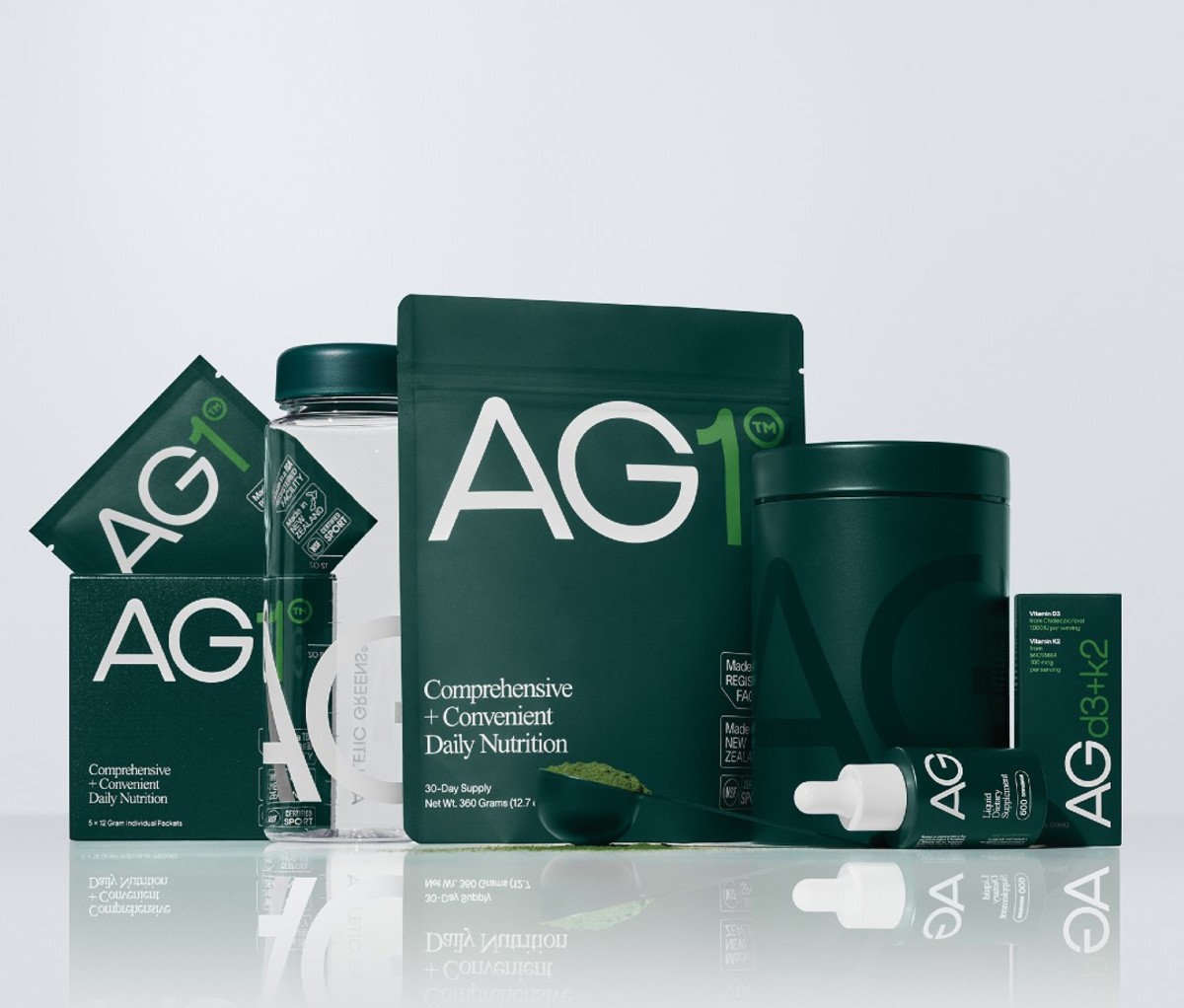
- AG1 is one of the most neutral-tasting, easy-mixing green powders, making it easy to consume consistently. The blend contains vitamins and minerals, pre- and probiotics, phytonutrients, and antioxidant and adaptogenic herbs and mushrooms, plus superfoods and enzymes that can help improve digestion.
AG1 is both NSF-certified and made in a TGA-registered facility, which helps it stand out among the competition. This testing is vital for ensuring high-quality products in a market not regulated by the FDA. Athletes and customers rave about AG1, with over 20,000 4.5 average reviews commenting on the brand’s convenience and energy-boosting properties. Read our full breakdown of AG1 here.
[From $79; athleticgreens.com]
Get it
Best for Athletes: BPN Strong Greens
Pros:
- Informed Sport-certified and third-party tested
- Contains adaptogens
- Naturally sweetened with stevia and monk fruit
- Contains beetroot juice extract for improved exercise performance
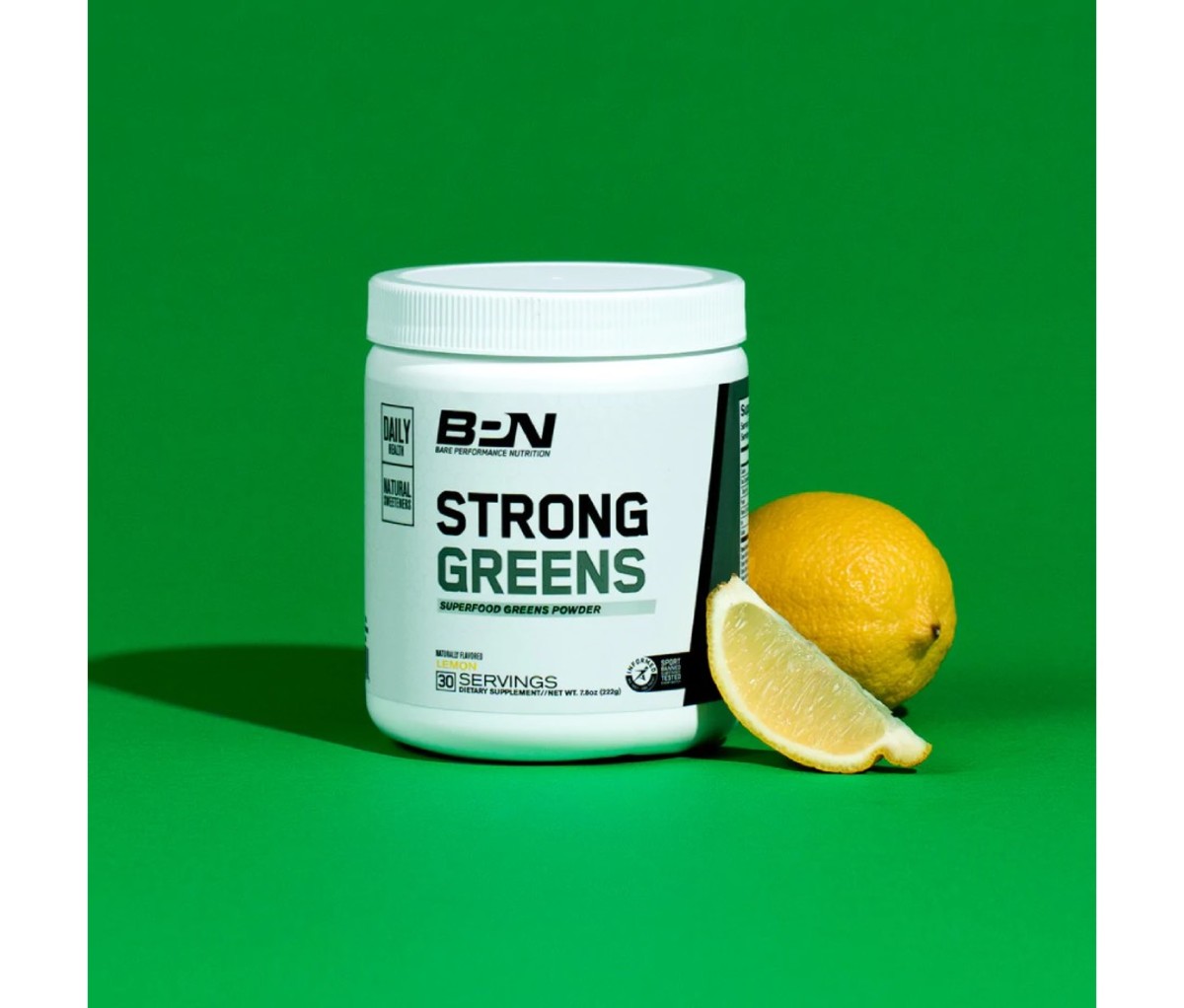
BPN is a veteran-owned-and-operated business that produces high-quality supplements. Strong Greens powder is ideal for athletes and gym-goers looking for a performance boost due to the inclusion of beet powder and several vitamins and minerals.
Green powders can supply the vitamins, minerals, and antioxidants your body needs for health and fitness recovery, according to Jesse Feder, RD, CPT. “They’re helpful, especially when you’re following a very restrictive diet that puts you at risk of experiencing nutrient deficiencies like fatigue, weakness, and more,” he says. This is especially true for weight-cutting phases, when athletes are known to have a greater likelihood of nutrient deficiencies like vitamin D and iron.
Beet powder has been researched for its ability to enhance blood flow and support mitochondrial efficiency, which means more energy production during your workouts. Beetroot juice can also improve muscle power output and lessen time to muscular fatigue.
Moreover, Strong Greens provides antioxidants and phytonutrients that support overall health, including wheat grass, chlorella, turmeric, and adaptogenic ashwagandha, all in a third-party tested formula that’s naturally sweetened and gluten-free.
[From $40.50; bareperformancenutrition.com]
Get it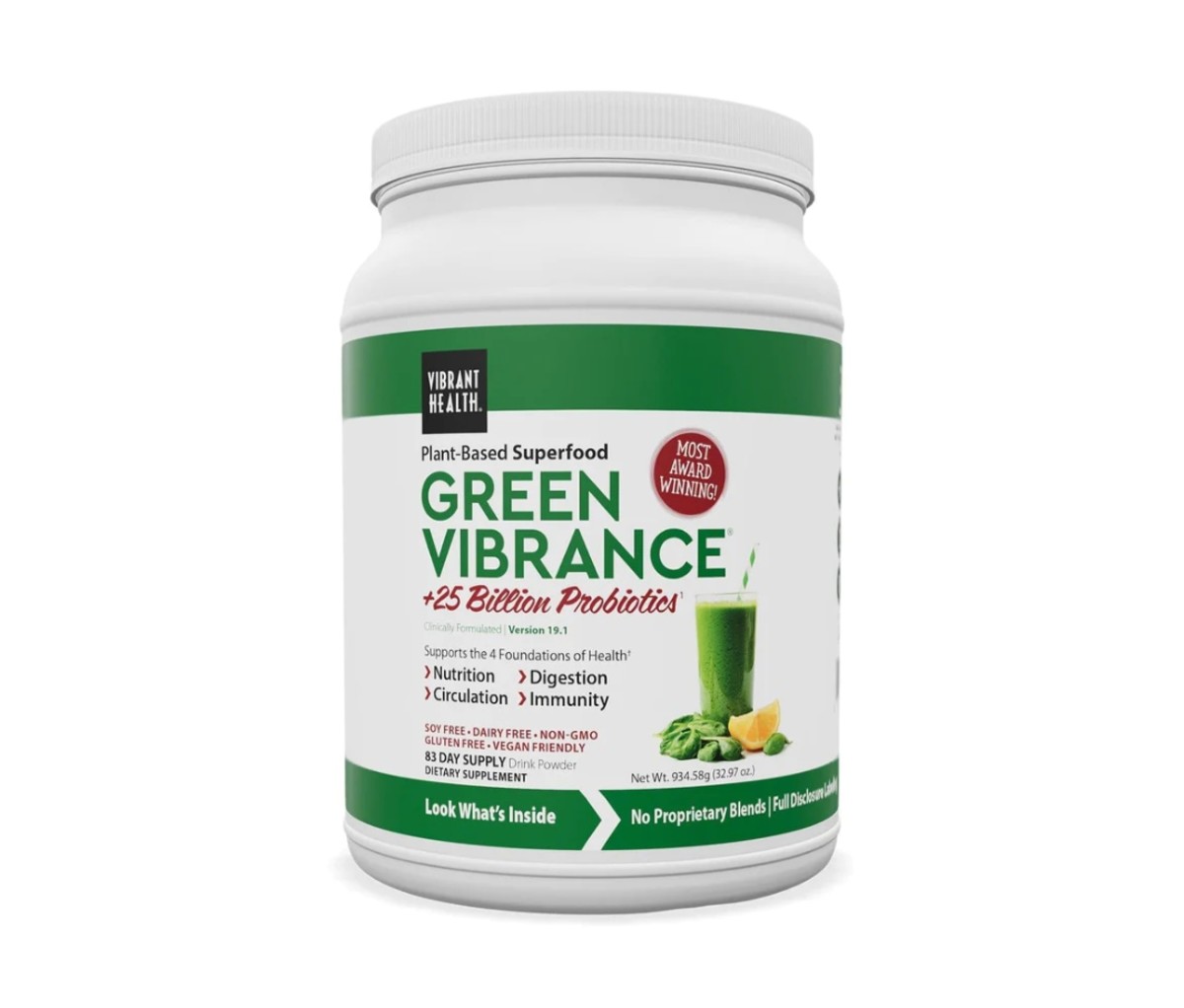
Best With Probiotics: Vibrant Health Green Vibrance
Pros:
- Provides 25+ billion CFU of probiotics
- 1,000 IU of vitamin D per serving
- Contains flavan-3-ols for heart health
- Soy-, dairy-, and gluten-free
Vibrant Health’s Green Vibrance powder has been around for 30 years, making it one of the original superfood blends. The powder stands apart from other brands by incorporating well-researched strains of probiotics with 25+ billion CFU (colony-forming units) per serving.
This green powder also contains spirulina, wheat grass, beetroot powder, and six different nutrient-dense cereal grasses for a wide range of potent vitamins, minerals, and antioxidants. Green Vibrance has a pool of dedicated fans with great reviews.
[From $91.70; vibranthealth.com]
Get it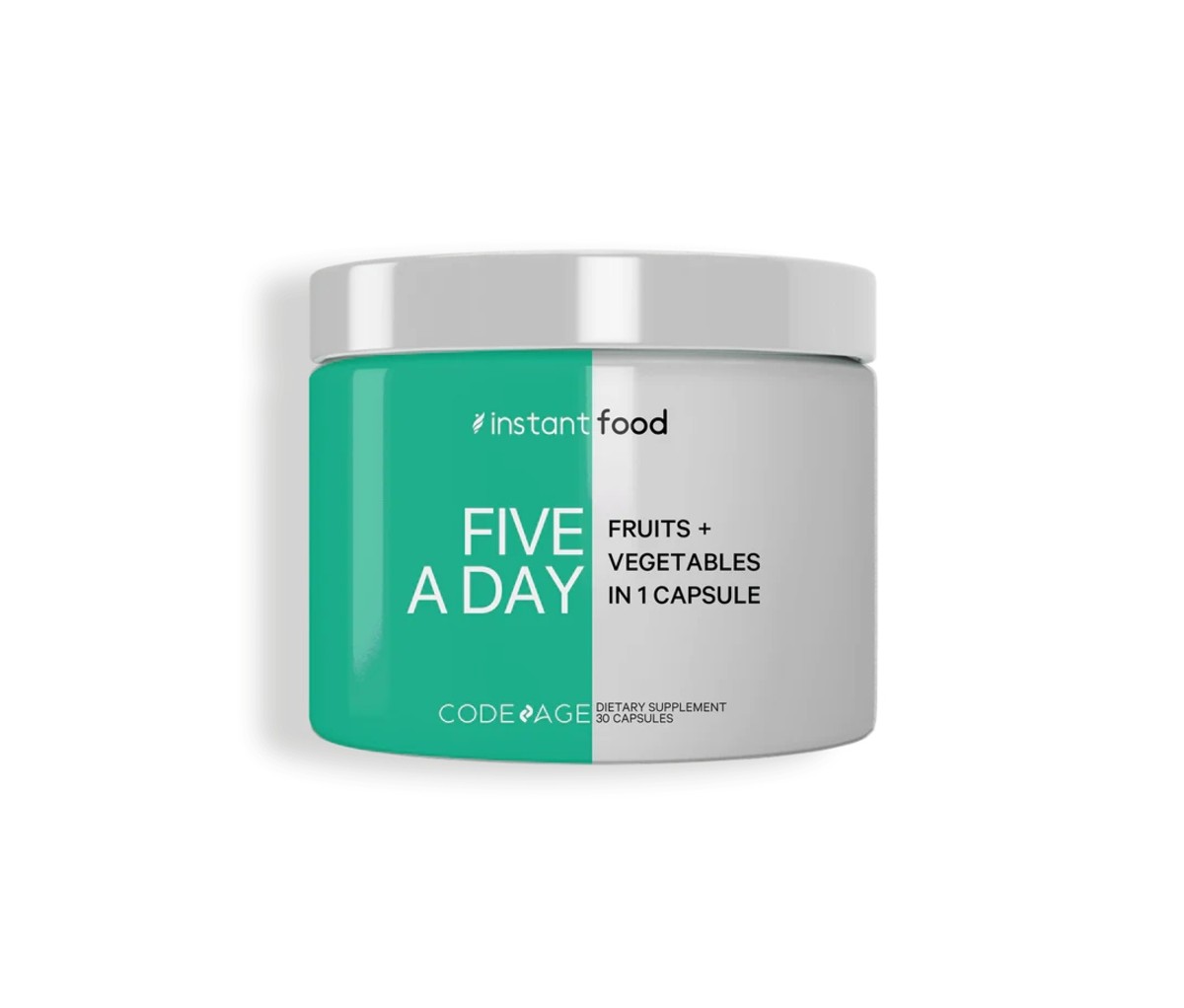
Best Capsule: Codeage Five a Day Fruits and Vegetables
Pros:
- 100 percent whole food mix comprising 17 fruits and vegetables
- Five servings of fruit and vegetables in a single capsule
- GMP-certified and third-party tested
- Dairy- and gluten-free
Not a fan of powders? You can still get the benefits of green powders with a capsule from Codeage. One capsule contains a mix of 17 different fruits and veggies, amounting to your daily five servings.
Codeage’s capsule is simple and efficient. The formula has no watered-down ingredients, just potent, nutrient-dense microgreens and sprouted plants like broccoli, onion, tomato, carrot, spinach, kale, Brussels sprouts, berries, and cherries. The supplement is third-party tested and vegan.
[From $25.50; codeage.com]
Get it
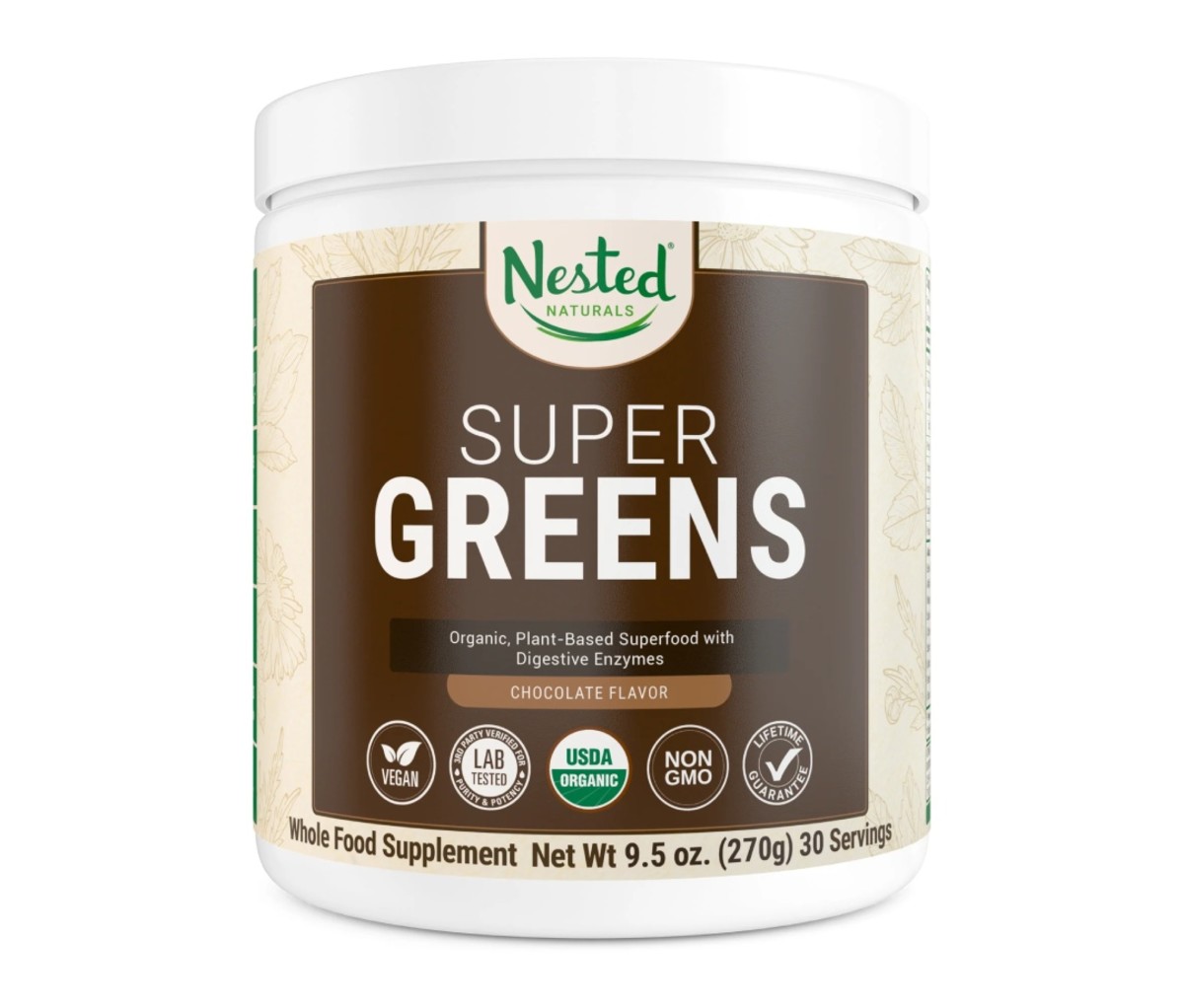
Best Flavored: Nested Naturals Super Greens Chocolate
Pros:
- Tasty chocolate flavor
- Provides enzymes and probiotics
- GMP-certified
- 4-stage testing for potency, heavy metals, active probiotics
- Certified vegan and organic
If you aren’t a fan of the sometimes grassy, green, or fruity flavor of most green powders, Nested Naturals has a tasty alternative. The chocolate flavor is mildly rich and smooth, with plenty of happy reviewers commenting on the easy-drinking taste.
Nested Naturals Super Greens also contains gut-friendly enzymes for digestibility and probiotics for a diverse microbiome. They test each batch four times for potency, heavy metal content, active probiotics, and chromatography to ensure you’re getting the plant matter that’s listed in the ingredients. To top it off, the product is GMP-certified.
[From $28.75; nestednaturals.com]
Get it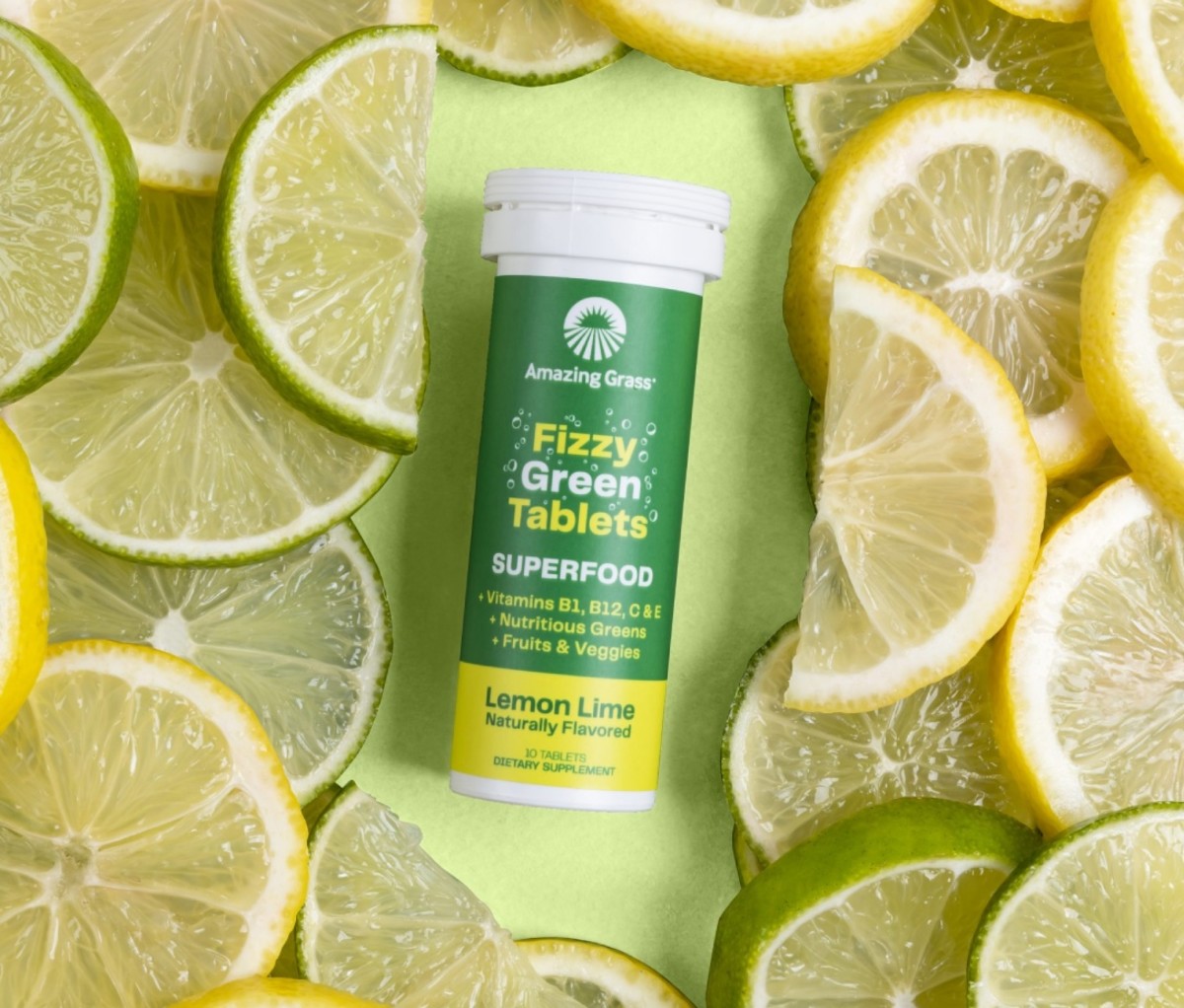
Best for On-the-Go: Amazing Grass Fizzy Green Tablets
Pros:
- One full serving of greens and veggies
- 100 percent DV vitamins B1, B12, C, and E
- Tasty flavor
- Versions available with caffeine and electrolytes
For something completely different, Amazing Grass, which also makes a fantastic traditional powder, offers fizzy tablets you can pop into your water bottle and take on the go.
The tablets dissolve in water and come in tasty flavors like strawberry lemonade, watermelon lime, and berry. They also provide vitamins B1, B12, and C for improved energy.
[From $9; amazinggrass.com]
Get itHow to Choose a Greens Powder
Transparency is critical when you’re looking for a green powder, according to Feder. “I highly suggest you look for one that doesn’t contain a proprietary blend and discloses all the ingredients and their amounts,” he says.
A propriety blend tells you what’s in the supplement but does not disclose how much of each is in it. “I personally like to know exactly what’s in the supplements I take. Additionally, you should look for a powder that contains a large variety of vegetables, as this will ensure you’re getting different nutrients,” Feder adds. Lastly, he suggests a third-party supplement tested for contaminants and other ingredients to ensure the powder is safe.
Kara stresses that looking for key ingredients that provide beneficial nutrients is essential. “Some specific examples include artichokes, cabbage, and broccoli—which are all high in fiber—and kale and spinach—which are both high in essential nutrients like vitamin K, B6, and potassium,” he says.
Beyond these nutrients, it’s also important to look for ingredients that are high in antioxidant value. “Antioxidants are essential for helping to combat free radical damage at the cellular level, which can help avoid serious health issues,” he adds. Greens like asparagus, cabbage, and collard greens are loaded with antioxidants.

What to Watch For
Some green powders contain added sugars, preservatives, coloring, and other artificial ingredients that may not be helpful for your health, so make sure to take a closer look at the ingredients list.
Green powders are not for everyone, according to Catherine Gervacio, R.D. “If you’re taking medications, it’s ideal to consult a health professional before taking them. For example, anti-cholesterol medications may interfere with the absorption of nutrients green powders contain,” she says.
Green powders are safe as long as they’re sourced well, but some supplements have been shown to contain heavy metals like lead.
“If the soil in which greens like kale and alfalfa contains heavy metals, the plants can possibly absorb those metals,” warns Hilbert. That’s why third-party testing is so essential.
Hilbert recommends you use caution, start low and slow, and watch and track for any symptoms you might experience. “For the most part, green powders are safe and can be part of a holistic wellness plan,” she says.
from Men's Journal https://ift.tt/jZVztum
via
The Importance of VO2 Max Testing, Regardless of Your Fitness Goals
Heart health as the key to peak human health.
from Bodybuilding.com Articles https://ift.tt/nDqwE8Q
via IFTTT
from Bodybuilding.com Articles https://ift.tt/nDqwE8Q
via IFTTT
Wednesday, February 15, 2023
Mens Journal
Most football workouts require heaving heavy metal. The workout Patrick Mahomes relies on to stay lightning fast and keep his arm firing like a cannon revolves around explosive power. That’s not to say the Kansas City Chiefs quarterback doesn’t lift heavy; he’s deadlifting 550 pounds. But his long-time trainer, Bobby Stroupe, founder of APEC in Texas, prioritizes medicine ball work for its ability to train Mahomes to generate power from all angles. He implements med ball training two times a week, year round, whether in-season or off. They’ll work through roughly 20 different med ball exercises (think throws, rotational passes, and shot-puts), with weight ranging from heavy to light.

“It’s a great way to engage the same muscles as the football with a different kind of implementation,” Stroupe says.
It appears to be working. In 2020, when Patrick Mahomes was just 24 years old, he became the youngest quarterback in NFL history to nab the holy trinity: a Super Bowl title, Super Bowl MVP award, and a league MVP award. He’s a naturally gifted athlete, totaling 2,159 passing yards, 20 passing touchdowns, and a 109.5 quarterback rating in the 2022-23 season, but he’s also a voracious competitor.
“Patrick doesn’t want to lose at anything,” Stroupe says.
His NFL record is a good indicator of that. Mahomes secured his second ring with a 38-35 victory over the Philadelphia Eagles at Super Bowl LVII. The game was a nail-biter, with the lead volleying back and forth between the two well-matched teams. We spoke to Stroupe all about Mahomes’ prep work, including training strategies, recovery methods, and on-field rituals. Read what it takes to build a Super Bowl MVP, and try one of Mahomes’ very own workouts.
Want to train like a two-time Super Bowl champ? Here’s an explosive upper-body workout Stroupe puts Mahomes through. Do a proper dynamic warmup before completing the workout below.

Patrick Mahomes’ Explosive Power Workout
What you’ll need: Access to a cable machine and medicine balls (10 to 20 pounds).
What it works: These exercises mobilize the thoracic spine (upper and middle part of back), increase core and arm strength, improve rotational force, and foster explosive power.
How to do it: This workout is broken down into supersets, which means you’ll do two paired exercises back-to-back with no rest. Complete 3 sets of 6 reps for the pair before moving onto the next superset. Rest 1 minute between supersets.
1A. High-to-Low Cable Woodchop
How do to it: Connect a standard handle attachment, then move the pulley to the highest position. Stand with your right side parallel to the cable tower, feet shoulder-width apart. Grab the handle with your left hand and clasp your right hand over your knuckles. Take a step away from the machine to create tension. Start with arms fully extended and a soft bend in knees. Inhale, then exhale as you bring the handle down powerfully across your body at a 45-degree angle, pivoting off your right foot as you rotate your torso toward the left, stopping with hands just outside your left knee. Your back should be straight, core engaged, and arms extended. Hold for one count, then return to the starting position in a slow, controlled manner. Complete 6 reps, then switch sides.

1B. Overhead Rainbow Med Ball Slam
How do to it: Stand with feet shoulder-width apart with a soft bend in knees, holding a medicine ball in both hands. Keeping core tight and elbows at 90 degrees, rotate torso counter-clockwise, arc medicine ball overhead, and slam it on the floor to the left of your right foot. Pick up the ball and reset, holding the medicine ball at left hip; repeat motion to slam ball to the right. Alternate sides. Do 6 reps per side.
2A. Mid-level Cable Woodchop
How do to it: Connect a standard handle attachment, then move the pulley to the middle position. Stand with your right side parallel to the cable tower, feet shoulder-width apart. Grab the handle with your left hand and clasp your right hand over your knuckles. Take a step away from the machine to create tension. Start with arms fully extended and a soft bend in knees. Inhale, then exhale as you bring the handle down powerfully across your body at a 45-degree angle, pivoting off your right foot as you rotate your torso toward the left, stopping with hands just outside your left knee. Hold for one count, then return to the start position in a slow and controlled manner. Complete 6 reps, then switch sides.
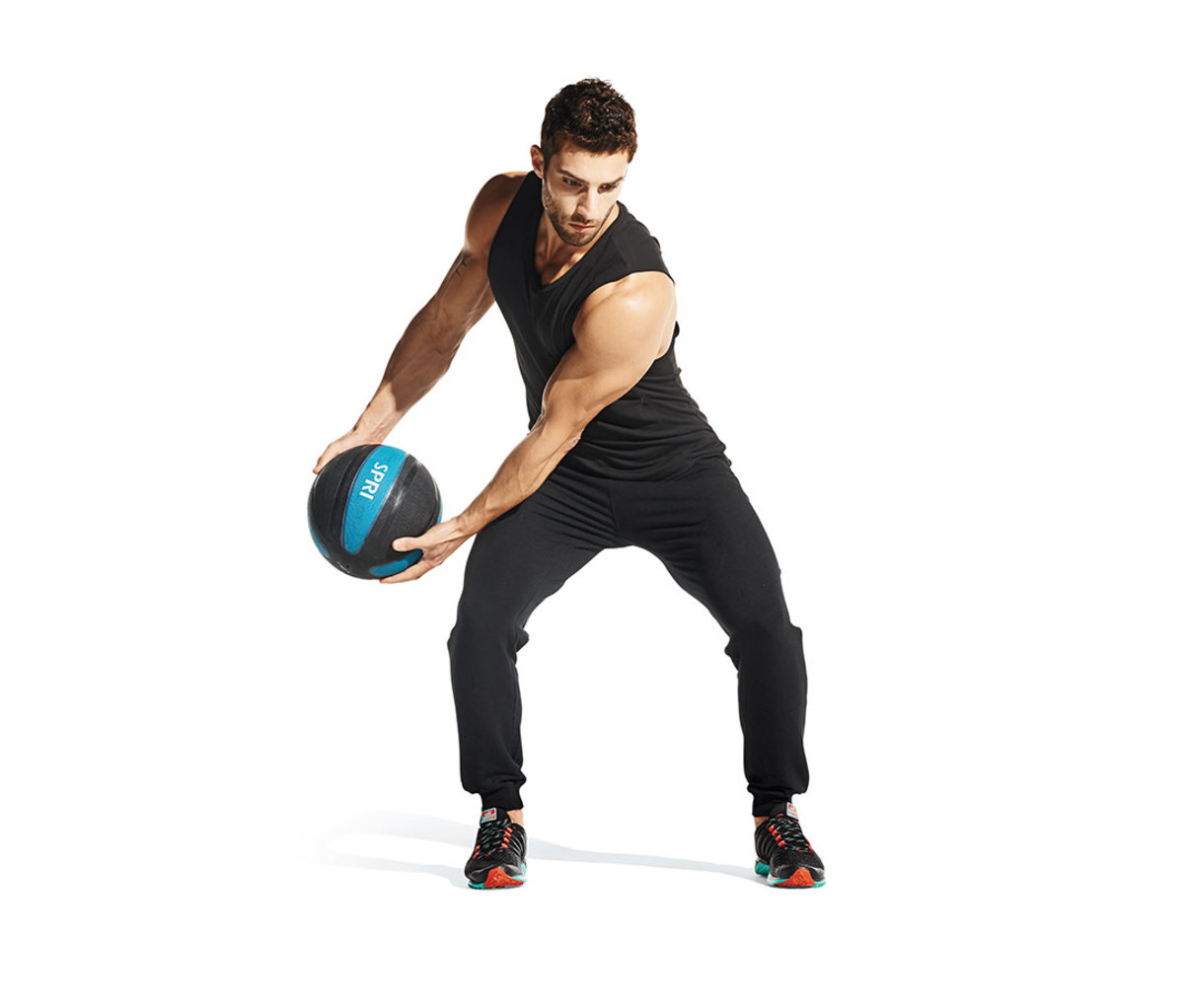
2B. Med Ball Rotational Throw
How do to it: Stand with your right side parallel to a brick wall with legs staggered and your right foot forward. Bend your hips and knees slightly and hold a med ball at arm’s length, hands cupping from underneath. Twist your torso to the left, shifting your weight to your left foot, drawing the ball to your left hip. Powerfully rotate your torso, using the power in your legs to throw the ball against the wall. (Imagine you’re hoisting something heavy into the bed of a truck.) Pick up the ball and repeat with the opposite side facing the wall. Alternate sides. Do 6 reps per side.

3A. Low-to-High Cable Woodchop
How do to it: Connect a standard handle attachment, then move the pulley to the lowest position. Stand with your right side parallel to the cable tower, feet shoulder-width apart. Grab the handle with your left hand and clasp your right hand over your knuckles. Take a step away from the machine to create tension. Start with arms fully extended and a soft bend in knees. Load the right side of your body as you twist your torso to bring the handle by your shin. Inhale, then exhale as you explosively drive the handle up across your body until your hands are above your head. Your back should be straight, core engaged, and arms extended. Hold for one count, then return to the starting position in a slow, controlled manner. Complete 6 reps, then switch sides.
3B. Reverse Scoop Diagonal Med Ball Throw
How do to it: Stand with feet shoulder-width apart and hold a med ball by your right hip. Inhale as you hinge at hips to lower into a squat, then exhale as you explosively extend through hips and throw the ball over your left shoulder behind you. Walk to the ball and begin the next rep. Alternate sides. Do 6 reps per side.
from Men's Journal https://ift.tt/lT0pbXt
via
What’s the Deal with Omega-3?
Learn how to best utilize the benefits of omega-3 supplements.
from Bodybuilding.com Articles https://ift.tt/hL2PZQu
via IFTTT
from Bodybuilding.com Articles https://ift.tt/hL2PZQu
via IFTTT
Mens Journal
Patrick Mahomes is undeniably one of the most exciting athletes to watch in the NFL. On his way to leading what many are considering the next great football dynasty, the Kansas City Chiefs quarterback secured his second ring with a 38-35 victory over the Philadelphia Eagles at Super Bowl LVII. The game was a tense one for fans, with the lead being exchanged often between the two well-matched teams.
Mahomes was masterful in and out of the pocket, throwing his trademark acrobatic passes and scrambling out of pressure from the specialized Eagles pass rushers. The athleticism he displayed would be impressive under normal circumstances, but it was even more so given that only two games earlier he’d suffered a high ankle sprain. Jaguars defensive end Arden Key landed on Mahomes’ leg after a sack, forcing him to miss most of the second quarter of the NFC Divisional Round. The quarterback returned in the second half to lead them to victory, but the injury was one that had fans on edge.

Despite the sprain, Mahomes showed up ready to win thanks to the relentless work he put in with the PT staff of the Chiefs and his long-time trainer Bobby Stroupe, founder of APEC in Texas. The quarterback has been working out with Stroupe since he was in grade school. That work has only intensified as his career has progressed in the NFL. Leading into this latest Super Bowl run, Stroupe worked with Mahomes year round to find new ways to build upon his natural ability.
Men’s Journal sat down with Stroupe to discuss how he develops a training system around Mahomes’ unique mobility, leverages real-time fitness data from WHOOP, and getting him ready to win Super Bowls.

Men’s Journal: What makes Patrick Mahomes such a dynamic player?
Bobby Stroupe: Because of the other sports Patrick played, like baseball and basketball, his approach to the position is very original. There’s no denying the great genetic pool he comes from either, with his father having played baseball professionally for a number of years. That natural talent, tireless work ethic, in addition to his sheer will to win make him truly special and a real pleasure to work with as a trainer.
If you were to see Patrick running straight down the field, you might not think he’s a world-class athlete. But it’s the fact he can run backwards or laterally almost as fast—if not just as fast—as he can forward. That’s one of the factors that makes him an outlier. Not to mention how explosive he is in any of those directions. I was able to see that in him at a very young age. His jumps in the traditional sense may not have been the best, but they were very good, and he’s able to go in almost any direction with it. No matter where he’s coming from, he doesn’t lose power.

Did Super Bowl prep look different this season compared to the last two?
Patrick was weighing in around 238 during that first Super Bowl run. He didn’t love how he felt. Now that I’m working with him more consistently, we try to have him slimmer and you can see the benefits. That second Super Bowl run, he was in a boot, which meant he wasn’t really allowed to go full force. Being the workhorse that he is, he was putting in extra time at the gym, along with the recovery, which meant our sessions were somewhere around four hours a day—five if he was throwing. That wasn’t ideal either, because of his foot. This time around, the boot was gone, so we were free to train how we wanted, and we felt great going into the season.
What kind of work do you guys put in during the off-season?
During the off-season we’re training five times a week, and during the season we’re doing about three times a week. In the off-season, we’re looking for issue resiliency, pattern stability—all the things we don’t want Patrick to miss a step on when he’s ready to play again. During the off-season we train pretty early in the morning, because Patrick enjoys a bit of golf and wants to get off the tee before it’s too late.

Give us a rundown of a typical NFL season training block.
During the season, we’re doing about eight to 10 hours of specialized training together [per week], in addition to the workouts and practice he has with the team. On a week where they’re playing on Sunday, we’re training Monday, Tuesday, and Friday. Of course that adjusts if they’re playing on a different day. Once he’s in the flow of the season, training shifts to a dynamic set of days where we can get him ready to hit performance peaks when he needs to—especially during the playoffs and even more so for the Super Bowl.
For that in-season training, we have a general three-day concept going. The first day is mainly mobility that can look like a gymnastics workout with a lot of stretching, yoga, and Pilates. We do lots of poses and positions like backbends. That’s where we’re grounding him, getting him more comfortable in his relationship with the ground—getting him out of cleats and getting his bare feet on the turf and grass. Everything movement-wise we want to cover is covered on this day, making sure his squat and form looks smooth before we introduce weight.

The second day is more of a strength and conditioning workout with targeted loads. We’re toying with maximum strength and power. Patrick likes to lift heavy. We know we want him gassed and we want his testosterone pumping. We want his ligaments tight, hamstrings strong, and we want that density in the muscles. Patrick is crazy strong and we can have him on the bench lifting 550 pounds. That training is definitely more traditional and they’re long days.
The last day is more of a neurological ramp-up. We’re looking to de-load, going below 20 percent of the usual load [but moving] at much faster speeds. That strategy goes for any lifts, rotations, or throws we might be doing. The idea is to help the thoracic spine move faster than it will ever need to in the game. We want him to be running faster than he needs to in the game, with full pads on. I want to see explosive power when he’s throwing med balls. If you follow the progression, you can see the ultimate goal is to have him faster on game day.
Can you share more about the medicine ball work and how it translates to football?
Medicine ball training is important because he wants to be able to produce power from a number of different angles. That means we’re doing med ball throws, med ball rotational passes, and shot-puts. They’re a great way to engage the same muscles as the football with a different kind of implementation. I’d say we do some sort of med ball workout two times a week, year round, whether he’s in-season or off.
I’ll even get the radar gun out so I can see the miles per hour in which he’s throwing the medicine ball. I’ll have him move in all sorts of ways before he throws, so his body becomes as comfortable as possible with every scenario. There are over 20 different med ball throws we do, with weight ranging from heavy to light.

Do you ever use footballs in workouts?
I’m not going to get him out there on the field just to throw footballs, because that’s not my place. He has people on the team who can help with that. But we will do locomotion patterning throws, because I need to know how he works in asymmetrical movement patterns. I’m focusing on his movement literacy. Sometimes I’ll have him hold a football specifically for the fact it’s his happy place. The football in his hands is when he’s most comfortable, then it’s my job to get him uncomfortable so I can help him find ways to deal with it.
Are you tracking his holistic fitness and wellness data?
For recovery and monitoring, WHOOP is a huge tool for us. I get a WHOOP reading from Patrick every day. He wears it on his bicep during games. I have access to his info, as well as some more detailed data on the backend. I see how much he slept and how he recovered. He’s been in the green all season long, so he’s been getting a lot of “green battery” texts from me. On the rare occasion I don’t see one of those, he gets a few stern words.
If I wake up and see that his recovery score is in the 30s, that doesn’t mean we aren’t going to work. It could mean that we’re going to spend a little more time with our warmup and cool down, perhaps a few less reps. Perhaps we do a few more minutes with the Hyperice Hypervolt massage gun after the workout. Say on game day we see he only has a 20 percent recovery score. Does that mean we’re going to call the Chiefs and say he can’t play? No. It just means we’re going to use that knowledge so he’s in the best possible situation when he shows up on the field.

These guys are performers. Patrick wouldn’t be in the position he’s in if he wasn’t able to perform when it’s asked of him, whether he’s ready or not. I also don’t want to see a 95 percent recovery from him every day, because if you’re doing real work and you’re challenging yourself, that’s not what you’re going to see. We’re looking to push his body forward, during a football season that lasts 25 weeks long. You want a range of green, but you don’t necessarily want a peak every weekend. If you’re going to peak, you probably want it during the Super Bowl.
The hit Mahomes’ ankle took during the Divisional Round was nasty. How did you process that situation as a trainer?
The Jaguars game was not a fun watch for me. We knew they were an underrated team. There were a lot of people who were counting them out, but that’s not how we were preparing for it at all. We knew it was going to be a battle. They got after Patrick really good, and that injury happened in the first quarter, during the second series. It was very stressful, but I have a lot of trust and faith in the staff to do everything needed for him.
There can be a lot of reasons why an injury like that doesn’t come out worse. Some of it’s chance and some of it’s body preparation for those stressors. If you go back and watch the video of that injury, there are a lot of chain-reaction biomechanics happening that prevented him from having an ACL tear or a fracture. I think the Chiefs did a phenomenal job in that situation, especially Rick Burkholder and Julie Frymyer. There’s a whole ecosystem around his development and rehab.
My goal was to make sure he still had maximum strength going into the game and the injury wasn’t going to hold us back from achieving that. I’ll say immediately my mind was working on the training plan that could help him get back as fast as possible if we won the game. There’s still a lot we can do even if he has to be in a boot or keep weight off his leg. I still had to wait for the MRI and everything else, but that didn’t stop me from getting to the whiteboard in my mind.
Did your training plan adjust at all knowing the Super Bowl would be played against the Philadelphia Eagles?
The team we’re playing against isn’t going to take over the way we get Patrick ready. But there’s always going to be that one to five percent of the training that’s specific to the defense across the line. I’m not going to tell you that we have a player chart in front of us and we’re going to bench 50 more pounds because Ndamukong Suh is going to be on the other side of that line. But if we know there’s an active defensive line that will be chasing.
We knew the Eagles defensive line has some specialized pass rushers who are going to get up the field quick. That means Patrick is going to have to move more. And when there’s more pressure on the inside, that means you’re going to have more curvilinear runs to avoid that. So that could mean we theme the sprints and runs more in that direction.
If you have a power rusher, running away from them is a good thing to do. If you have a speed rusher, you’re going to want to run toward them. It’s better to pass a fast train than run from it. So our movement strategies are going to reflect that. There are special considerations to be made if you have an injury to one of your feet, too. If you know you’re going to get rushed on the inside, you probably want to make sure you’re fully capable of running outward in the direction that’s going to cause you less pain in that foot.


What kind of warmup does Mahomes go through before a game?
Patrick is a really superstitious guy, and he does the same warmup routine every time. So you’ll see him do some Romanov upper-body stretches, which look like wrist stretches. Then he’s going to do his arm care routine, where he’ll start to speed things up. There are a series of different swings he’ll do that look like basketball pivots, trying to get the fascial system woken up. You’ll see him doing skips, backwards running, and jumps. Then he’s going to shoot the football like a basketball, doing some fadeaways and jump shots, which I assure you is not something I wrote up. Then he’ll go to different corners of the end zones to do these little rituals, it could be prayer or it could be a stretch, but it’s unique to him.

Given the many years you guys have worked together, and the incredible feats you’ve seen him accomplish, what’s the key to training like Mahomes?
I think it really comes down to that need to win. Patrick really responds whenever we gamify our training. I’ve found that in the way that we work out or the way we recover. Patrick doesn’t want to lose at anything…beer pong, darts, or Super Bowls.
from Men's Journal https://ift.tt/wJ7roFm
via
Subscribe to:
Posts (Atom)