Why is the New Year’s resolution, a tradition that once embodied hope, now synonymous with failure? Much of it has to do with the fact that 80 percent of people abandon their pledge by February. So, instead of asking why, we should ask: What can we do to increase our chance of success, especially as we prepare to make New Year’s Resolutions for 2023?
As Everyday Warriors, you’re already heading in the right direction; you understand that success requires building healthy habits and developing positive mindsets. While important, two more parts of the equation are even more crucial: goal management and preparation.
Goal Management
Feeling overwhelmed is the most common reason New Year’s resolutions fail. That’s understandable since it can be challenging to focus on results when success seems so far off. Well, it doesn’t have to be this way. The following two steps can make even the most ambitious goals manageable.
1. Set a specific goal and define success
Decide what you want to achieve and write it down. Most people skip this step, contributing to the high-failure rate after the new year. Putting your goals on paper is the equivalent of signing a contract with yourself. Next, determine what achieving your goal looks like. Two people can have the same goal but very different definitions of success. Instead of saying that you want to lose weight, be more specific, like losing 80 pounds over the next 16 months. What you’ll have at the end of the first step is your long-term goal.
Now that you know what you want to achieve and what success looks like, it’s time to break your larger goals into smaller, more manageable tasks. Write down these smaller goals and the steps required to reach them. Achieving small victories will empower and motivate you. For example, if you want to lose 80 pounds, break that into five-pound increments. Also, write down how you plan to achieve your goal and how long it’ll take; maybe it’s exercising three times a week, limiting your sugar consumption, and setting a goal of losing five pounds each month. What you’ve created is a series of short-term goals, a plan to achieve them, and a realistic timeframe.
Prepare to Execute
Here’s a little New Year’s trivia before jumping into our next part. Who do scholars credit with being the first to adopt the tradition of making annual resolutions?
A.) Romans
B.) Babylonians
C.) Assyrians
If you said the Romans, you are…wrong. The correct answer is the Babylonians, an ancient culture that existed in Mesopotamia from 1894 BC to 539 BC. The tradition dates back four millennia to Akitu, a 12-day festival in mid-March celebrating the spring barley harvest.
Let’s get back to helping you make good on your 2023 New Year’s resolution. After setting, defining, and writing down your short- and long-term goals, it’s time to move on to the third and fourth steps.
Many confuse planning and preparation, some even use the terms interchangeably, but they’re far from the same. While you can plan on baking an excellent apple pie, if you don’t buy the right ingredients, preheat the oven, and follow the recipe, you’ll fail. Let’s use our weight-loss goal as an example. Preparation may mean getting what you need to cook healthy meals, buying running shoes, and joining a gym. No matter how much you plan, you must start preparing at some point. Together, planning and preparation will get you ready for the final step.
4. Execute
Our new book, The Everyday Warrior, lays out a practical framework for overcoming obstacles and achieving your goals. This brings us to the final step of following through on your New Year’s resolution. In the military, we describe this step as having a bias for action. In the book, we say, “Get shit done, make shit happen, and do it all again tomorrow.” These are just different ways of saying that after you’ve planned and prepared, it’s time to execute.
It’s entirely up to you
As you head into 2023, remember that progress is a lifelong journey—not a destination. Also, when you fall (and you will fall), get back up, learn from your mistakes, and continue pushing forward because failure is a byproduct of growth. It’s all part of the process. If you’re planning on recycling the exact resolution you’ve made every year since 2018, perhaps it’s time to try something different. Now that you have the right tools, making 2023 the year you follow through on your New Year’s resolution is entirely up to you.
This article is an installment of the Men’s Journal Everyday Warrior series, which features advice, key interviews, and tips for living a life of consistent impact, continuous growth, and continual learning.
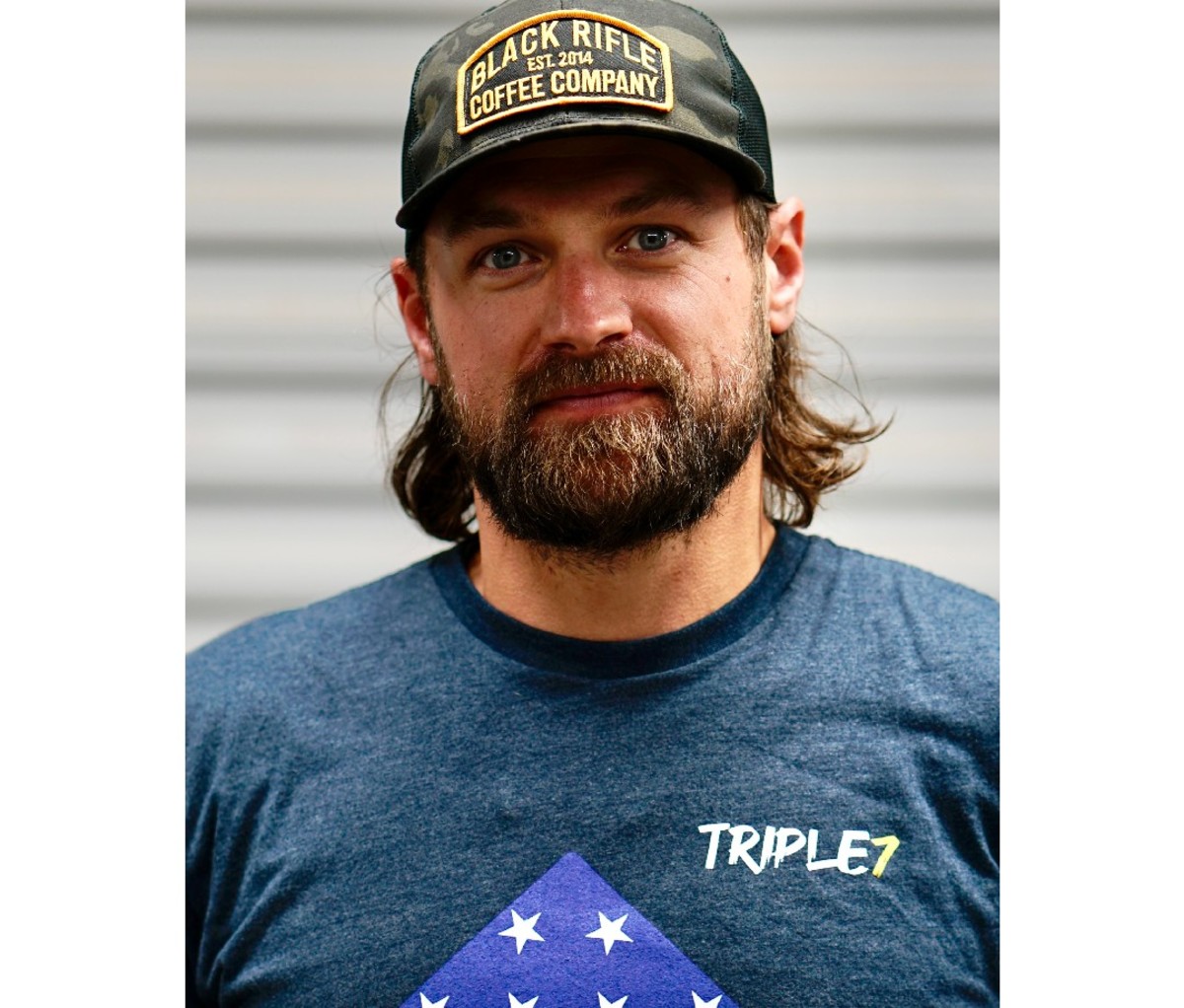
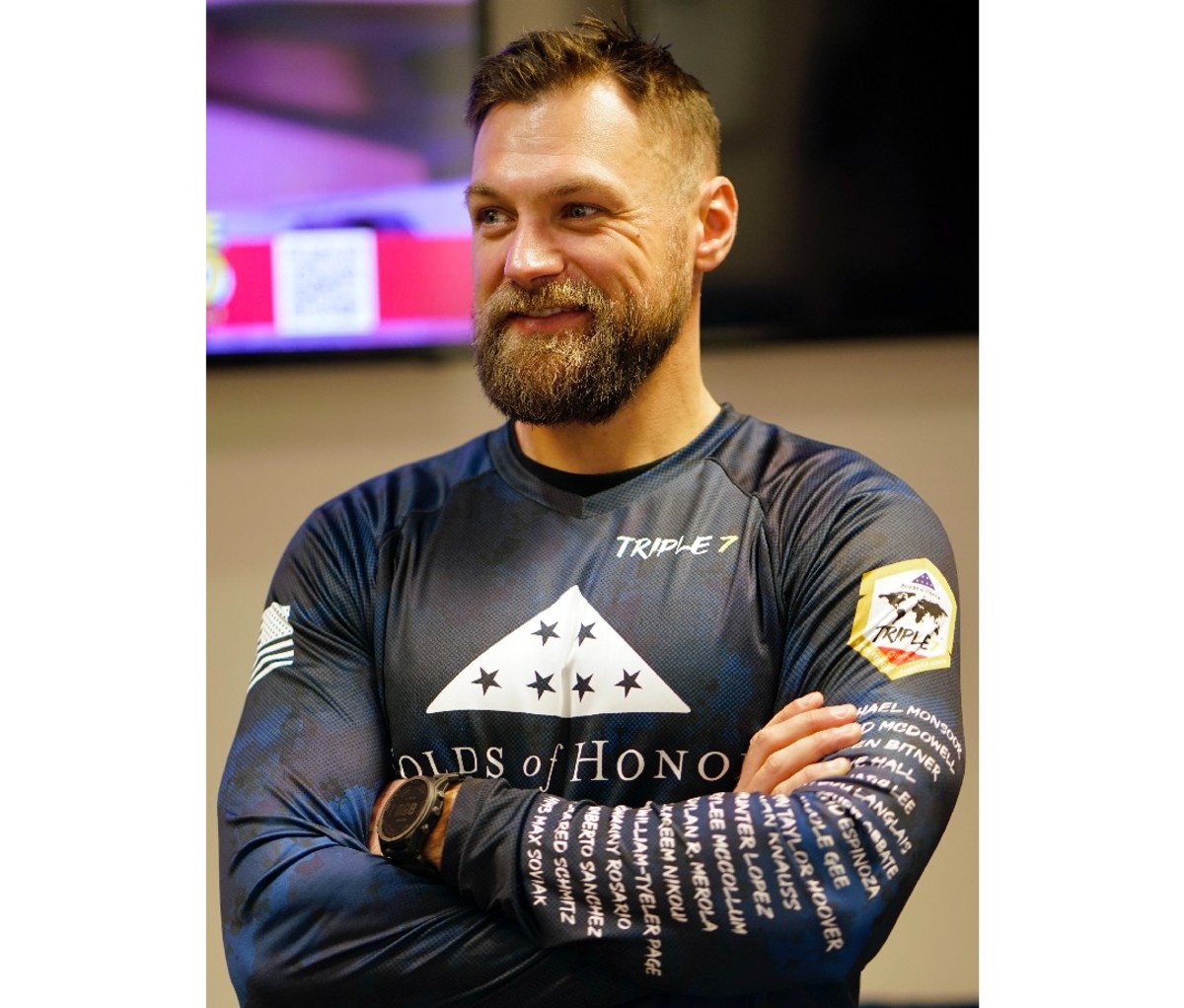
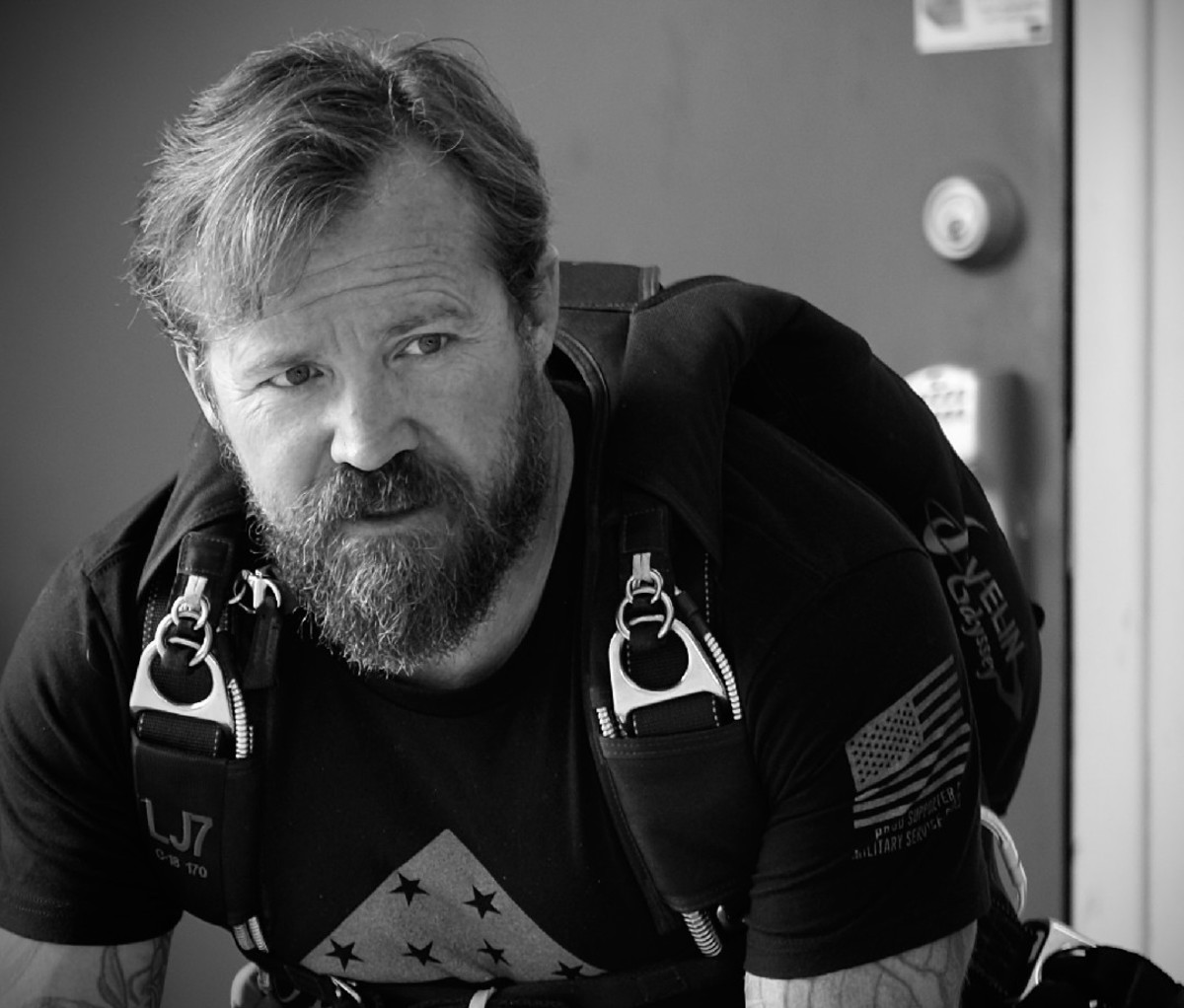
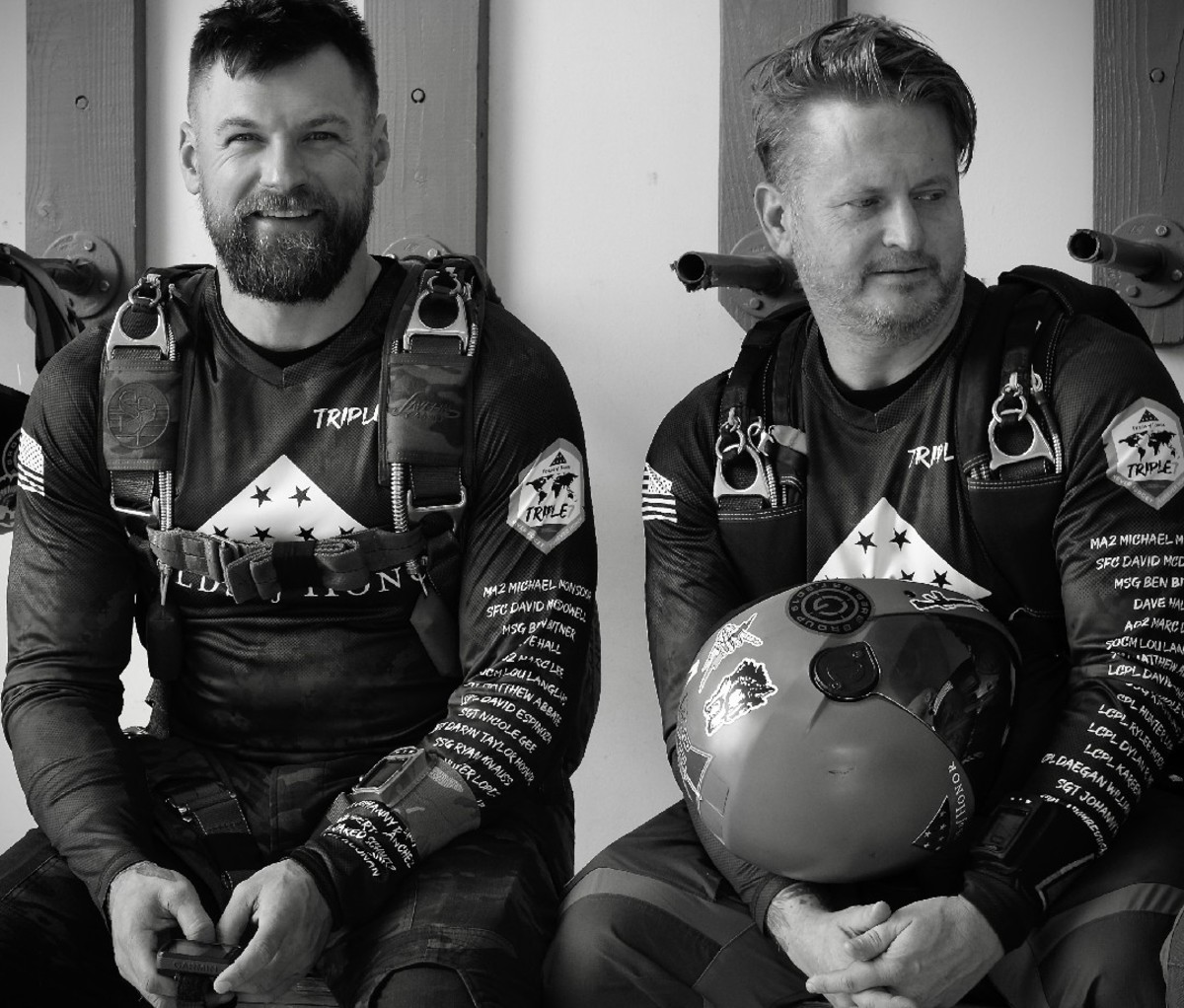
With the kick-off of the Triple 7 Expedition now measured in days rather than weeks or months, it’s a great time to introduce you to the jump team. Along with meeting these former special operators, you’ll also learn more about the fallen heroes they’re honoring; extraordinary Americans who lost their lives during the global war on terror.
In honor of their sacrifices, the Triple 7 team is working with Folds of Honor to provide 1,400 scholarships to the children and spouses of America’s fallen.
“Everybody on this team feels fortunate to have served alongside truly amazing men and women, some of whom did not come home,” says Mike Sarraille, a retired Navy SEAL and co-founder of Triple 7. “When people stop sharing their stories, their legacies begin to fade, and we cannot let that happen.”
Courtesy Image
Each team member will dedicate a leg of this record-breaking Expedition to a fallen hero. After today, you’ll know four of these brave Americans’ stories. Next week, we’ll wrap up this two-part Men’s Journal series by telling you about the remaining five.
Courtesy Image
Logan Stark
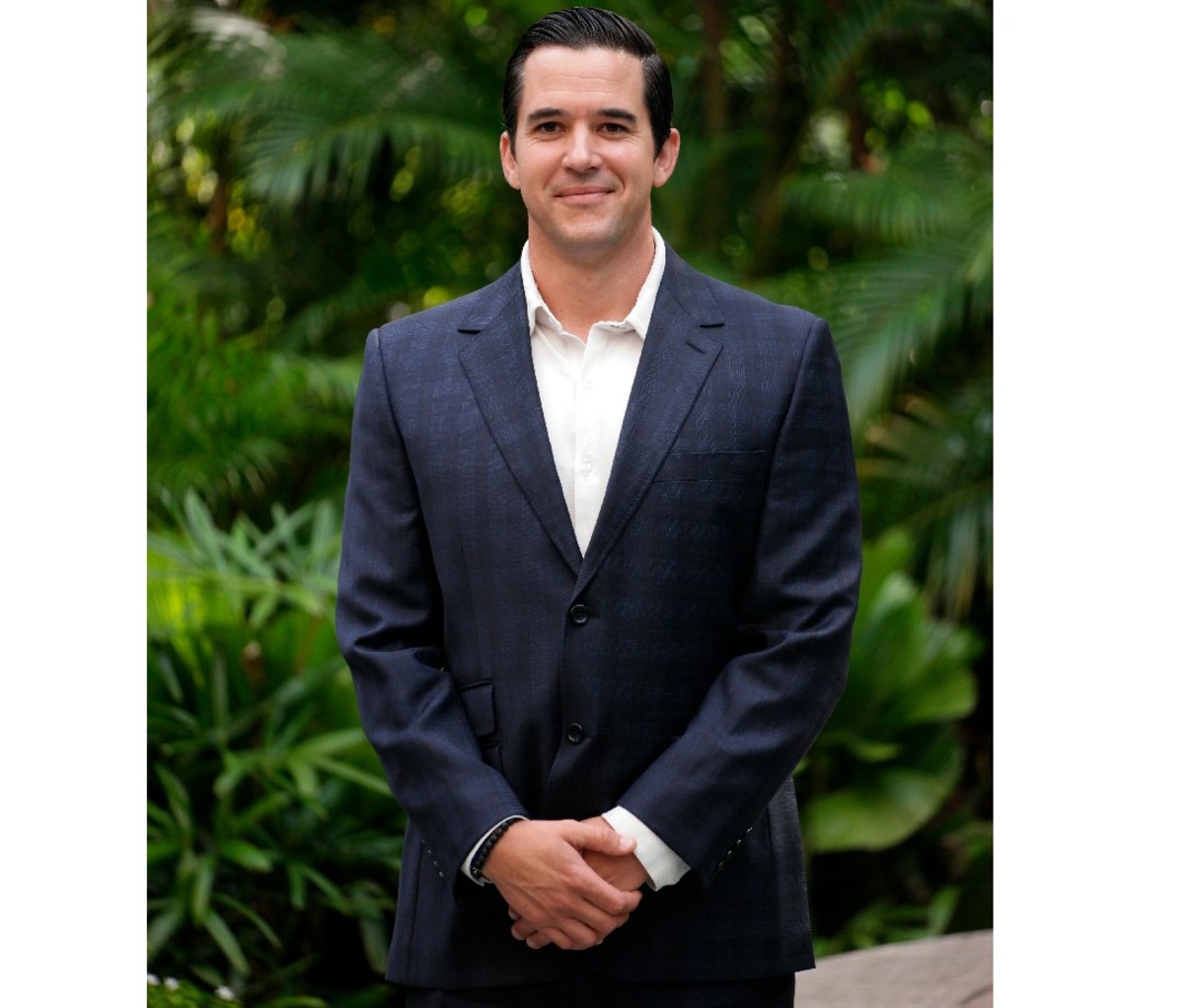
Logan Stark joined the United States Marine Corps shortly after graduating high school. After boot camp, he trained as an Infantry assaultman and later served three deployments, including one to Afghanistan with the 3rd Battalion, 5th Marine Regiment. Stark was a scout sniper, an elite group of Marines known for the psychological and physical toll they take on the enemy.
Courtesy Image
In 2011, after serving his final deployment in Afghanistan’s Helmand province, Stark left the Marine Corps and enrolled at Michigan State University. His experience in Afghanistan so profoundly impacted him that he made a short film about the deployment. While it was only a school project, it led to articles in USA Today and a New York Times blog series. Today, Stark is the vice president of media at the veteran-owned Black Rifle Coffee Company.
When the team jumps into Australia, they’ll honor U.S. Marine Sergeant Matthew Thomas Abbate. Born and raised in Fresno, CA, Abbate enlisted in the Marine Corps after graduating high school in 2006. He was a scout sniper stationed at Camp Pendleton with the 3rd Battalion, 5th Marine Regiment—an infantry expeditionary force nicknamed Dark Horse.
In December 2010, during Abbate’s third deployment, he was fatally wounded in Afghanistan’s Helmand province amid a coalition airstrike and enemy attack. A Marine who served alongside him said, “Some guys have the heart, but they don’t have the ability. [Others] have the ability but not the heart. [Sgt. Abbate] was the whole package, and he was humble about it.”
Two months before his death, Sgt. Abbate displayed extraordinary bravery and courage during an ambush that wounded several Marines. For his actions, he posthumously received the Navy Cross, the second-highest medal for valor in combat.
His other awards and decorations include a Purple Heart with Gold Star, Navy and Marine Corps Achievement Medal, Combat Action Ribbon with Gold Star, Marine Corps Good Conduct Medal, National Defense Service Medal, Afghanistan Campaign Medal with Bronze Star, Iraq Campaign Medal with Bronze Star, Global War on Terrorism Service Medal, Navy Sea Service Deployment Ribbon, and NATO-ISAF Medal.
Courtesy Image
Nick Kush
You may have heard special operators referred to as quiet professionals. In the case of retired U.S. Navy explosive ordnance disposal technician Nick Kush, the title is fitting. In 2016, after serving 20 years in the special operations community, including several deployments in Iraq and Afghanistan, Kush retired from the Navy.
Courtesy Image
After retiring, he spent nearly two years training special operators in advanced parachute flight. Kush has approximately 8,200 jumps, owns Deland High-Performance LLC, and is a research and development specialist at Performance Designs. His awards and decorations include two Bronze Star Medals with Valor, two Iraq Campaign Medals, an Afghanistan Campaign Medal, and two Combat Action Ribbons.
When the team jumps into Spain, they’ll be doing so in honor of Aviation Ordnanceman Petty Officer Second Class Marc Alan Lee, the first Navy SEAL to lose his life in Operation Iraqi Freedom. He was hit by enemy fire during an hour-long firefight with insurgents on August 2, 2006, in Ramadi, Iraq. During the exchange, AO2 Lee protected several teammates by unleashing a barrage of machine gun fire that forced the enemy back and provided his team time to find cover.
In his final letter, Lee told his family that his deployment in Iraq made him appreciate the United States even more. “[Being in Iraq] makes me realize what a great country we have,” he wrote. AO2 Lee posthumously received the Silver Star, the Bronze Star Medal with Valor, and the Purple Heart; his other awards and decorations include the Combat Action Ribbon, Meritorious Unit Commendation, and the National Defense Service Medal.
Courtesy Image
Jariko Denman
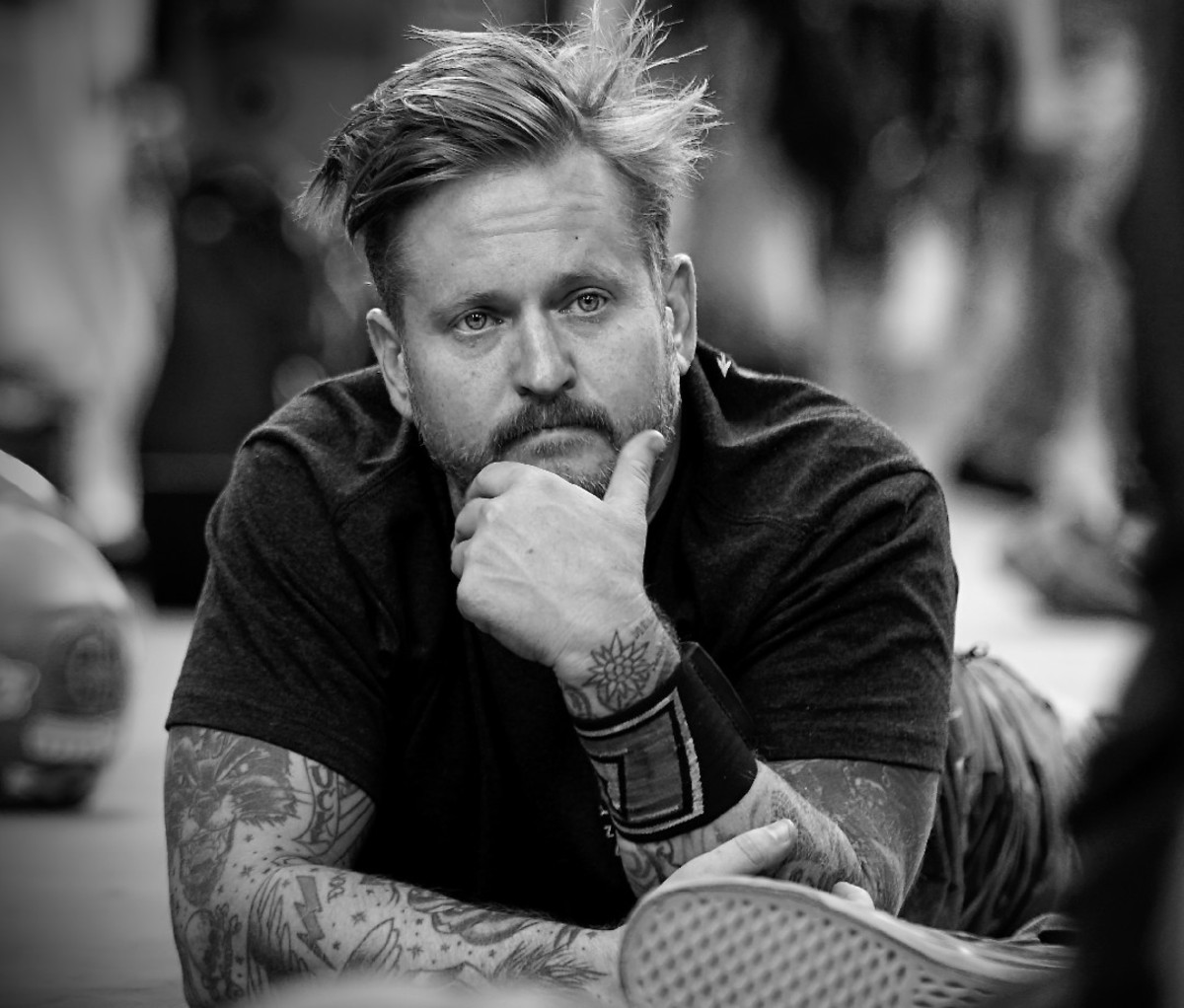
Born into a military family, Jariko Denman spent much of his childhood moving around the world. In 1997, he continued the family tradition by enlisting in the U.S. Army. After finishing Basic Combat Training and attending Jump School at Fort Benning, Denman passed the assessment and selection process for 75th Ranger Regiment. During his career, he took on various leadership roles, including weapons squad leader, rifle platoon sergeant, senior enlisted advisor, and first sergeant.
Logan Stark and Jariko DenmanCourtesy Image
In 2017, after four years as a senior military science instructor at St. John’s University, Denman retired from active duty. Since retiring, he’s been an advisor on major film productions, national ad campaigns, and television shows. Denman is Black Rifle Coffee Company’s senior media production manager and a contributing writer for Coffee or Die.
When the team jumps into Chile, they’ll honor Sergeant First Class David L. McDowell, an Army Ranger who served with the 2nd Battalion, 75th Ranger Regiment. In April 2008, during his seventh combat deployment, SFC. McDowell was locked in a firefight against Taliban forces in Afghanistan’s Helmand province when he sustained fatal injuries.
A husband and father of two, McDowell’s awards and decorations include Bronze Star Medal with Valor device, Army Commendation Medal with one oak leaf cluster, Army Achievement Medal with three oak leaf clusters, three Army Good Conduct Medals, National Defense Service Medal, Afghanistan Campaign Medal, Iraq Campaign Medal, Global War on Terrorism Expeditionary Medal, Global War on Terrorism Service Medal, three NCO Professional Development Ribbons, Army Service Ribbon, Overseas Service Ribbon, Combat Infantryman Badge, Expert Infantryman Badge, Master Parachutist Badge, and the Ranger Tabs.
He posthumously received the Purple Heart, Bronze Star Medal with Valor device, and Meritorious Service Medal. As a Ranger, SFC. McDowell was committed to defending those fighting alongside him. He believed it was an honor to “uphold the prestige, honor, and high esprit de corps of the Rangers.”
Courtesy Image
Andy Stumpf
Although Andy Stumpf knew he wanted to be a U.S. Navy SEAL, he had one problem: he was 11 years old. For many children, this dream would have been fleeting, replaced just a few days later by the desire to be a race car driver or an astronaut. Not Stumpf. This all-consuming goal drove him for the next five years; then, during his junior year of high school, he enlisted in the Navy.
After finishing Basic Underwater Demolition/SEAL (BUD/S) training, Stumpf began a 17-year career that included becoming the first E-6 commissioned through the Navy’s Limited Duty Officer Program. By the time he retired in 2013, Stumpf had executed hundreds of combat operations and received five Bronze Star Medals (four with Valor), the Purple Heart, the Joint Service Commendation Medal, the Navy and Marine Corp Commendation Medal with Valor, three Navy and Marine Corp Achievement Medals, two Combat Action Ribbons, and the Presidential Unit Citation.
Stumpf, a sponsored skydiver and BASE jumper, set two world records in 2015 to raise one million dollars for the Navy SEAL Foundation. The first record was for jumping from 36,500 feet, and the second was for flying more than 18 miles in a wingsuit. He’s the host of the popular podcast Cleared Hot with Andy Stumpf, a Legacy Expedition co-founder, and one of the two retired Navy SEALS responsible for making Triple 7 a reality.
Courtesy Image
During the team’s Africa jump, they’ll honor Senior Chief David Lee Hall, a U.S. Navy SEAL who passed away on October 12, 2020. Hall joined the Navy shortly after high school and is one of the youngest to graduate BUD/S. During his military career, he served as a SEAL Qualification Training instructor, spent five years with a Special Mission Unit, and deployed to the Middle East several times. After the Navy, he was a defense industry consultant specializing in counter-insurgency operations.
Help the Triple 7 Expedition team provide 1,400 scholarships to the families of America’s heroes by donating today. Make your tax-deductible gift online or by texting Triple7 to 76278. Remember, 100% of your donation goes directly to Folds of Honor.
On the fifteenth week of this year’s NFL season, the Last Vegas Raiders welcomed back tight end Darren Waller after several months out with an injured hamstring. For those questioning his capability to be an effective weapon for quarterback Derek Carr, the Pro Bowl player made a powerful statement without saying a word: In the first 20 minutes of a game verse the Patriots, he sprinted right through the midfield defense to catch a 25-yard touchdown.
“I know I have the ability to make plays,” Waller told Men’s Journal. “I also know that a big part of that is my physical capability to out-maneuver and overpower the defense.” So, despite a demand from the Raiders fanbase to see one of their stars on the field, the athlete didn’t compromise when it came to his recovery.
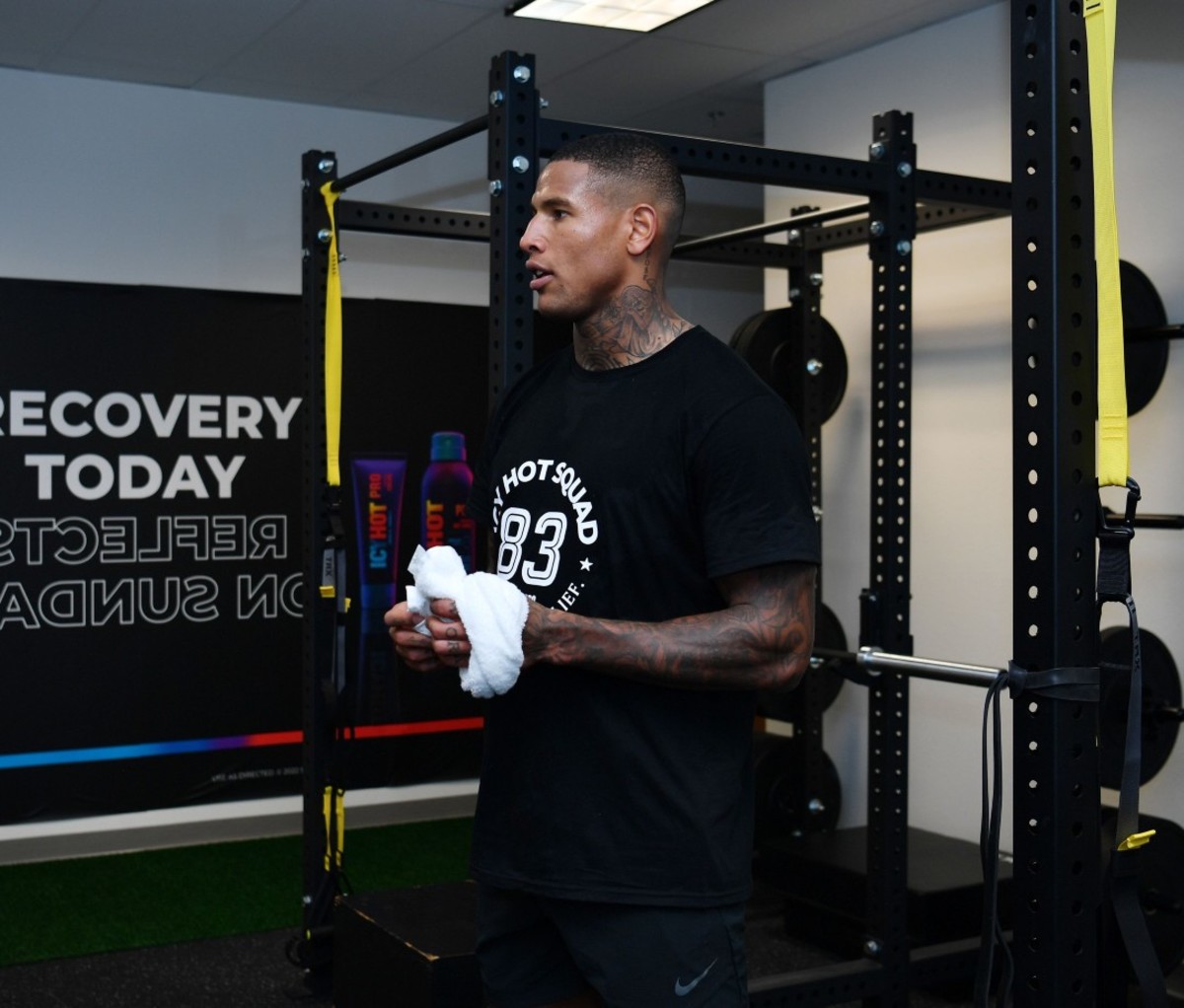
Waller’s comeback wasn’t rushed and it surely didn’t come without hard work. He spent hours with trainer Dr. Zaki Afzal of Optimize Physical Therapy. The two have worked together on the athlete’s strength and mobility since Waller made the move to Vegas. First brought in to address strain on his foot, Waller has since leaned on Afzal for guidance on every facet of his physical well-being.
Courtesy Image
Inside Darren Waller’s Workouts
“Darren was already comfortable in the weight room, so we wanted to bring that power into his speed and mobility training,” says Afzal. “There are a lot of football players who don’t have great natural foot rotation, because they’re always wearing cleats and having their feet taped up every other second.” So the program the two do in the gym is designed with strength and multi-plane movement in mind. The results of that work has been seen in the tight end’s performances during the last few record-making seasons.
“I don’t put a lot of focus on stats, but having the most catches by a Raider ever is one that means something to me,” says Waller. The record was earned in 2020, when Carr relied on the tight end during a season where the team’s wide receivers were hit by a number of injuries and issues. The situation is one that Waller doesn’t expect to be repeated, with a few new WRs being added into the mix, but that doesn’t mean he’s resting on his laurels. “I don’t expect to get the same amount of touches, but I want to be productive whatever I need to do in a play.”
Given the wide span of responsibilities Waller has as a tight end, Afzal uses a number of modalities to get him game-day ready. Depending on how he’s feeling, the routine could include Keiser machines, plyo boxes, resistance bands, and kettlebells. “Darren needs to be able to block hard, cut fast, and move explosively,” says Afzal. “Because of that, I try to avoid unilateral training, I want to hit a number of muscles and improve the coordination between those muscles.”
Being a specialist in physical therapy and orthopedics, Afzal is also well-suited to help Waller through the unavoidable impacts the athlete will take on the field. “This is a full-contact sport,” he says. “The best we can do is adapt his training when we need to and do everything we can to make sure he’s as strong as possible when he’s playing.”
Tyler Kaufman/AP / Shutterstock
How Darren Waller Recovers
Pushing limits doesn’t end in the gym. Waller brings that same tenacity into his recovery. This is not about finding practices that make him comfortable, but rather finding ways to get back in the game faster. These days, the routine entails a weekly visit to IMR Float, a recovery center in Henderson, NV. There, he sits in a sauna at 150 degrees, being led through a meditation by one of the guides. Once he’s spent about five minutes sweating, he passes under a cold shower before plunging into a cold tub set around 50 degrees.
“Back when I was in Baltimore, John Harbaugh used to always say, ‘Get comfortable being uncomfortable,’ which has always stuck with me,” says Waller. “This sport takes [us] all over, into all kinds of conditions, so if you want to be prepared for the cold, you have to get used to the cold. If you want to be prepared for the heat, you have to be in the heat. So while saunas and ice baths are a mode of recovery, they’re also a practice in mental toughness for me. I want to know that I can push myself to the limit and not break, so I push myself to those limits whenever I can.”
Waller also gets regular massages after his morning workouts with Afzal where the PT will apply Icy Hot Pro to the areas that have taken the biggest beating. The maximum-strength version of the familiar pain-relieving product contains menthol and camphor. That post-workout treatment is crucial because he’ll need to be on the field for practice later that day, and can’t be slowed down by sore muscles. On top of those tools for physical recovery, the tight end also uses meditation to keep his head clear and focus intact.
The Workout That Helped Raiders Tight End Darren Waller Make His Big Comeback
Directions: This is a pared-down version of a routine that Waller did while training for his return to the field. One of the guiding principles behind the workout is its finisher, a hamstring curl. By ending with an isolation exercise that puts a high amount of stimulus on the problem area, it encourages tissue growth and recovery. The first two pairs of exercises are done in a superset. Do them back to back without rest. Give yourself 45 to 60 seconds rest between the movements that are not supersetted.
Warmup Skills Superset
1A. A Skip
Stand with feet hip-distance apart, looking forward with torso straight. At first, do this in place, then move forward: Drive your left knee up as you swing your right arm forward for counterbalance, then strike your foot back down into the ground forcefully. Immediately repeat on right side, swinging left arm. This is a dynamic drill, so really think about popping off the ground with each step. It mimics the knee drive required for running, and greases the joints and wakes up your muscles for single-leg push-off. 2 x 20 yards
1B. B Skip
This is done in the same cadence as the A skip, but builds on the mechanics and adds a kick. Once you drive the knee up, extend the leg out straight, then drive it back down as if you were clawing the ground with your foot. Again, be sure to pump your arms to aid in balance and momentum. 2 x 20 yards
Select one kettlebell at a moderately heavy weight and loop a resistance band around the handle, tying the other end of the resistance band around a bar or fixed anchor behind you. Bring the kettlebell out, away from the tied end until there’s only a small amount of slack. Stand about a foot behind the kettlebell with feet shoulder-width apart. Hinge at your hips and grab the handle, tipping it slightly so it’s resting on its edge. Engage your lats, then hike the kettlebell back through your legs. As it passes back through, forcefully extend through your hips and squeeze your glutes. The kettlebell will typically float at the top of the swing, but the band will add some resistance and pull it back down into the next rep. 3 x 5 reps
2B. Broad Jump
Stand with feet shoulder-width apart and arms straight in front of you, parallel to ground. Swing your arms back behind your body, loading your glutes and hamstrings like a bow ready to launch an arrow. Explode out as you swing your arms forward, using momentum to improve your distance and balance. Try to leap as far forward as you can, landing softly on both feet. 3 x 3 reps
Courtesy Image
3. Band-Assisted Hamstring Curls
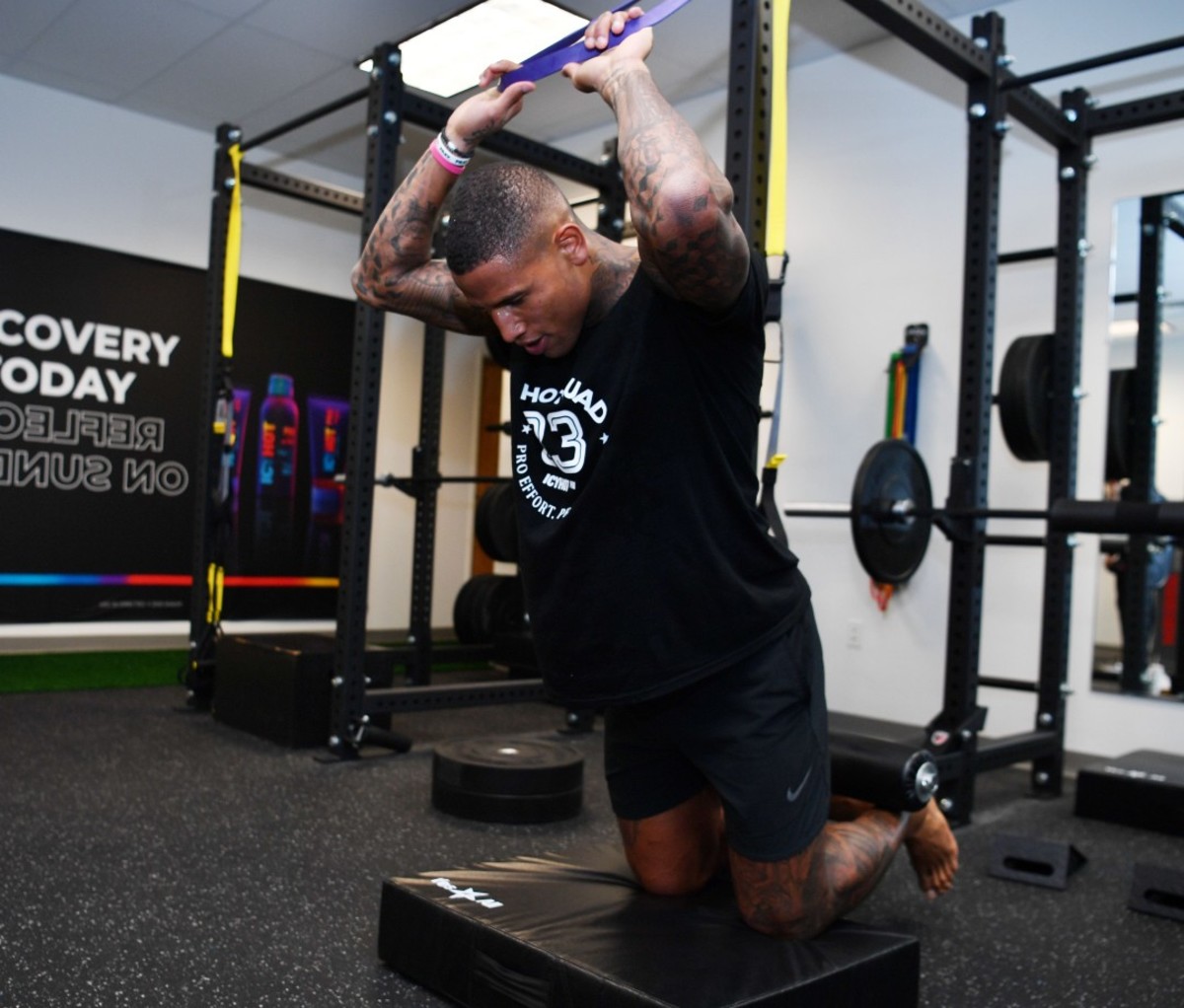
Secure one end of a resistance band to an anchor point above and directly behind you (think squat rack). Kneel on a pad with your feet anchored by a piece of equipment or have a training partner hold your ankles down. Lower yourself slowly using your legs and hamstrings to control the descent. There will be a point when your hamstrings are unable to handle the load, which is when you’ll utilize the resistance band to prevent any unnecessary stress. Engage your glutes and hamstrings to bring yourself back up to the starting position, using the resistance band for help as needed. The progression removes the band. 3 sets x 6-10 reps (depending on ability)
In a continuing effort to bring sport to everybody, Nike has announced an initiative that will reach athletes where they are. Starting December 30, 2022, Nike Training Club (NTC) content will be arriving on Netflix where it’ll be available to 223 million worldwide subscribers. It also means that if you’re planning on getting in better shape in 2023, you can start two days early.
Made “for everybody and every body,” there will be more than 90 NTC workouts requiring little or no equipment. These workouts will meet the needs of every level of fitness with a range of workout types, times, and intensities. Among the available workout categories will be yoga, strength, and high-intensity interval training. Providing guidance and motivation in these workouts will be a dozen of Nike’s world-class trainers, including Kirsty Godso and Betina Gozo.
Each NTC training program has multiple episodes. In total, there will be more than 30 hours of sessions released on Netflix in two parts. Five training programs will be available at the end of December, while additional programs will arrive throughout 2023. Netflix subscribers will be able to access curated programs or select workouts by type or duration. In addition, the NTC content will be available in 10 languages.
The new Nike content will give you an opportunity to be more active with your fitness goals. To find the NTC workouts, all you need to do is search “Nike” on Netflix.
Dry January has become increasingly popular in recent years, but we’ll be the first ones to say it: There’s nothing quite like sipping on some good whiskey after a long day or enjoying a glass of red to enhance the deliciousness of dinner. Even so, that evening beverage—and the subsequent false feeling that everything’s suddenly a little easier to handle—can easily snowball into multiple drinks or drinking every day of the week. Even if you stay under two drinks per night (that’s considered “moderate” drinking for men), the effects of alcohol can add up night after night.
The problem: “Alcohol is a neurocognitive depressant, meaning it depresses the central nervous system. Over time, it can negatively impact nearly every system in the body,” says Abe Malkin, M.D., family medicine physician and medical advisor at Monument, a digital alcohol treatment platform.
Fortunately, the human body has an amazing ability to heal.
“The benefits of sobriety can become apparent in just a few weeks,” Malkin says, “like during a sobriety challenge.”
Taking a 30-day break from alcohol, such as during Dry January (or any time of year), can create a host of benefits, including better sleep, a more stable mood, less brain fog, and an improved immune response. Perhaps most notably, studies show it can improve your relationship with alcohol if and when you decide to imbibe again. Research even shows staying off the sauce for 30 days can actually make you feel more satisfied with life and more motivated and confident in your own abilities.
If you’re toying with the idea of going booze-free for a bit, it’s smart to commit to a challenge that has defined rules and expectations: A 2017 study in the European Journal of Public Health found that people who committed to Dry January were more successful at staying sober for the 30 days and had reduced problematic drinking six months later compared to people who set a more general goal to drink less.
“Popular sobriety challenges like Dry January provide an extra level of peer accountability and help normalize alcohol-free living as a proud choice,” Malkin adds.
And it doesn’t mean you have to give up booze forever: Dry January is a great way to develop a more mindful relationship with the joy juice moving forward.
When tallied up, the benefits of abstaining from alcohol for 30 days make a compelling case for giving it a try. Here are all the upsides you could see by taking a break from booze during Dry January (or anytime this year).
Dry January: 10 Benefits of Taking a 30-Day Break From Alcohol
1. You’ll Get Better Sleep
We all know a good night’s sleep is crucial for better performance at work, more gains at the gym, and a better headspace overall. But alcohol compromises your sleep quality. “While alcohol can help you fall asleep more quickly, it interferes with REM cycles and prevents deep restful sleep,” Malkin explains. “When people stop drinking they are often pleasantly surprised that they feel much more well rested.” Research also shows alcohol intensifies breathing-related problems like snoring. If you give up that evening cocktail, your partner may also catch some better shut-eye, too. Because alcohol does help you fall asleep faster, you might have trouble drifting off quickly once you go alcohol-free. For help with that, try these six exercises to help you fall asleep faster at night. Ground Picture / Shutterstock2. You’ll Feel Less Anxious and Handle Stress Better
“People often rely on alcohol to cope with stress and anxiety, so they are surprised to find that their mental health actually improves when they stop drinking because they have fewer emotional swings,” Malkin says. This goes back to the fact that alcohol depresses your central nervous system. But as a result, it also activates your sympathetic nervous system—that fight or flight rev that keeps your body reactive for when stress or threats come along. As time goes by without alcohol to keep you in this heightened state, your parasympathetic nervous system (“rest and digest” mode) is able to kick in and put you in a better physiological space to handle stress and surprise without the rollercoaster ride. Research also shows that the part of your brain that regulates anxiety and your desire to drink are the same, so as the former eases up, so does the desire to reach for booze to treat it with. Keep in mind if you’ve been drinking heavily recently—especially if you’ve been under a lot of stress—early sobriety can sometimes intensify anxiety at first. But “ultimately, abstaining from alcohol can have a very positive impact on mental health, relationships, and mental clarity,” Malkin says. djile / Shutterstock3. You’ll Have More Energy
Because alcohol depresses your nervous system, it also zaps your energy and makes you feel sluggish the next day, research shows. Waking up without the tiredness of even a subtle hangover—as well as without the disrupted sleep that comes from heavy drinking—means you’ll feel more awake and alert in the morning and have higher natural energy levels throughout the day. Shutterstock4. You’ll See Gains in Your Training
Benefits No. 1, 2, and 3 on this list all combine to help you get a way better workout and recovery, which can translate to growing bigger, stronger muscles faster. Plus, a low-key hangover won’t tempt you to skip a workout or sap your motivation in the gym. In addition, giving up a regular habit of just two drinks a night means you’re skipping roughly 250 to 350 calories, depending on your drink of choice—and even more if you regularly exceed two drinks. For anyone looking to trim fat, this can make a big difference. Ground Picture / Shutterstock5. You’ll Get Sick Less Often
A major but lesser-known upside to doing Dry January is the overall improvement you’ll get in your immune system, Malkin points out. “Unhealthy alcohol use can impair your immune system and ability to recover from illnesses,” he says. “Those abstaining from alcohol may get sick less often than when they were drinking, and heal from illness more quickly.” This is great news considering cases of the flu, RSV, and COVID-19 have all been skyrocketing lately—but a strong immune system is a crucial asset any time of year. Shutterstock6. You’ll Save Money
“When giving up alcohol or cutting back significantly, [many people] find they have much more financial freedom,” Malkin says. It’s easy to overlook the heavy financial burden of drinking regularly: A January 2020 survey by The Harris Poll reported that millennials spend about $300 per month on alcohol, or $56 per outing—and that's not even including the added inflation of 2022. Not only will you save that money for the month of January, but when you consider that the Dry January challenge helps people drink less in the months afterward, you’re looking at a lot less money flowing into your glass all year long. Shutterstock7. You’ll Help Your Skin
Your skin health is heavily dependent on hydration. And guess what? Alcohol dehydrates your body, including your skin. Going without allows your cells to better retain water and makes it easier for your body to flush out old, dead cells. That means abstaining from alcohol can give you clearer and more youthful-looking skin. Shutterstock8. You’ll Boost Your Self-Confidence and Self-Control
A 2020 study out of the U.K. found that, compared to the everyday person, people who participated in Dry January had higher levels of “general self-efficacy”—a complicated scientific marker that essentially refers to your belief in yourself, your motivation, and your self-control. That’s all to say: Forgoing alcohol for 30 days can help you foster the confidence and self-discipline you need to reach your goals. This benefit comes in part from holding strong against the psychological and emotional crutch of alcohol. If you can stay on course, that strength doesn’t just help you avoid having a drink—it translates to every area of your life, from your fitness goals to your career goals and financial goals as well. You may find that you're better able to commit to other healthy choices after completing a 30-day alcohol-free challenge. Shutterstock9. You’ll Probably Be Happier
That same 2020 study also found that people who participated in Dry January had higher levels of well-being compared to the everyday person. This is in part thanks to the reduced mood swings, decreased anxiety, and better sleep that come from abstaining. But Malkin also points out that when you’re drinking a lot, alcohol becomes the source you go to in order to feel better. “When people give up alcohol or cut back significantly, they often discover new enjoyment in other parts of their life,” he explains. “They often develop new passions, feel more energized, and show up more fully in their personal and professional lives.” Shutterstock10. You’ll Have a Healthier Relationship With Alcohol
Research shows participating in Dry January does indeed help people develop a healthier drinking habit in the long run. Plus, they feel more equipped to say no to a drink when they want to, even after the challenge is over. It’s kind of like how when you overhaul your nutrition, you enjoy Cheetos or pizza more. That’s because you only eat them occasionally, and they don’t have that habitual, emotional hold over you. Proving to yourself that you can take a 30-day break from alcohol helps break the cycle of mindlessly drinking, Malkin says. “It also provides an opportunity to reflect on the role alcohol plays in your life, and helps alleviate the mental reliance on drinking as a social crutch.” Simply put, taking a 30-day break from alcohol can help you make more mindful choices moving forward—even if that choice is to enjoy your beloved glass of whiskey after a long day come February. Shutterstock
Whether you’re training for a race, an intramural league, or simply because you like to, improving muscular power can be a great addition to your workout regimen.
from Bodybuilding.com Articles https://ift.tt/3y4KfZe
via IFTTT
We hate sounding like your mother. But there’s a reason we always repeat training tips and rules, like wrapping your hands—including your thumb!—around the bench press bar, or making sure your feet are pointing straight ahead.
Actually, there are a few reasons. Safety is one. But as with most fitness rules, doing things the right way pays dividends in the short term (less chance of injury) and the long term (improved muscle growth). Pay close attention to the rules and training tips below, and you can avoid making critical mistakes in the gym.
1. Avoid the Suicide Grip
The “suicide grip,” sometimes called a false grip, involves doing bar work—bench pressing or pullups, for example—without your thumbs wrapped around the barbell (see image above). Avoiding this grip is easy to justify: If the barbell slips when you're pressing, that barbell will crush your face, neck, or ribs. But it’s not only about safety. The suicide grip is also a weaker grip compared to having your hands wrapped around the bar. To set a new personal record and really add pounds to your bench press, squeeze the bar as hard as possible. It'll help you stabilize the movement as well as engage other muscles. [ami-related id="2946006" url="https://ift.tt/dOwln64" title="How to Bench Press: Everything You Need to Know" target="_blank" thumb="true" imgsrc="https://ift.tt/GIa0VhE" imgid="2947088" format="standard" flag="" channel="36" showsubt="true" subtitle=""] Skydive Erick / Shutterstock2. Point Your Feet Ahead
The only time you should have your feet slightly turned out is when you're squatting. For everything else, keep your feet pointed straight ahead. Turning your feet in the wrong direction will not only create a lot of stress on your knees and hips, but also reduce your strength. [ami-related id="981211" url="https://ift.tt/Bf5WU0N" title="How to Do Squats: A Step-by-Step Guide" target="_blank" thumb="true" imgsrc="https://ift.tt/x3Lhy8O" imgid="981503" format="standard" flag="" channel="36" showsubt="true" subtitle=""] Ground Picture / Shutterstock3. Use Weight Collars
Have you ever seen somone exercise without weight collars, only to have the plates slide around and almost fall off? Regardless of the weight, it should be instinctive to attach weight collars when using barbells. Having weight collars on a barbaell can help improve your balance and the feel of the exercise—good luck trying to set a PR when your 45-pound plates are wobbling all over the place. There is, however, an exception to this rule: Leave the collars off when you're bench pressing. If you get stuck at the bottom of the move, you can safely slide the plates off the bar and get out from underneath it. Hero Images on Offset / Shutterstock4. Keep a Straight Back
Too often, lifters bend backward as they press overhead. This happens for two reasons: They want to tilt their chest up to mimic an incline bench press, or they lack shoulder mobility. Tilting your chest or bending backward puts enormous and dangerous stress on the joints of your lumbar spine and risks a serious injury. In addition, too much arching will shift the the force onto your chest and away from your shoulders, which means you won't be getting the shoulder work that you're been looking for. Instead, squeeze your glutes and core as hard as you can and time your breathing so your lungs are full of air as you push overhead—this will stabilize your lower back and help you push more weight overhead safely. [ami-related id="378440" url="https://ift.tt/fB50es8" title="The Best Sprint Workouts to Get Faster, Build Muscle, and Drop Fat" target="_blank" thumb="true" imgsrc="https://ift.tt/NS7JItx" imgid="378666" format="gallery" flag="" channel="36" showsubt="true" subtitle=""] Andy Gin / Shutterstock5. Squat Low
Just ignore the myth that parallel squats are bad for your knees—it’s false. You need to reach proper depth on the squat, and that means bringing your hips below your knees. If you don't go deep enough, you'll limit your range of motion, and in turn, limit the size and strength of your legs. Worse, you'll increase your chances of hurting yourself because the force of the weight will stay on your knees instead of shifting onto your hips, which are far stronger until you reach parallel. Make sure to brace your core as you squat, spread your knees as you descend, and keep your weight on your heels. Ground Picture / Shutterstock6. Always Warm Up
Coming to the gym and starting your workout ice-cold can lead to injuries and pulls. But don't think you can get away with just a few light reps of your first exercise—that won't cut it. You need a series of dynamic movements that will open your joints, increase your core temperature, activate your weak muscles, and fire up your nervous system. This is especially the case if you're planning on lifting heavy. If you don't work up to the weight, you won't be prepared to lift a heavy load. Jacob Lund / Shutterstock7. Balance Pushing and Pulling
Walk into any commercial gym and you’ll notice most guys do a lot of pushing exercises like the bench press, pushup, military press, dip, and squat. Those moves are effective in building muscle and increasing strength, but you also need to incorporate pulling exercises to develop balance and your ideal physique. Doing more pulling—rows, pullups, reverse flyes, deadlifts—promotes better posture and balance around your joints, which prevents injuries. But a more underrated reason is pulling makes you stronger—it gives you the foundation you need to push harder. For example: If you’re plateauing on the bench, do more rows to build out your back. This will actually help you press more weight. [ami-related id="574169" url="https://ift.tt/AD6jYMS" title="Do It Right: How to Deadlift Properly" target="_blank" thumb="true" imgsrc="https://ift.tt/lT2yUtP" imgid="574172" format="standard" flag="" channel="36" showsubt="true" subtitle=""] Blanscape / Shutterstock