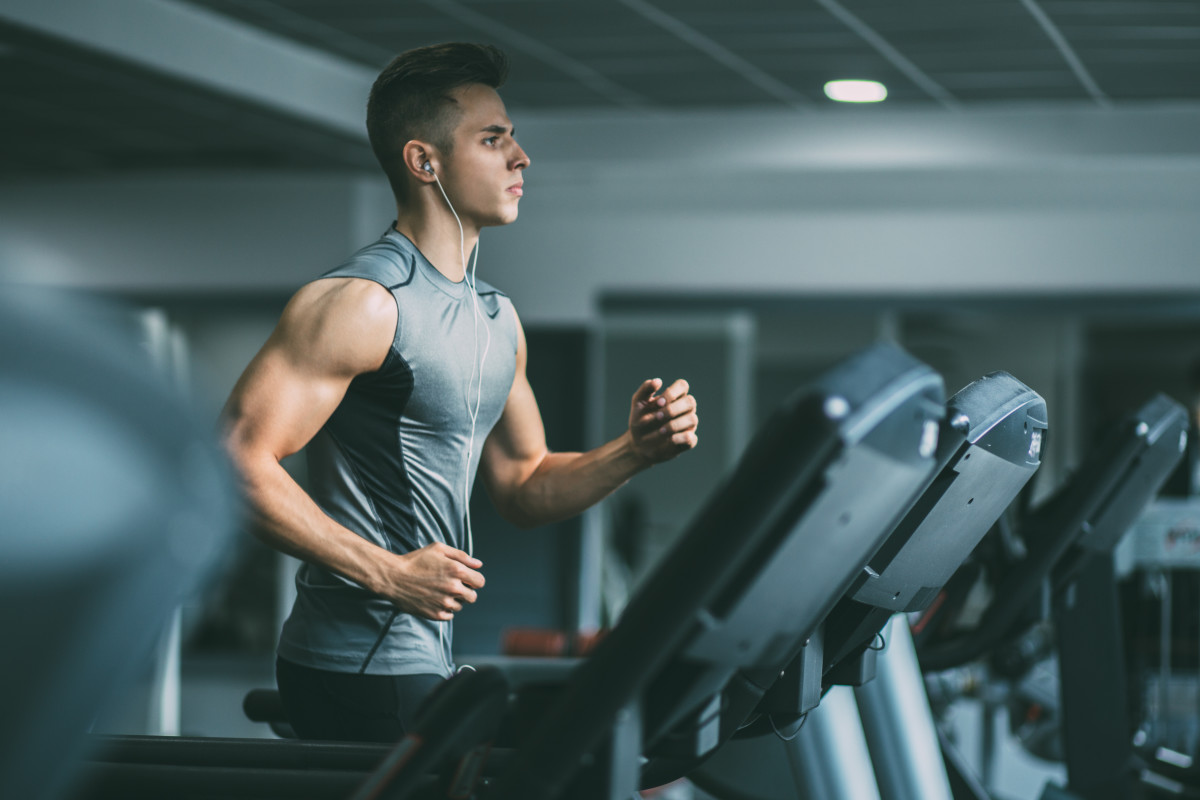
This pandemic has been wreaking havoc over everyone’s lives. Especially if you love going to the gym. Gyms being closed has forced people to change up how they stay in shape. Which can work, but it isn’t exactly the same. So it almost feels like a godsend that Gyms are starting to open up in parts of the country.
As great as it is for Gym to be opening up again, there are some things you need to take into account. Not just the health-based measures of being in a public place when the pandemic is still going strong. What you will need to do is not to act like time hasn’t passed by overexerting yourself and causing a serious injury.
Just because you may have been working out from home all this time, that doesn’t mean you can just jump right back into it. The body needs to get used to the workouts at a gym. You need to build up your stamina and all that. Not to mention the pandemic causing such stress to our minds and bodies that need to be overcome.
Getting back to the gym is going to require a different sort of dedication. You will need to know exactly the ways you need to reacquaint yourself to such a rigorous routine. But you don’t need to do so all alone. You can sign up for Noom and get a ton of help in going back to the gym.
Noom is a great fitness app for many reasons. But right now it is great because it will provide you with a wellness coach at all times of the day. Professionals who know what they are doing and will be able to cater a routine for you specifically to get back into the swing of things.
When you sign up for Noom, you need to take a highly personalized test. That way the app can know a ton about you to make up a diet and fitness routine to reach the goals you aiming for. Once that is all said and done, you will get access to these wellness coaches.
When you get started with a wellness coach at Noom, the personalized nature will be a godsend. Knowing your current fitness levels and such, the coach can tell you what to do to ease back in. Working out from home to get ready with the exact exercises to get ready. Shortening the duration of each workout when you’re at the gym initially.
Shutterstock
You’ll want to shorten the duration of your workouts at first because of DOMS. That means Delayed Onset Muscle Soreness. Which can be a real killer when trying to get back into the workout routine. You won’t be able to work out as well as you need to do the next few days.
With the help of the Noom wellness coaches, you will get help in avoiding DOMS. But if you can’t avoid DOMS, they can help you overcome the pain. Lessen the amount of time you have to deal with DOMS. That way you can keep yourself going. Because it’s all about getting into a routine.
It is going to take a while to get back to the levels you were going at before the pandemic shut everything down. The wellness coaches at Noom will help you wrangle your ambitions. Keep things down to Earth for now. Let you work back to those levels.
As is usual with any workout routine, you need to take care of your diet. And the personalized test when you sign up for Noom will help you figure out what to eat. But the wellness coaches can help you in any even greater and more specific way. Your diet will help you greatly in getting back to it.
Whether you are looking to start at the gym for the first time or are getting back into a pre-pandemic routine, Noom will help you out greatly. The wellness coaches will help keep you healthy and dedicated. The first time back doesn’t have to be the last and Noom will help make sure that it isn’t.
There’s something about a global pandemic and lengthy at-home lockdown that seems to intensify the need for an after-work cocktail. In April, I considered a bottle of Cazadores blanco a pantry staple. Cracking ice into a rocks glass with a shot of tequila, soda water, and a squeeze of lime or two was the occasional, after-work break I needed from hitting refresh on the The New York Times website over and over again. But for a few weeks, the drink tasted like nothing. A cold collection of bubbles that was relaxing in its effervescence but wholly devoid of flavor. The smell was empty, too. I came down with COVID-19 in early March. I was lucky to have a mild case that put me out of commission for a few weeks but needed no hospitalization. The strangest symptom for me was the complete loss of smell, something called anosmia (and later, parosmia). At the time, smell loss was newly linked to COVID; now, it’s a more reliable predictor of infection than a PCR test. It happened very suddenly.
One morning, I could smell; that evening, I could not. I was sitting in bed, drinking ginger lemon tea and hitting refresh repeatedly on the news. A story popped up about anosmia in European novel coronavirus cases and, suddenly, I realized the tea I was drinking was nothing more than scentless, tasteless, warm water. My nose was clear, but my brain registered nothing. I leaned over to my boyfriend, who had been embracing his new work-from-home setup and had gotten more lax on showering. Nothing.
My inability to smell lingered long after I recovered from the other symptoms of the virus. The air inside my home had no comforting, discerning scents. No fragrances of morning coffee, fresh laundry, or anything at all. It made cooking challenging (how spicy could it be, really?), but cleaning out my cat’s litter box was a breeze. I immediately became aware of something that had never crossed my mind before: My ability to smell my surroundings was far from guaranteed. Initially, I worried daily that maybe my sense to smell was gone forever. I felt weirdly alone without it—separated from a perception of my environment I’d always taken for granted. Thankfully, by the end of April, I started to taste the tartness of lime in my tequila sodas again, soon followed by the subtle presence of agave.
Bit by bit, it came slowly back. By early May, I could smell most things around me, though not as intensely as before. Eating was enjoyable again. I wasn’t permanently changed, but my anosmia had gotten markedly better. But then, during the third week of May, I took one sip of a freshly made drink and forcibly spit it out onto the counter before I could make it to the sink. Tequila. Soda water. Lime. But what I tasted was a forgotten pile of vegetables left way too long in the fridge— like rotten zucchini had been muddled into the beverage. A putrid, ripe smell emanating from the glass caught my nose and I gagged, dumping the tequila down the sink.
Suddenly, many previously normal smells—in particular, smells I loved—were rancid. A geranium-scented hand soap in the kitchen smelled like rotten squash. Taking a shower was an exercise in sensory futility between fragrant shampoos and facewash. I had to hold my breath in order not to gag walking through the produce section of the grocery store. Most fruits—from strawberries to pineapple, oranges to bananas—were completely inedible as they tasted as terrible as they smelled. I had to stop eating cucumbers, tortilla chips, eggs, and olives—among many other things. One of the most crushing blows: when pizza tasted so awful I had to hold my breath to get down a single bite.
This sounds ridiculous, I know. The idea that a piece of pepperoni pizza could taste rotten when it’s most definitely not, sounds crazy. It sounds made up. And it sounds like something that shouldn’t be a big deal because it’s not life-threating. I was otherwise okay; everything around me just made me gag. It wasn’t until I discovered AbScent, a UK-based non-profit dedicated to promoting awareness of smell disorders and offering support for sufferers, that I even learned what was happening to me. Experts refer to the distortion of smell as parosmia. Chrissi Kelly, who grew up in Maine but has lived in England for the past three decades, founded AbScent after her own experience with anosmia that began in 2012. “It’s very, very difficult to get people to understand just how awful it is to lose your sense of smell,” she told me. “It’s a very isolating experience. [Friends and family] think to themselves, ‘Well, I can plug my nose and I can see what that’s like and I just don’t get it. What’s the big deal?’ And the fact of the matter is that people who lose limbs, people who lose their eyesight, people who lose their hearing recover their well-being eventually, within about two years. People who lose their sense of smell tend to deteriorate over time.”
How COVID-19 Can Affect Your Sense of Smell
There are two ways viral infections can cause smell loss. The first is through mucus blockage—i.e. a stuffed-up nose—that prevents odors from reaching receptors in the upper part of the nasal passage. The second, which is generally more rare, is when the olfactory neuroepithelium—the tissue that lines the nose and contains the nerves that communicate scent to the brain—is damaged by the virus. “Basically, if the nerves are damaged, that can lead to a more profound loss of sense of smell,” explains Dr. Evan R. Reiter, professor of otolaryngology – head and neck surgery at Virginia Commonwealth University. While the research on smell loss and COVID-19 is of course, still evolving, studies have found that smell loss affects anywhere from 50-80 percent of individuals who contract the virus. That is not an insignificant amount. A recent study in Europe reinforced the distinctiveness of loss of smell and taste caused by SARS-CoV-2, sharing that while many people seem to recover quickly, there is reason to believe that problems with olfactory functioning will persist for some, long after they’ve otherwise recovered from the virus.
What Living With Anosmia and Parosmia Is Really Like
While far from a medical niche, smell and taste disorders exist outside of the general purview partly because of a lack of familiarity and partly because they just don’t seem as serious as issues with the other senses. This can make it confusing for those experiencing it, as well, gauging how to react or when to see a doctor. But, a lack of smell presents a set of real, life-affecting problems. Some scents alert us to possible danger: smoke from a fire, sulfur from a gas leak, even the smell of something burning on the stove. But even more, scent provides a way to connect with those around us. It provides comfort, familiarity and often nostalgia; it helps us to understand and interact with our environment in ways we really never consider until they disappear.
If anosmia is already an unfamiliar condition, then parosmia is even more so. With parosmia, the distortion usually happens with smells that are familiar. Generally pleasant scents are replaced with aggressively foul odors, like rotten vegetables or cigarette smoke. Parosmia renders food inedible and makes simple chores, like washing dishes, very challenging. How does it work? “In general, there are thousands of different receptors, all coded by different genes for olfactory neurons,” explains Dr. Reiter. “Most odors are relatively complex; they stimulate a whole bunch of different types of sensors. Your brain gets input from all these different receptors, then puts all that together to determine, this is a rose, this is my husband, this is dog poop. With parosmia, when there’s damage from any source, potentially all of the neurons and sensors are not affected the same, so instead of getting the signals from all of these different receptors, which the brain is used to, it’s maybe only getting signals from 25 or 50 percent—and when it puts that together, it changes the nature of what you’re smelling.”
What this means is that I dread brushing my teeth because the toothpaste tastes like it’s spoiled. A squeeze of lime in a cocktail—previously a nice way to wind down after work—is enough reason to pour my drink down the drain. For me, five months out from having COVID-19, parosmia affects every aspect of my daily life in a savagely smelly way.
How COVID-19 Could Help Experts Raise Awareness Around Olfactory Disorders
The nature of COVID-19 offers a unique opportunity to learn more about smell disorders in ways that can help people in the future. In early April, Dr. Reiter, who is also the medical director of the VCU Smell and Taste Clinic, launched a study with his team to understand more about the loss of these senses. “More often than not, when people experience changes in their sense of smell due to a virus, they will come in months or even years after their viral infection, simply because it hasn’t gotten better and they’re curious about that. You can also reason there are probably a lot of people who don’t seek medical attention or get tested.” This has made it challenging to research olfactory disorders, and in this way, COVID-19 presents opportunity. “Here we are with a highly publicized pandemic and the lay community is very aware that loss of sense of smell can be a hallmark symptom, so we’ve got all these people who are going through it together. We took the opportunity to try and study the natural history because that really hasn’t been possible [previously] with the way patients present so sporadically and so after-the-fact.”
This is hopeful. And in the meantime, the ranks of AbScent members continue to swell. In March, Kelly launched a COVID-specific parosmia support group on Facebook. Currently, there are more than 5,000 members who all describe similar experiences: coffee tastes terrible; gin seems to be the only liquor that isn’t wretched; rotten, smokey, and chemical smells and tastes abound. Everyone feels alienated because their experience is so unrelatable and sounds so ridiculous to their friends and family. Everyone finds solace in the experiences of other group members. Not one person has reported that the parosmia has ended and their sense of smell is completely back to normal. But it’s still early. The longest stretches of anosmia and parosmia date back to March; smell disorders can resolve—but it often takes months or years. And with every post shared in the group and every bit of information gathered by AbScent and shared with researchers (with permission, of course), the future of helping those suffering from smell disorders gets brighter. In a group that thrives on shared experience, this is definitely meaningful.
The best hope currently, as COVID-related anosmics and parosmics patiently wait for more scientific findings to emerge, is something called smell training, which is essentially physical therapy for the neural pathways between brain and nose. “The olfactory neurons are somewhat unique in the nervous system, in that they have the capacity to regenerate,” says Dr. Reiter. “What can happen in some cases is as the neurons regenerate, the wiring may get crossed, if you will, and people get a distortion.” Smell training is the repeated exercising of these neural pathways to help them recover properly, whether someone has no smell, or one that seems to be misfiring. It is the only research-backed technique that’s shown symptomatic improvement for smell disorders.
And it’s a process. “We have to think about this olfactory nerve as an injury rather than a disease that can be cured,” says Kelly. “If you got into a car accident and you looked at yourself in the mirror and saw that you were covered in scars, you wouldn’t say, when are my scars going to go away.”
There are success stories within the olfactory community. Chrissi, herself, is one. And her experiences resonate within the ranks of AbScent members suffering from anosmia and parosmia. I smell train every day. I take out a collection of small glass jars that contain different essential oils in various scent categories: orange and lemon for fruit, rose for floral, eucalyptus for resin, and clove for spice. For about 10 seconds each, I smell them individually. I focus on how they smell, how they’re supposed to smell, and I imagine being able to eat anything I want in the future, with no fear of an unexpected, rotten flavor. A few days ago, as I was brushing my teeth before bed, the toothpaste tasted utterly, completely normal. It’s been five months since I originally lost my sense of smell, and every small win makes me more hopeful.
Working out is a great way to stay healthy. But if you want to boost the results of any workout, you need to pick up some protein powders. That way you can make shakes before and after a workout to fuel your body with the proper nutrients. But not all protein powders are made the same.
You have plenty of options to choose from out there. So to help you make the right choice for your needs, check out the selection we have gathered for you below.
If you want to grab the best overall container of protein powder, then you would be wise to pick this container up. To us, it is the best overall for a few reasons. For one, it’s very affordable for the amount you will get. Another being that it tastes really good, making it very easy to ingest it. It’s also lacking in lactose, carbs, and fat while also being very low in sugars. No unnatural comedown after taking this. But to us, what makes it so great is that the protein will absorb into your bloodstream much quicker than others. So if you want the all-around package, then this is the one for you.
There are plenty of great protein powders out there for you to pick up. But a good deal of them has sugar in them. If you aren’t looking to fill your body up with sugar but you still want a highly effective protein powder, then this is the one for you. You will gain a ton of muscle and burn a whole lot of fat with this in your workout routine. So if you don’t have an attraction for sugar in your diet, then this is the one for you.
When you workout, you are more likely than not looking to build muscle. So a protein powder is there to aid in your musculature’s growth. But with this option, you won’t just see your body growing with muscle. You will also see it burn away that excess fat that you no longer want to see on your body. You’ll get plenty of energy to keep up the good work during your workout. And with this in your workout routine, you will see yourself gain a lean and mean looking body. So if fat burning is key for you, then look no further.
For plenty of people out there, cutting out dairy is a vital way to stay healthy and lose weight. There’s a lot of good protein powders out there that wouldn’t fly for these folks. But this option is not just great for them because it is dairy-free. It’s just great in general. Your body will be very happy that you are putting this into it. All-natural ingredients make the body feel great and it greatly helps in aiding in your workout. Muscles will grow and energy won’t be depleted. Not to mention that despite the lack of dairy, it will still taste amazing going down. So pick this up if you want to avoid dairy in your life.
Everyone working out at the gym or at home is focused on making their bodywork a lot better than it has before. But there tends to be one element people forget in this journey. And that is making sure your immune system stays strong too. If you work out too hard and burn yourself out, you can severely weaken the immune system. But with this protein powder, your immune system will be just as strong as your new muscles. Get all the help you need to make the most of your workouts and keep your self from getting sick. You can’t go wrong with those options.
Being able to take control of your fitness, nutrition, and overall health doesn't happen by magic. If you're looking to build the type of self-discipline that will help you earn better workouts and better results, it all starts with these three simple steps.
from Bodybuilding.com Articles https://ift.tt/3b68BeS
via IFTTT